Hokoji, meaning “Phoenix Light Temple,” is a Zen Buddhist practice center located north of Taos, New Mexico, just outside the official Taos Pueblo lands. It sits at a little over 8000 ft in elevation from sea level at the foot of the majestic Sangre de Cristo Mountains. The area of Northern New Mexico around Taos and nearby Santa Fe has had a long history of counterculture communities going back to the 1960s and has gained a proud reputation for embracing alternative lifestyles. Founded in 1983 by Kobun Chino Otogawa Roshi and his student Bob Watkins, Hokoji serves as a zendo for the Japanese Soto Zen tradition.

Founder and Origins
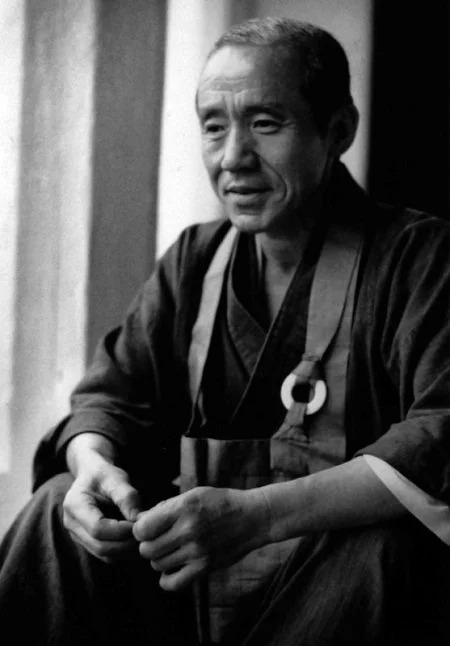
Following the organization’s establishment in 1983, the zendo itself formally opened its doors in 1986. Its founder, Kobun Chino Otogawa, was committed to teaching Zen Buddhism in the West. Kobun had come from a line of Soto Zen priests in northwestern Japan, eventually studying under and receiving dharma transmission from Koei Chino Roshi. Kobun would break with tradition by refusing to haze novice monks while serving as a trainer at Eiheiji monastery and ignoring his master to travel to the United States upon invitation from Shunryu Suzuki to help found Tassajara Monastery. Arguably, this willingness to break with strict tradition would be instrumental in developing a viable Zen practice in America.
During the course of his teaching, he would become close friends with Chogyam Trungpa Rinpoche and influence the practice of the Shambhala tradition. He would found Hokoji along with Bob Watkins, at the time just an unassuming adobe house, and would continue teaching around the United States and the rest of the world until his untimely passing in 2002. The current Guiding Teacher of Hokoji, Ian Forsberg, is in the line of dharma transmission from Kobun.
Soto Zen School
Soto Zen, the Japanese line of the Chinese school of Chan Buddhism known as Caodong, as transmitted by Dogen Zenji, understands all people to already have an awakened nature that one can come to recognize through proper practice. This is traditionally achieved through “Silent Illumination,” in which one drops off the body and mind of their own self and that of others, deconstructing their conventional view of their self and the world around them, and seeing their true nature, an insight known as “Kensho.” From there, one is able to deepen their insight through regular practice. In the Soto tradition, nearly anything done with a meditative focus can be beneficial to this process. The idea is that even by practicing daily life with the right awareness and presence, one can still become aware of their Buddha Nature as surely as lifetimes spent in meditation.
Practices and Values
Hokoji is part of the Soto Zen tradition, meaning they use seated meditation, or zazen, in order to cultivate a state where one can become aware of one’s inherent enlightenment. They focus on “family style” practice, favoring a no-pressure, relaxed atmosphere that is meant to facilitate deeper practice according to the limits of one’s ability rather than implementing a strict daily regimen. Firm discipline is not necessarily the goal; rather, meditation with the rest of the community (sangha) is the means by which one can maintain presence and awareness in the moment. There are a number of practices undertaken at Hokoji that are a staple of Soto Zen and which are relatively unique to the school:
Shikantaza, or “Themeless Sitting,” requires remaining present and aware in the moment while acknowledging but not concentrating on one’s thoughts. The practitioner lets their cognition fade away and lets themselves exist in the moment without actively thinking about what is happening. Kobun describes this as surrendering one’s self-centered choice in what they do, and just sitting without actively trying to understand oneself or what they are doing. In this way, one is forced to sit with oneself and accept oneself as who one is without judgments, gaining insight into their nature.
Kinhin, or “Walking,” follows zazen and is a continuation of the meditative state one enters during seated meditation. The practitioner maintains their mindfulness and gets a welcome break from prolonged sitting that might otherwise become a distraction. Above all, it is meant to be a slow and purposeful walk, done with an aware mind before returning to seated meditation.
Oryoki is a traditional meal practice performed during meditative retreats. The same meditative mindfulness cultivated during zazen is applied to the act of partaking of food. The bowl, being the “ki” in Oryoki, that is used during the ritual meal hearkens back to the earliest Buddhist monks begging for food on a daily basis while offering dharma to the lay community in turn. By participating in meals through this method, the practitioner is reminded of their relationship to the food, developing gratitude and mindfulness even in performing the basic functions of everyday life.
Sangha, or the “Community,” is an integral part of Soto Zen practice at Hokoji. Rather than practicing alone like a Solitary Buddha, the Soto school recognizes community practice as part of the greater path of the Bodhisattva. As a community, one is able to practice with like-minded individuals, engage in mutual support of one another’s journey, and develop the compassion necessary for the Bodhisattva path. The nature of the community also means that Hokoji relies on donations and volunteer work to continue operating and maintain the grounds and buildings for use by the rest of the community. Contributions like this serve as expressions of gratitude to the community and as compassionate opportunities to develop the community further to increase its appeal and reach. Rather than having a clear distinction between monastics and laity, Hokoji maintains a fairly egalitarian and inclusive community.
Dharma Discussion involves a dialogue on Buddhist teachings that takes place following the meditation session. During the discussion, the Guiding Teacher shares their insights and experiences of their practice as part of a conversation, not a sermon. It is intended to be an exploration into the teachings transmitted by Kobun Chino Otogawa Roshi and the Soto school at large.
Sesshin, or “Embracing Mind,” is an opportunity to collect oneself by immersing in a consistent practice apart from wider society. This retreat serves as a multi-day period in which one can dedicate their entire day to mindfulness and Buddhist practice without the distractions of everyday life.
At Hokoji, practitioners have the opportunity to engage with all of these aspects of Soto Zen practice with one another. They offer several different practice opportunities, including Tuesday morning meditation, Thursday evening meditation, and half-day meditations on the first Sunday and Tuesday of the month. They also engage in regular online dialogues and study with other temples, including Myokoji Temple in Ben Lomond, California, and Hakubai Temple in Boulder, Colorado, calling themselves collectively the Phoenix Heart Sangha whose stated goal is to “create a community dedicated to exploring, actualizing and disseminating Kobun Chino Otogawa’s teachings about the formless heart of Zen Buddhism, as well as the legacies of other bodhisattva ancestors in Kobun’s lineage and parallel traditions.” Despite being separated by geographical distance, they strive to maintain a close community bound together by Kobun’s teachings and a common love of the dharma and one another.
Culture
Hokoji bears the hallmarks of American Zen in many ways. Its founder, Kobun, understood that a monastic approach to Buddhism would undoubtedly be less successful than applying Buddhist teachings to everyday life because of the particular demands and expectations of American life. As a result, he drew from the Soto tradition and advocated for developing presence and awareness in one’s daily routine instead.
While the tradition certainly has Japanese roots, Hokoji does not present itself as exclusively Japanese, with Kobun having encouraged students to apply Zen teachings to their respective backgrounds instead of adopting Japanese customs. In this way, Hokoji is akin to many other Western, and particularly American Buddhist communities, including in terms of demographics, comprised of Western followers, by and large, including among leadership. Hokoji certainly still recognizes its heritage in Japanese Soto Zen, but like its founder, Kobun, it seeks to find the balance between finding wisdom in tradition and enabling unencumbered practice by meeting practitioners where they are, all while leaving open the question of what American Zen can or ought to be.
Report by Ethan Solomon
With gratitude to Hokoji and the Phoenix Heart Sangha for their detailed available information, additional resources, and images
Sources:
- “Compiled transcripts from Kobun’s talks during sesshin. The original version of the “Embracing Mind” book.” Phoenix Heart Sangha. https://www.phoenixheartsangha.com/resources.html
- “Hokoji – Phoenix Light Temple.” https://www.hokojitaos.org/
- “Kobun Biographie.” kobun-sama.org. Archived on October 11, 2011. Internet Archive. https://web.archive.org/web/20111011173507/http://www.kobun-sama.org/english/biografie.htm