

Mikaela Hutchinson
Buddhism Research Report
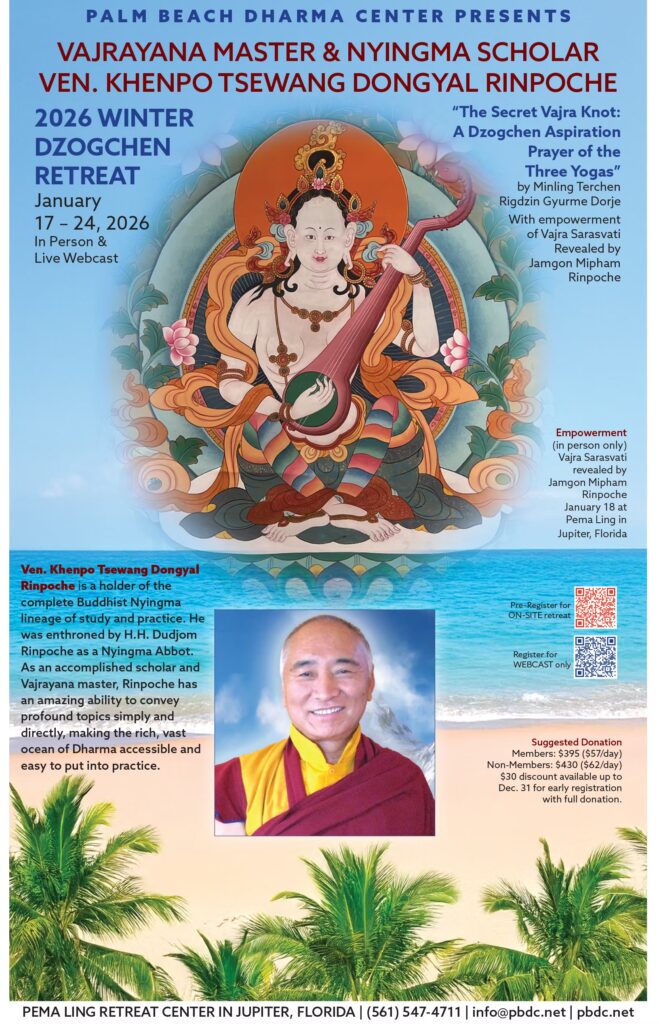
The Padmasambhava Buddhist Center of Tennessee is part of a larger international network of Nyingma Buddhist communities founded by Khenchen Palden Sherab Rinpoche (1938–2010) and Khenpo Tsewang Dongyal Rinpoche. Both brothers grew up in the Dhoshul region of Kham in eastern Tibet near the mountain Jowo Zegyal, in a family deeply connected to the local monastery, Gochen Monastery. Their father handled important administrative responsibilities there, and their grandfather served as chant master in charge of ritual ceremonies. The brothers often mention that they grew up surrounded by constant prayer and mantra recitation, since their father prayed late into the night and early in the morning. This environment shaped their understanding of discipline, devotion, and daily practice long before they began their formal monastic training.
After leaving Tibet, the Rinpoches continued their studies in India and became respected Nyingma scholars and teachers. When they began teaching in the United States, they quickly developed a following among students interested in Tibetan Buddhism and the teachings of Guru Padmasambhava. They first visited Tennessee in 1987, and interest grew fast enough that by 1990 the Tennessee branch officially formed. What started as a small meditation group eventually became one of the most active Tibetan Buddhist communities in the region. Today, members gather at the Yeshe Tsogyal Temple in Nashville and attend retreats and teachings at Padma Gochen Ling, a retreat center located outside Monterey, Tennessee. These two locations function as the physical and spiritual centers of the local community.
Padmasambhava Buddhism Center of Tennessee practices within the Nyingma school of Tibetan Buddhism, which is the oldest of the Tibetan traditions. The Nyingma approach emphasizes early tantric texts, treasure teachings revealed by Padmasambhava’s disciples, and the study of Dzogchen, a system of practice aimed at recognizing the natural state of the mind. Because Nyingma is part of the larger Vajrayana tradition, the center also uses ritual, visualization, mantra, meditation, and symbolic practices. These methods form the foundation for spiritual development in the lineage. Teachings at the center follow the transmissions passed down from the Rinpoches, and there is a strong focus on correct ritual performance, accurate understanding of Buddhist philosophy, and maintaining connection with the lineage.
Although PBC-TN is not a residential monastery, many of its routines mirror the structure found in traditional monastic communities. Members participate in regular meditation sessions, chanting practices, and teachings that help maintain a steady rhythm of spiritual activity throughout the week. This structure makes the center feel grounded in the Tibetan tradition, even though most members are laypeople with jobs, families, and responsibilities outside the center. The community tries to balance authenticity with accessibility, creating a setting where both experienced practitioners and beginners can feel comfortable.
The center draws a mix of students, from long-term practitioners who have followed the Rinpoches for decades to new visitors exploring meditation for the first time. Many attend the weekly meditation sessions or participate in foundational Vajrayana practices such as Ngöndro. Others come to learn about shamatha meditation, Buddhist philosophy, or chanting. The center uses a blend of shedra-style academic study and drubdra-style meditation training, which is common in Nyingma communities. This combination helps students understand the tradition intellectually while also learning how to apply it through practice.
Because PBC is an international organization, PBC-TN has strong connections with centers in Asia, Europe, Russia, and other regions of the United States. Many teachings from the Rinpoches are shared across these centers through recorded talks, online programs, or coordinated retreats. This makes the Tennessee community part of a much larger network that traces back to traditional monastic training in Tibet and India. Students from different countries sometimes attend the same retreats or online teachings, which adds to the sense of belonging to a global Buddhist community.
Weekly practice is a central part of the center’s routine. On Saturdays, members gather for Ngöndro practice, which includes refuge, bodhichitta, Vajrasattva mantra recitation, mandala offerings, and guru yoga. The full sadhana is chanted during the first hour, and students who want to continue accumulating their personal practice can stay afterward. On Sunday mornings, the center hosts a calm-abiding meditation session that focuses on developing mental stability and clarity. The Rinpoches often describe this type of meditation as essential for understanding the mind. After meditation, a Buddha sadhana is chanted. On the first and third Sundays, the practice is followed by a Dharma talk that introduces foundational Buddhist concepts for beginners.
Other weekly sessions include a Tuesday evening Heart Sutra practice, which emphasizes compassion and wisdom. This session reflects the Nyingma view that philosophical understanding and ethical conduct go together. The center also holds a full-moon prayer bowl session that follows the Tibetan lunar calendar, as well as a weekly Medicine Buddha practice dedicated to healing. These activities create a steady rhythm of community practice that helps laypeople incorporate Buddhist training into their daily lives.
Inside the shrine room, the center follows traditional Tibetan etiquette. Members enter quietly, avoid placing Dharma texts on the floor, and try not to sit with their feet pointing toward the shrine. Incense is often burned, but the community is mindful of people with sensitivities. Cushions and chairs are arranged neatly, and students can bring personal meditation cushions if they prefer. The atmosphere is calm and respectful, yet relaxed enough to be welcoming for people who may be new to Buddhism. This balance helps make traditional practices accessible to American practitioners without losing their cultural context.
The center is funded through voluntary donations from members and visitors. Support can be given through various methods, including online payments, mailed checks, or monthly memberships. The center also keeps a wish list of needed items, which allows people to contribute in practical ways. This approach reflects the long-standing Buddhist model in which lay supporters help sustain temples and retreat centers through generosity. It also creates a sense of shared responsibility within the community.
The 2026 Winter Dzogchen Retreat is held from January 17 to the 26th of January where sangha members/laymen can practice meditation and study. The members can donate $395 for the retreat, and nonmembers can donate up to $430 for the entirety of the retreat. People can participate in person or via webcast. This helps fund the center, along with practicing meditation and study, which aids in accessibility. The PBC-TN also has a YouTube account that has talks on Dharma and how to perform meditation.
Members of PBC-TN generally see themselves as part of a broader movement that brings Tibetan Buddhism into American culture. Many believe that the Dharma can adapt to new cultural settings while remaining connected to its original lineage. Students often express that they appreciate having access to authentic teachings, structured practice opportunities, and a supportive community environment. By participating in meditation, chanting, ritual, and study, they feel they are contributing to the preservation and spread of Tibetan Buddhism.The Padmasambhava Buddhist Center of Tennessee functions as a consistent and accessible space for cultivating Tibetan Buddhist practice. Its weekly schedule, retreats, teachings, and community events give members a clear path for learning and participation. Guided by the legacy of the Rinpoches, the center continues to support both new and long-term practitioners while maintaining its role in the development of Tibetan Buddhism in the United States.
Sources
“Padmasambhava Buddhist Center – Meditation Study Dzogchen – Tibetan Nyingma.” Padmasambhava.Org, www.padmasambhava.org/. Accessed 30 Nov. 2025.
“Padmasambhava Buddhist Center of Tennessee: Meditation: 419 East Iris Drive Nashville, Tennessee.” Pbc, www.pbc-tn.org/. Accessed 30 Nov. 2025.
“PBC YouTube.” YouTube, YouTube, www.youtube.com/@PBCInternational. Accessed 30 Nov. 2025.