by Aidan Dowdy
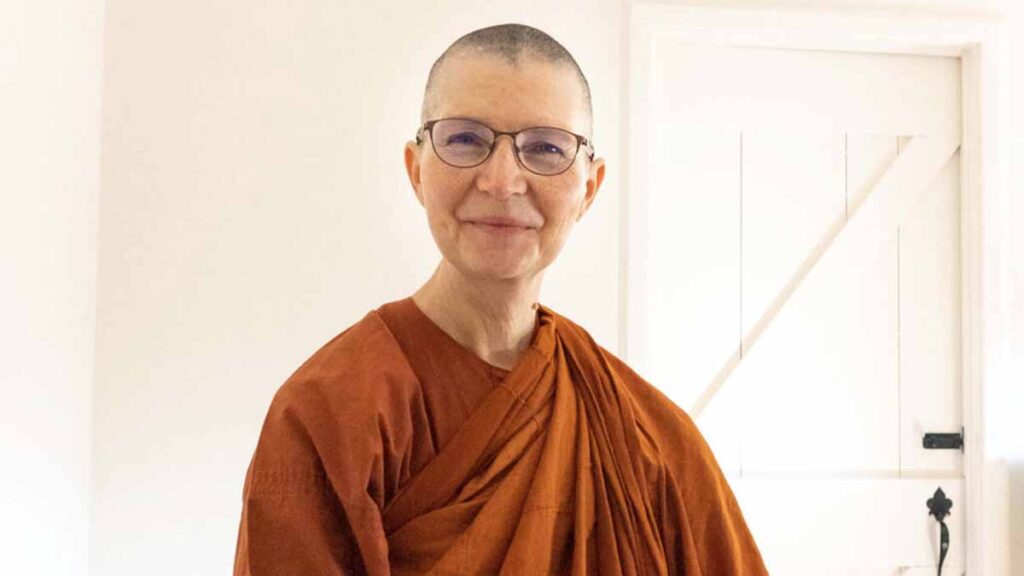
Dhammadīpā
Located in between Alexandria and Arlington, Virginia, the Dassanāya Buddhist Community combines Theravada and Zen traditions to harken back to early Buddhist teachings found in the Nikāyas. The Nikāyas refer to traditional Theravada monastic communities and fraternities found in Sri Lanka within the Buddhist Sangha. Founder Konin Cardenas, also known as Ayyā Dhammadīpā, is a world-renowned Dharma-transmitted teacher in the Suzuki Roshi lineage of Sōtō Zen. Previously, she spent five years ordained in the Theravāda tradition in Sri Lanka from 2019-2024. Dhammadīpā serves on the Sangha Council of Buddhist Global Relief, a non-profit dedicated to providing food assistance, sustainable agriculture aid, and educational support—especially for girls and women. Dhammadīpā also sits on the Board of Directors of the Soto Zen Buddhist Association. She has received Dharma Transmission previously and is an heir to the Soto Zen lineage, recognized in the US and Japan, meaning she has complete authorization to teach and lead communities of laypeople. In her early life, she was originally Catholic, but after reading Taking the Path of Zen by Robert Aitken Roshi, she decided to ultimately convert to Buddhism in 1987. Books such as the ones she read when she was younger have inspired her to become an author. Her work appears in Buddhist publications, including “Lion’s Roar” and “Buddhadharma” magazine. Her newest work, however, is a standalone book titled “Gifts Greater Than the Oceans: Benefits of the Buddhist Practice of Giving,” emphasizing that giving is a fundamental practice for creating harmony and connection, which is a key focus of the Dassanāya Buddhist Community. She also speaks/teaches Spanish as a way for her to connect with her Colombian heritage and expand her reach with the community’s teachings.
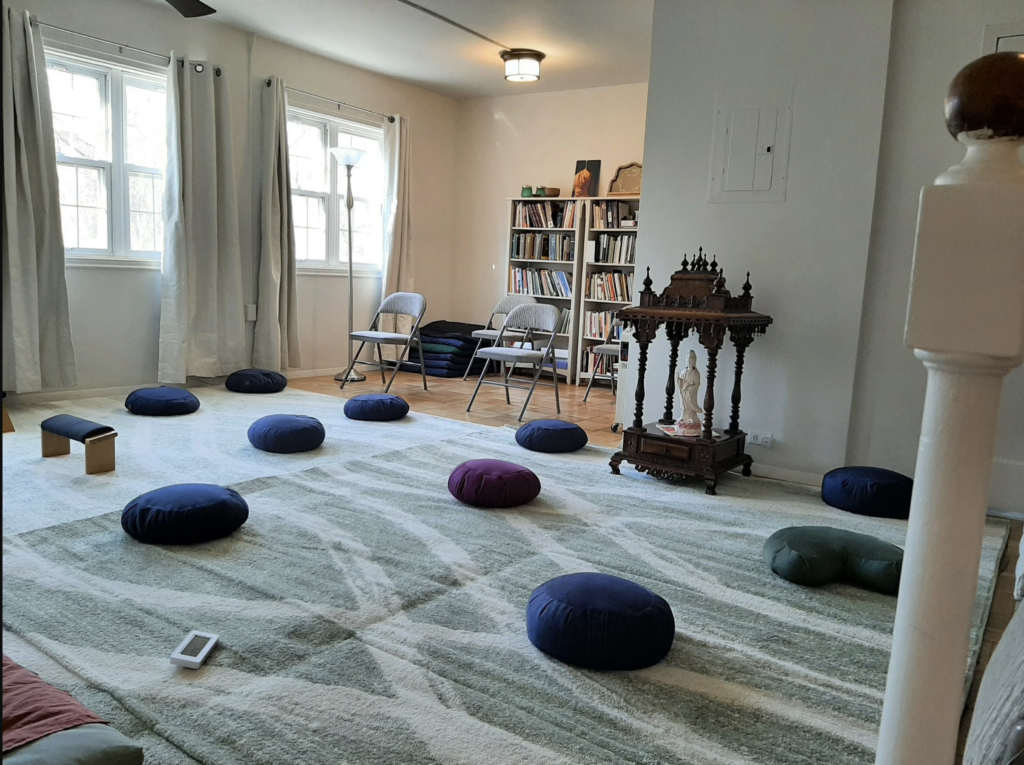
The Dassanāya Buddhist Community heavily advertises that anyone is welcome to attend programs, listen to teachings, and meditate with the core members. As stated previously, the community blends traditional Theravada teachings with Zen Buddhism. This aims to highlight the importance of both old and new ideas, especially in current times where there is lot of division, Dhammadīpā claims. The Temple itself is the house of Dhammadīpā, a repository of teachings on the Buddhist path of discovery, created to support practice and study in four areas: ethics, meditation, service, and contemplative arts. The community is centered on the people rather than any place or single leader. Besides Dhammadīpā, there are many exec members. The 2 teachers in training Rakhi and Stephen Steiner, as well as an elected president Dana Elliott, serve to maintain the temple and help organize events at Dassanāya in conjunction with Dhammadīpā. The name Dassanāya means “for the purpose of seeing” and in the context of the temple, “a gathering of people who come together to see with the wisdom of Buddhism.”
“I aspire to offer teachings that are encouraging, that support people to discover that they are an expression of Dharma. I’m particularly interested in the interplay between stilling and clarifying the mind, and opening to greater kindness and generosity of heart.”
– Dhammadīpā
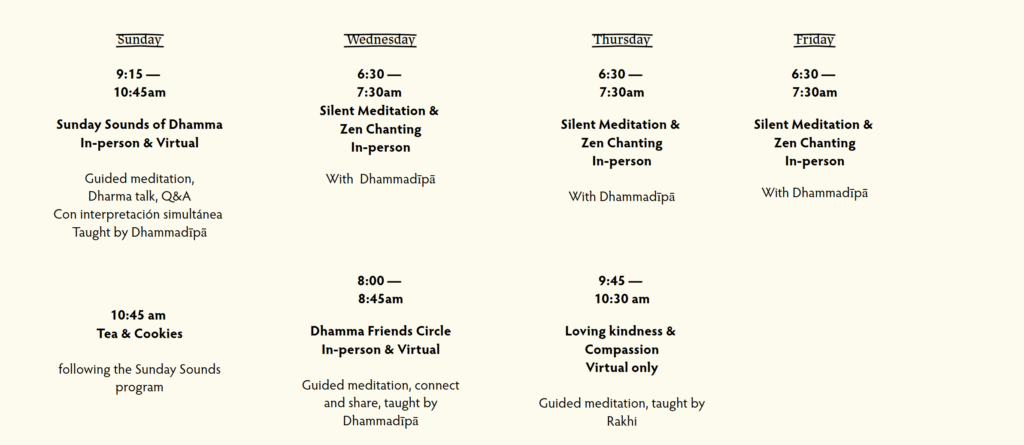
The temple has a website complete with a schedule showing upcoming events at the temple and retreats away from the temple. While the community is most known for their guided meditations in which practitioners can attend in person, there is a zoom where anyone can attend if they can’t make it in person. In the temple, most weekday in-person meetings consist of silent meditation, followed by Zen chanting. Dhammadīpā highlights the fact she wants the teachings assessable for all. She accomplishes this by having recordings of teachings in both English and Spanish as well as a sign language interpreter. All recordings are on youtube and lecture audio recordings are posted on the audio teaching website DharmaSeed.
Fundamentals of Dhamma:
9-month Study Sangha
This nine-month program focuses on developing an embodied understanding of the Dhamma, learning through the body as a way to explore the mind. Dhammadīpā repeatedly points out that the body isn’t just a vessel for meditation; it is the ground of meditation. Mindfulness of the body allows you to see how suffering, grasping, and clarity actually operate. The body becomes the gateway to investigating the mind. The course uses early Buddhist Theravada teachings to help participants bring more awareness, structure, and steady practice into daily life.
The study cycle follows a simple monthly rhythm. In the first week, participants read selected suttas and reflect on their own experiences of the body. On the second Sunday of each month, the whole group meets either in person at the Alexandria temple or on Zoom for a Dhamma talk, guided meditation, and Q&A with Dhammadīpā. Practices are not done alone, Dhamma is viewed as something lived in community and relationships, not just a set of doctrines. The course is offered on a donation basis, and it is offered every few years. Residential retreats connected to the program require separate registration, but the talks from those retreats will be available as recordings.
Themes of the course:
The breath as nourishment and as meditation,
Mindfulness of postures and in movement,
Joy in the body and the development of concentration, and
The body as part of the environment.
Other events and Membership
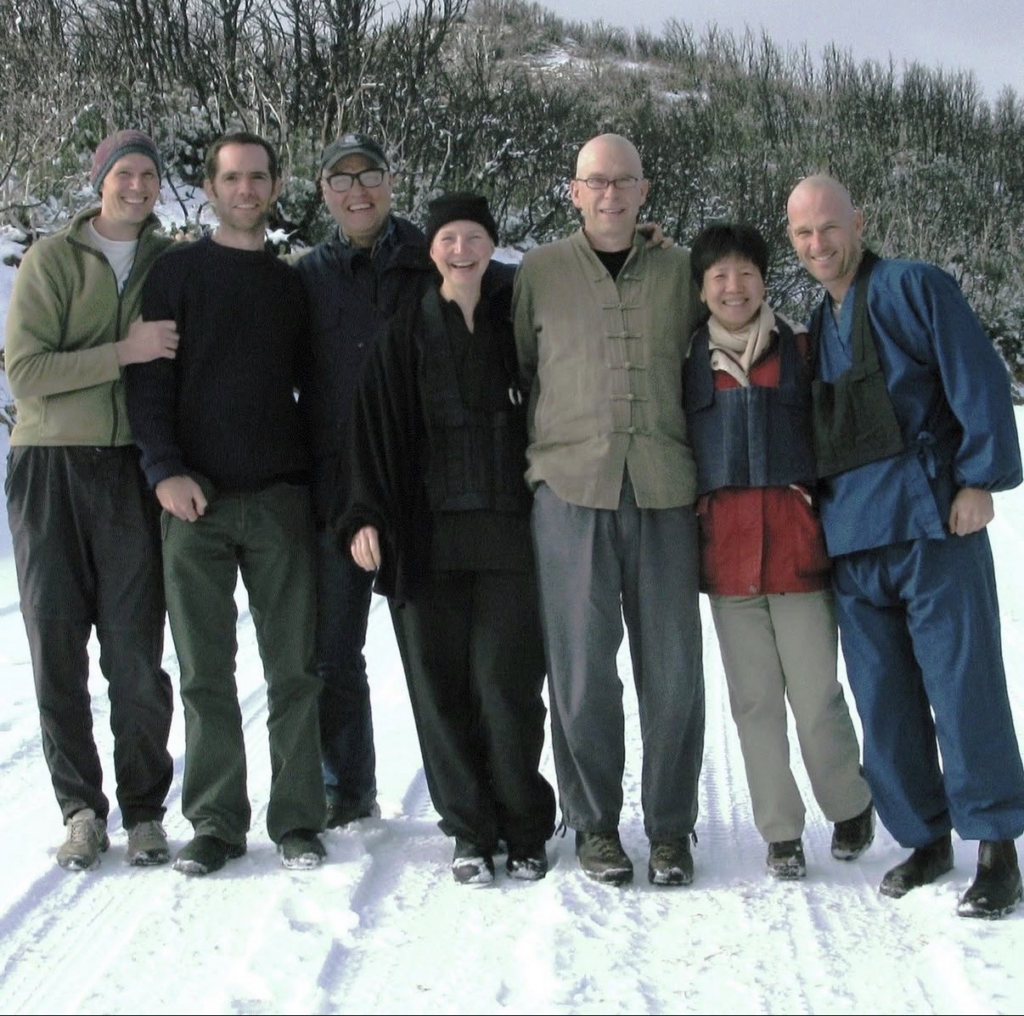
The Dassanāya Buddhist Community is fairly small but gains lots of support through larger Zen centers around the world. Dhammadīpā’s global connections allow the temple to go on many retreats to Sri Lanka and Japan, as well as the San Francisco Zen Center where Dhammadīpā is an active member. All activities and support for the temple is soley donation based, where membership is free. Donations go to support the four traditional requisites (food, clothing, lodging, and medicine) for Dhammadīpā as well as overall maintenence to the temple and other individuals who may temporarily reside there. The community also has lots of outreach that include Instagram, Facebook, Youtube, and the previously mentioned DharmaSeed.
Works Cited
https://www.sfzc.org/teachers/dhammadipa
https://dharmaseed.org/teacher/631