As Buddhism has developed in the west, many fascinating adaptations have been made to the religion. One such group that has made its way into the west is the Diamond Way Karma Kagyu Lineage. With centers all over Europe and North America, the lineage is flourishing even outside of Tibet. This report will summarize the foundations of the lineage and will analyze the practices of a Diamond Way center in Houston, Texas.
Historical Origins
The Diamond Way Karma Kagyu Lineage holds the historical Buddha, Siddhartha Gautama, as the founder of their linage. The Buddha, who was born into a wealthy family, abandoned princely comfort to seek enlightenment. The Buddha sought enlightenment and liberation after seeing “the four signs:” a sick man, an old man, a dead man, and an ascetic. The visualization of these signs made the Buddha realize that nothing is truly permanent; thus, one should seek enlightenment and liberation from the cycle of re-birth. After six years of ascetic practice, the Buddha obtained enlightenment. During the forty-five years after his enlightenment, the Buddha continued to teach the Dharma to ascetics and monastics [1].
The Lineage and Founders
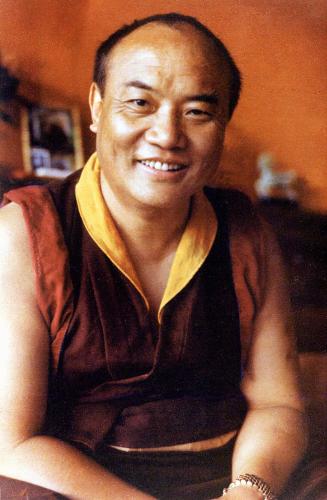
The Diamond Way Karma Kagyu Lineage is one of four branches of Tibetan Buddhism. The lineage is led by an incarnate Karmapa. Since the lineage’s founding in the eleventh century, seventeen Karmapas have led and maintained the tradition. The Diamond Way school still closely adheres to the teachings of the former sixteenth Karmapa and the current seventeenth Karmapa. The sixteenth Gyalwa Karmapa, Rangiung Rigpe Dorie (1924-1981) was born in the Derge province in Eastern Tibet. Because of a series of political uprisings, he was forced to flee Tibet. Even though he was forced to continue the lineage outside of Tibet, he was the first to spread the Tantric Kagyu teachings to the west. Because of the efforts of the sixteenth Karmapa, Buddhism is now accessible in Europe, North America, and around the world.
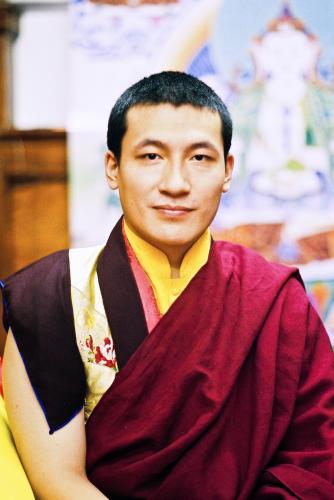
After the death of Rangiung Rigpe, the seventeenth Gyalwa Karmapa, Trinley Thaye Dorie (b. 1983) was declared his incarnate successor. Trinley Thaye Dorie and his family fled from Tibet into Nepal, and then into India, where he still resides. He was given a formal Buddhist education, and in 2003, Trinley Thaye Dorie was declared a “Great Tantric Master.” The seventeenth Karmapa has continued to lead and expand the linage’s reaches into the west.
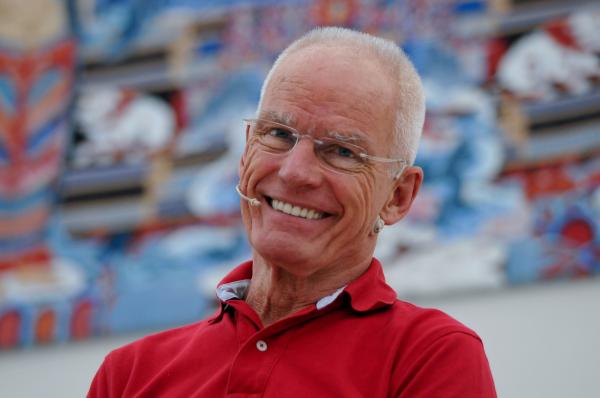
In addition to the leadership of the Karmapas, Lama Ole Nydhal is an additional leader of the lineage. Lama Nydhal was a student of Rangiung Rigpe. He was the first western disciple of a Karmapa, and Lama Nydhal and his wife, Hannah, are credited with bringing and establishing the Karma Kagyu Lineage in America and in western Europe. Lama Nydhal has established over six hundred Diamond Way Karma Kagyu Buddhist centers in forty-four different countries. Lama Nydhal wanted to give the west access to the peaceful way of life generated by meditation and Tantric study. Lama Nydhal believes that enlightenment ultimately produces “fearless [living], joy, and active compassion while remaining effortless and spontaneous in whatever happens” [1]. This transcendent perspective removes the descriptors of past, present, and future—all simply is.
Meditation and Teachings
The Buddha’s teachings are essential for the Diamond Way Karma Kagyu Lineage. The Diamond Way believes that these teachings are applicable to daily living, and when directly applied to moral actions, one can cultivate an “enlightened way of living.” True enlightenment is found when individuals develop an appreciation for “the way things are.” This perspective is cultivated by not ascribing feelings and emotions to reality; rather, one sees nature as impermanent. The Buddha’s teachings allow one to maintain a life of devotion and intentional action [2]. Buddhist practices create an “inner compass” that guides one towards lasting happiness and an enlightened way of living.
By combining the teaching of the Dharma and the practice of meditation, inner insight is gained on how to incorporate Buddhist ideology into every aspect of daily living. Only true lasting happiness and inner peace is gained through living in accordance with the teachings and practices of the Buddha. The Diamond Way holds that the Buddha did not create a set of harsh dogmas or rules; rather, the Buddha offers meditation as a way of cultivating personal experiences that lead practitioners to a state of inner peace. Living in a conditioned state (i.e. a state of being owed to the constant influence of the Dharma) of inner peace makes proper bodily forms, correct speech, and an enlightened mind possible. Each of these states of being creates fearless living, lasting joy, and abundant kindness for oneself and for others [1].
To further the quest for inner peace, the Diamond Way uses the Vajrayana teachings as a way to viscerally transform the elements body, speech, and mind. Vajrayana, meaning diamond way in Sanskrit, is the foundation for a special “vehicle” that leads to enlightenment [3]. The Vajrayana teachings proclaim that every individual has an innate buddha nature. These teachings also endorse that reality is truly empty, and that compassion and insight lead to lasting peace. When one realizes that there is no difference between self and non-self, happiness, peace, and joy is found. The Diamond Way believes in the generation of karma; thus, inner peace is cultivated to prevent future suffering [1].
International Influence
The Diamond Way School has a prominent international influence—from the center in Houston to the far reaches of Australia. Annual international meetings are held to continue the teachings of the Buddha in a more modern setting and context. A variety of lectures, meditation retreats and courses, and other events are held in both America and western Europe each year. During the past two years, large groups of international practitioners have gathered in Germany and in New Zealand to learn from the Buddha’s teachings and to participate in the meditative practices of the Diamond Way Karma Kagyu Lineage [2]. These meetings not only bring awareness to the Buddha’s teachings, but they also maintain international relations between Diamond Way centers from all over the globe.
Key Issues and Practices of the Diamond Way Houston Center
As Buddhism spread to the west, the Diamond Way has established a platform on many key Buddhist issues. Specifically, the Diamond Way Houston Center has two areas of focus: community relationship building and living with the understanding that karma is generated through action. Rather than creating an isolated group of practitioners, the Diamond Way Houston center has chosen to open their doors to all. The Houston center believes that the Buddha wanted everyone to have access to the teachings that lead to enlightenment. They believe that the happiness and truth of the Dharma should not be reserved by any one particular group; therefore, the Diamond Way center in Houston makes every effort to have an inclusive environment. The Houston center maintains a transparent organizational model that is rooted in the foundations of friendship and volunteer work. Lay practitioners facilitate many if not all of the center’s activities. Members share the responsibilities of leading meditations, planning weekly meetings, and coordinating special monthly activities.
Members believe that negative karma is incurred through harmful actions. For the Diamond Way School, karma is incurred via cause and effect. This prompts members to live in a conditioned upright and just state, in order to first create positive karma and then to bestow loving-kindness to all. The experiences and choices that one makes today will have an effect on the future. Through meditation and the implementation of the Dharma, practitioners are able to create lasting and permeant values that allow one to live a happier and more peaceful life. This “permeant mental state” is created by taking refuge in the teachings (Dharma), in community (Sangha), and in teachers and leaders (Lama) [1]. These facets of the Buddhist tradition encourage practitioners to consider their actions with utmost discretion, while drawing practitioners closer to enlightenment.
Ethnic Composition
The Houston Center is ethnically comprised of predominantly Caucasian-American citizens. Even though the lineage is a Tibetan tradition, the work of Lama Ole has made Buddhism available to those who are not ethically tied to Buddhist traditions. Many of the practitioners in the Houston community are discovering the teachings of the Buddha for the first time. Coupled with the fact that all of the centers activities are volunteer led, the constituency of the center is comprised of local Texans who wish to meditate and learn in an inclusive environment [1].

Houston Center Activities
Meditation is central to not only the Houston center but to all Diamond Way practitioners. The Diamond Way School believes that meditation is the practice of “effortlessly remaining in what is” [1]. This state is only found in the calming of the mind. The Houston center uses a “Guru Yoga Meditation” from the sixteenth Karmapa as the guide for their weekly meditation practices. Meditation calms the mind and it allows practitioners to understand the unity of totality—noting is truly disparate. Meditation serves as a path from which enlightenment is obtained, as one is able to abandon attachment in the pursuit of true peace and understanding.
The Diamond Way Houston Center hosts a variety of activities each month. On Wednesdays and Sundays, groups gather for a brief talk about a Buddhist topic, which is followed by a guided meditation. An additional group of Ngondro practitioners gather each week for instruction and meditation. In order to continue the center’s goal of inclusion, an open house is held on the first Sunday of each month, in order to welcome those who are interested in meditation and Buddhist teachings. This monthly gathering includes both social and meditative elements. On the second Sunday of each month, a group gathers at a local restaurant for an evening meal. And on the third Sunday of each month, a “Dharma Movie” is shown [1].
The Diamond Way Houston Center strives to make activities available to all. Many events are held on Sunday, which is commonly held as the “western day of rest.” This allows for many to participate and enjoy what the center has to offer. The Houston center brings together the teachings of the Buddha, the traditions and teachings of the Karmapas, and meditative practice for local Texans to enjoy and learn from.
[1] http://www.diamondway.org/houston/
[2] https://www.diamondway-buddhism.org/
[3] Keown, Damien. “Kagyü.” In A Dictionary of Buddhism. : Oxford University Press, 2004. http://www.oxfordreference.com/view/10.1093/acref/9780198605607.001.0001/acref-9780198605607-e-867
— Kathryn R. Eckler