Written by Kirby Ann Smith
History
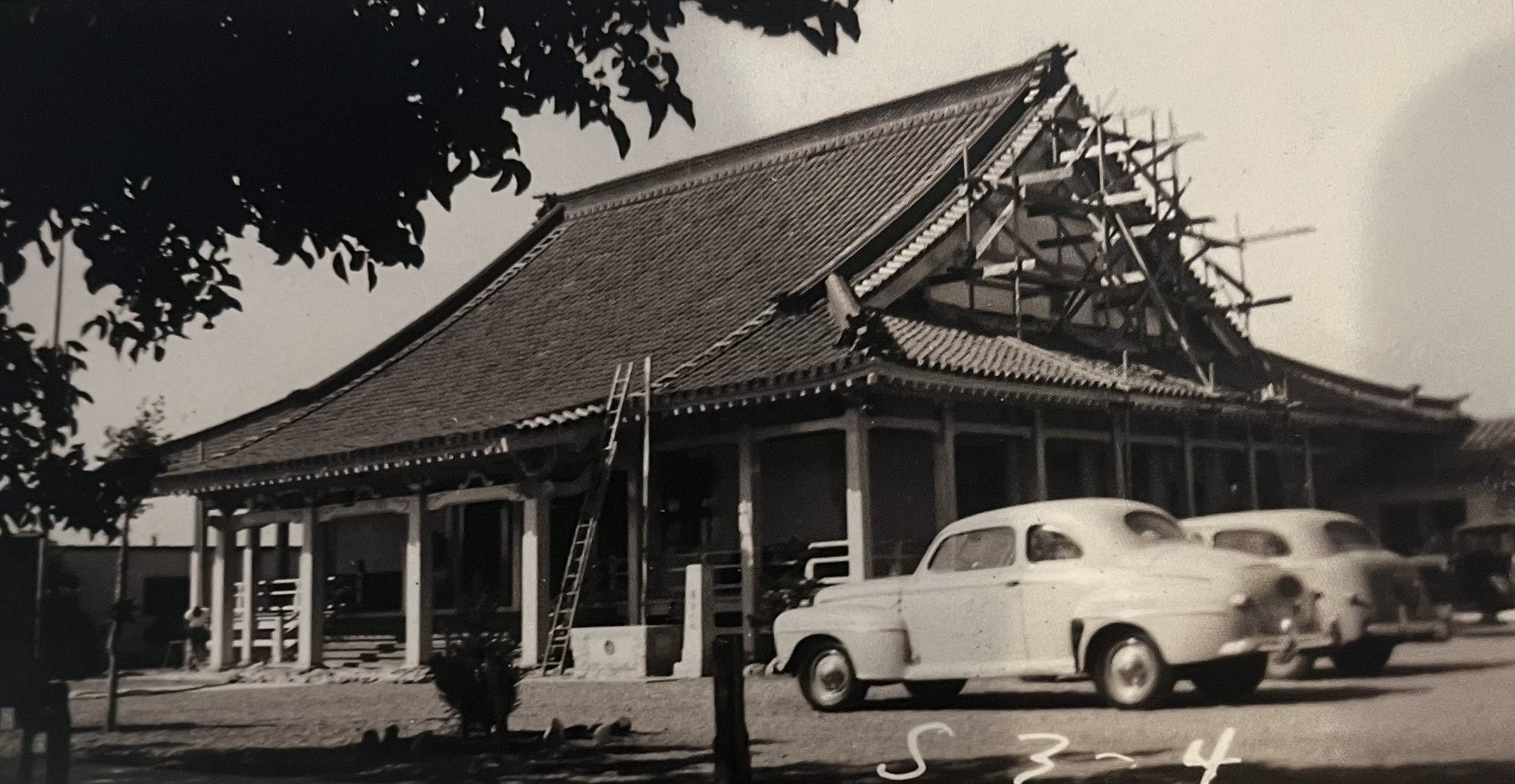
The San Jose Buddhist church founded in the early twentieth century in the year 1902 was created not by one Buddhist, but a group of Japanese Buddhists. This group was called the Japanese Buddhists of Santa Clara County. They belonged to the Jodo Shinshu Tradition of Buddhism – a tradition started centuries before by Shinran Shonin (1173 – 1263). It is believed that the founders can be traced to the early Issei pioneers who came to the US to work on railroads and later farms in the Santa Clara Valley.
The church was originally recognized as the “San Jose Branch of the Jodo Shinshu Mission to North America”, but over time it became known as the “San Jose Jodo Shinshu Mission”. Though founded in 1902 the first temple for the site was constructed five years later in 1907 and is now converted into a home. The main temple was designed and built in 1937 by the Nishida brothers who apprenticed in Japan. It only gained its “Betsuin” designation in 1964 due to its sheer size and position in the San Francisco Bay region. Because of the Betsuin designation, in the 90s the church converted a former bridal space into offices and started renovations to keep up with modern building standards. Some other alterations have been made as well during this century. This includes the alter that was redone by a Japanese artisan on the centennial of the church. In addition, an elevator has been added for accessibility, and many other renovations and reinforcements have been made.
During the War
During the height of World War II around 125,000 Japanese Americans were taken and imprisoned in internment camps across the western United States. This of course caused many issues within Japanese-American communities. The San Jose Buddhist Church served as a storage space for the valuable belongings of those interned at this time. A local attorney, J.D. Peckham, took care of the temple and the belongings for those years. He even would patrol the grounds himself to ensure its security.
In the years following the atrocities of World War II both foreign and domestic, the San Jose Buddhist Church was an integral part of rebuilding the San Jose Japanese-American community and surrounding ones. Most of those who lived prewar in the area returned and others relocated to San Jose. In all, membership at the temple rose to over 1,200 additional families than before the war. The massive growth of membership led to the building of the Annex Building in 1954 along with an education building.
Today
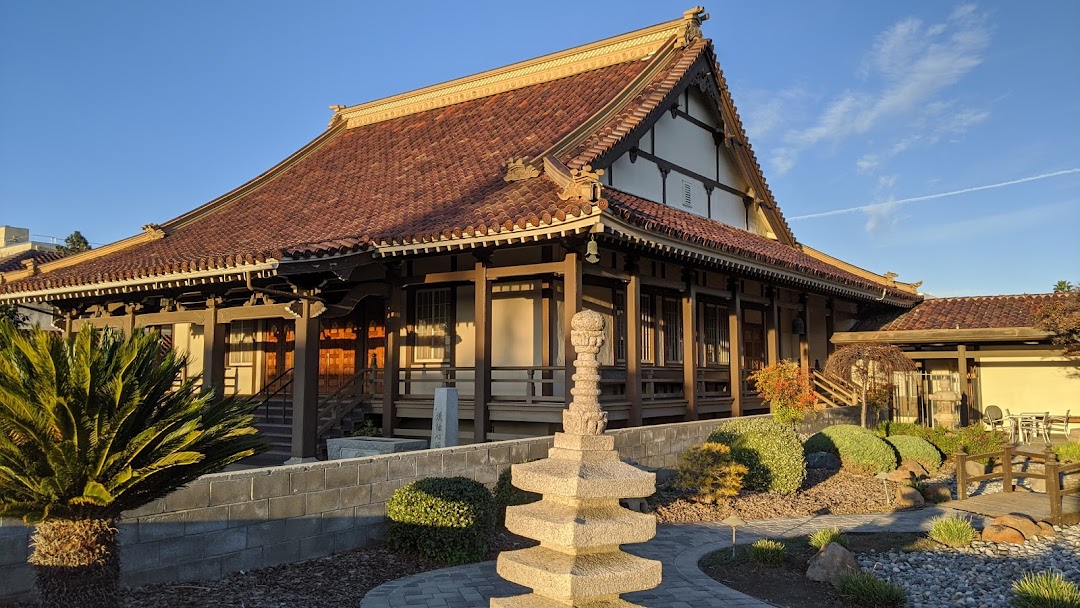
The San Jose Buddhist Church is currently home to 700 families of mixed cultural and ethnic backgrounds. Over the past 100 plus years 35 ministers have served the temple. They, along with the extensive board of directors share the mission statement: “We are striving to create an inclusive environment of unconditional acceptance, respect and gratitude where we honor the past, appreciate the present, build for the future, and learn to engage in a life of compassionate action.” Peace, happiness, and education are what the church has prided itself on since it was founded.
To support the ever-growing number of families the church is home to, local tech billionaire Chris Larsen and his wife Lyna Lam are helping to fund the new $25 million expansion in addition to their funds from their non-profit. Their goal is to make San Jose Buddhist Church a refuge and source of community for Buddhists in the region. According to SiliconValley.com, this would make the church a first for the region.
Wealthy doners are not the only source of income for the church. Membership includes fees to maintain the temple that can cost up to $1000 annually. There are varying costs depending on family size and age to make membership more affordable to all. Additionally, there are events such as the San Jose Obon festival that occurs in June and an annual golf tournament that participants can win skins and cash prizes at.
All of these funds go towards the wide variety of clubs, organizations, and programs available at the San Jose Buddhist Church. Educational programs include preschool and youth programs as well as Japanese language classes, Buddhism study classes, and a Dharma School. Classes such as these provide a solid foundation for youth and converts to begin their Buddhist path and help longer members to retain information and continue their learning.
Other funding goes to the disaster relief fund that aids those in surrounding communities. The Buddhist Church provides service to those inside and outside their community in a variety of ways. This includes but is not limited to cooking meals for the homeless and impoverished, volunteering at hospitals for spiritual care, and supporting the elderly. Some of the clubs also contribute to service causes such as the Dana Club of selfless giving and cooking club among others.
Clubs are not limited to service at the church. There are many more lighthearted clubs that build community and joy. There is even an aloha club that is “all things Hawaii” and a game club that hosts a large number of games for members.
Religious Services
There are separate youth and adult services on Sunday mornings. Adult religious services are comprised of meditation, chanting, rituals, and Dharma talks focusing around the Shin principles. Service is followed by a fellowship with refreshments. The Sunday morning religious practice mimics that of much of western religion. The church has an aim to accommodate “ordinary” people as well as monks. According to the ministers at the church, services include foreign words, perspectives, and rituals that may seem difficult to comprehend, while contemporary interpretations reveal the relevant truths that are conveyed. They also place emphasis on patience and gratitude while practicing the Jodo Shinshu Hongwanji-ha path to awakening. Services are also recorded and uploaded to the San Jose Church Website for members to watch if they cannot make it to a service.
Much of the teachings are adapted for American-born participants and others of multicultural backgrounds. Though predominantly of Japanese descent, there are a variety of people from other East Asian countries such as Cambodia and Vietnam that came over following the Vietnam War and others from western backgrounds. There is a family-oriented focus to the church and emphasis on building community within while embodying Shin values in everyday life. Ways to do so are listed on the church’s website as follows:
- 1) Gratitude (Thank you) Shinran realized that ordinary people could not adhere to the strict precepts demanded of monks, due to their responsibilities to support their families. He articulated another of the Buddha’s paths of awakening, specifically for the common person. Gratitude is familiar to all of us and reveals our humility, respect, and sense of harmony. Daily expressions of gratitude reveal the truth that we are constantly receiving benefits from the efforts of others. This rewarding perspective can be practiced at any age and at any time. This attitude can transcend a person toward the spiritual realm.
- 2) Dharma (Buddhist Teachings of Truth)
Upon his enlightenment, the Buddha based his teachings on natural laws, not on blind belief, nor on the action of gods. The following are true of all things on earth. Impermanence- All things change. Only the present moment, NOW, is the only reality. Past & future are only thoughts.
Interdependence- All things are connected and affect each other and thus nothing exists alone. - 3) True Nature of the self (Insightful introspection)
Our conscious mind determines suffering or bliss. Focusing mainly on our ego-self brings discontent. By aligning with natural laws (Dharma) and others, our awakened mind brings harmony and joy. Self is an integral part of the whole as a family, community, and world. By expanding our sense of self to include others means everyone is accepted just as we are. ME=WE.
There is an interesting interpretation of Buddhist teachings within the list. For example, one of the core teachings is the concept of not-self which appears to not be taught from the language used in the third bullet. This may be a method of easing lay people into the idea of not-self by using self to describe not only a person, but a community. It is a unique way of teaching the values of the Buddha to lay people, or as the church refers to them, “ordinary people”.
Positives
The San Jose Buddhist Church was built on a long historical foundation and has changed greatly over the span of 100 plus years it has operated. Through all of the years, however, it has maintained its core values associated with the Jodo Shinshu Hongwanji-ha tradition. Its family- and community-oriented focus allows it to keep a strong number of members and sustainable income. Unlike many other Buddhist communities in the West that have been around for many decades, San Jose Buddhist Church has no reports of crime or misuse of funding. Even serving as a safe place for targeted Japanese-Americans during World War II, it has been a long standing rock for the community and will continue to for years to come, especially with the new $25 million improvements taking place.
Other Information
Located at 640 North 5th Street San Jose, CA 95112
Contact: (408) 293-9292
Website: https://www.sjbetsuin.org/
Sources