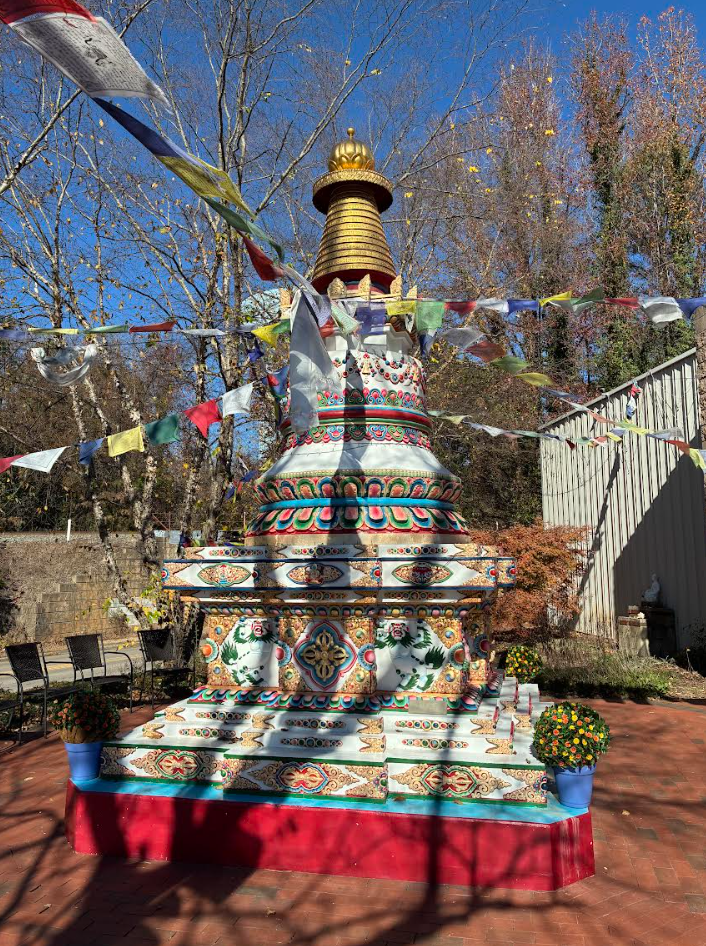
The Kadampa Center is a Tibetan Buddhist community located in Raleigh, North Carolina.
___
Founder

The Kadampa Center was founded in 1991 by Don Brown as a place to practice and study Tibetan Buddhism. Brown was a student of Lama Yeshe and became a teacher at his suggestion. He has served many roles at the Kadampa Center, including Spiritual Program Coordinator, board member, and Center Director.
His teacher, Lama Thubten Yeshe, studied at Sera Monastic University in Tibet until, in his own words, “the Chinese kindly told us that it was time to leave Tibet and meet the outside world.” He, along with Lama Thubten Zopa Rinpoche, began teaching Tibetan Buddhism to western students.
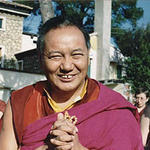
Lama Yeshe’s teachings resulted in the creation of The Foundation for the Preservation of the Mahayana Tradition, which the Kadampa Center is a part of.
___
Traditions
As part of the FPMT, the Kadampa Center upholds their core values and goals. This means the center focuses on preserving and spreading Mahayana Buddhism around the world by giving the public ways to reflect, listen, practice, meditate, and actualize Buddha’s teachings. They also teach people to spread the Dharma to other sentient beings based on these experiences. Their main goal is to be a harmonious environment that helps all beings find their infinite wisdom and compassion.
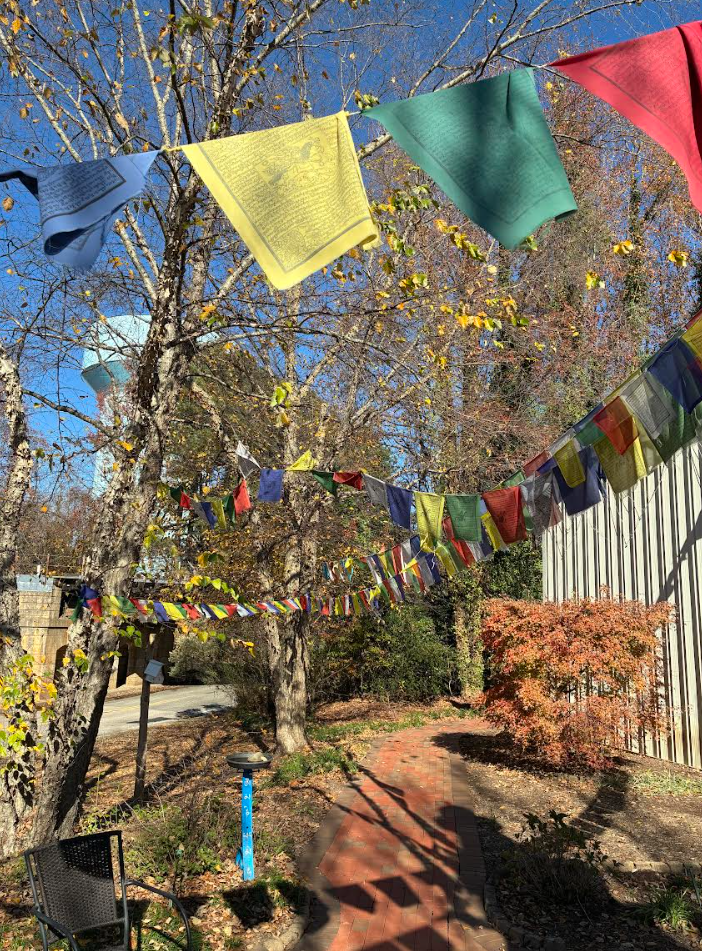
The Kadampa Center has Tibetan Prayer Flags hanging outside. These flags are inscribed with sacred texts and carry messages of wisdom and compassion. They are believed to spread blessings to all beings since these messages are carried by the wind. There are five colors of prayer flags and each one has a specific meaning. Blue symbolizes the vastness and open-mindedness of the sky, red represents fire and is associated with passion and transformation, white symbolizes the purity and compassion of air, yellow stands for the fertility and stability of the earth, and green represents water’s harmony and balance. As old flags wear out, new ones are hung. Hanging these flags can be a reflective and mindful experience, as individuals can connect with the divine and offer prayers for both themselves and others.
Another tradition is honoring the teachers at the center by saying Long Life Prayers for them. Years ago, Khensur Rinpoche suggested that 200,000 Tara mantras be written and dedicated to Geshe Gelek’s long life (one of the teachers at the center). In 2016, the center also asked about a long life prayer for Geshe Sangpo, another student of Khensur Rinpoche, and he advised them to expand the dedication to include him as well. These mantras are recited near the end of every Dharma Talk and are in the very front of every gold prayer book. Members don’t just say these prayers, though, they can also write them. Anyone can add their own mantras dedicated to the long lives of these Geshes through their website. The center counts their total number of mantras for these teachers and are currently up to 1,236,972.
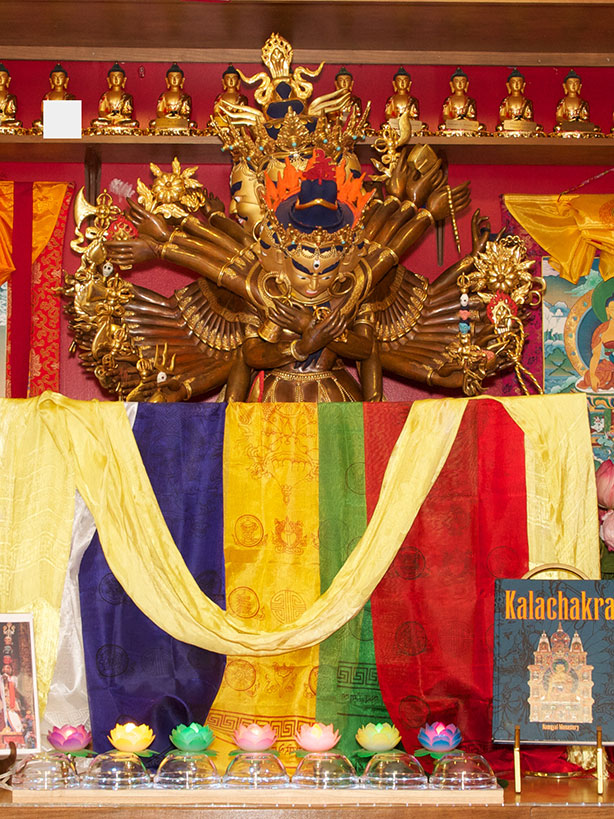
The altar is also an important aspect of the Kadampa Center. This altar is open to all members and everyone is always allowed to offer flowers any time of the year. In the winter, when the flowers from the garden aren’t as plentiful, donations are especially appreciated.
Volunteers are vital for keeping the altar looking its best. There is a team who makes sure the statues are polished and the altar is clean. They set up a special water bowl as well as offerings for practices and pujas. These are merit-making learning opportunities.
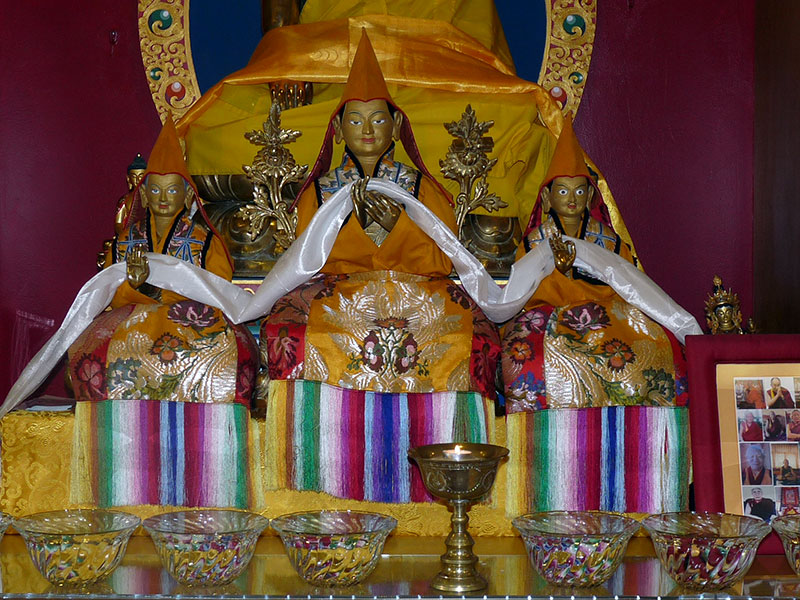
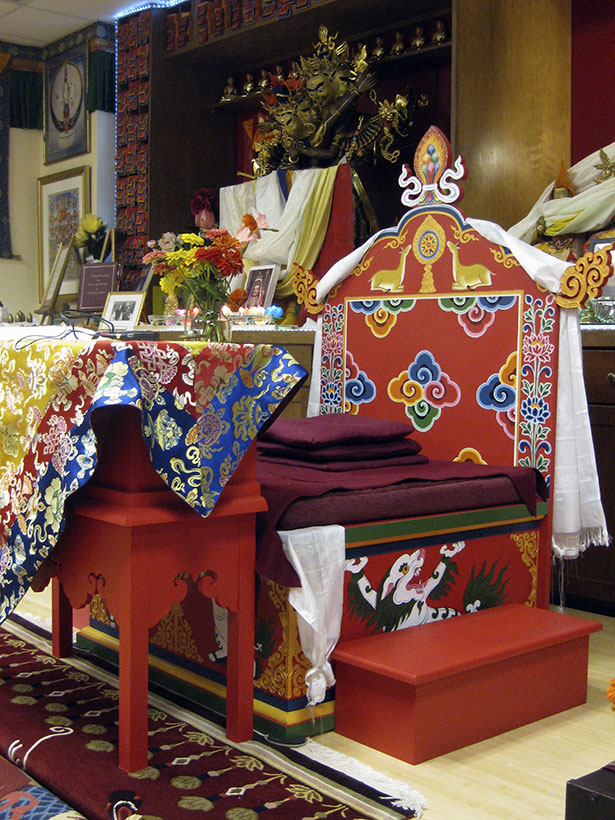
Many objects are included on the altar. For example, many Tibetan Buddhist Scriptures hang on the wall on the right side of the altar, Water Bowl and Lotus Light Offerings sit on a shelf (when one offers this water, they visualize it transforming into drinking water, perfume, flowers, etc. to cultivate generosity), and the throne (which symbolizes respect for the Buddha’s teachings) is front and center.
___
Relationship to Other Communities
As mentioned earlier, the Kadampa Center is part of the Foundation for the Preservation of the Mahayana Tradition. Through this, the center is connected to a variety of monasteries, nunneries, meditation centers, health clinics, prison programs, hospice services, and much more. There are 132 centers like the Kadampa Center in North America, Latin America, Europe, the Middle East, Africa, Asia, and the Pacific Region. These all invite visitors and students alike to follow the spiritual leadership of Lama Thubten Yeshe and Lama Zopa Rinpoche.
The center also hosts weekly meditation workshops thanks to Kadampa Center Prison Project volunteers. These workshops utilize meditation to overcome addictions and negative emotions, helping prisoners more successfully navigate life both inside and outside of prison. They now offer aftercare support and even have the opportunity for students to continue learning with a pen pal.
The Kadampa Center Prison Project was a model for The Liberation Prison Project, which is also associated with the FPMT and is focused on providing Dharma books/materials, advice, and teachings to those in prison who wish to study Buddhism. It started in 1996 and has helped over 20,000 people explore and study the practice of Buddhism in prisons around the globe.
___
Constituency and Teachers
The Kadampa Center is open to anyone who is interested in the study and practice of Tibetan Buddhism. A sense of community is important and they encourage members to participate in any way they are able. Some people enjoy being involved in the formal rituals and practices, while others are more inclined to simply enjoy Sunday Dharma in the company of others. Opportunities are also offered to members. People can choose to help clean, fill offering bowls, set up for events, manage an event, lead a class, or even become a member of the management team. These opportunities are extremely varied, so people of all levels of interest can participate.
As for the Sangha,

Geshe Gelek Chodha was born in Sikkim, India. When he was seven, he went to Sera Jey monastery to become a monk. In 1997, he achieved the degree of Geshe Lharampa. He was eventually requested to come to the Kadampa Center by Lama Zopa Rinpoche and became the resident teacher in 1999.
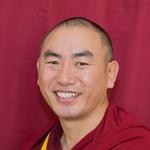
Geshe Palden Sangpo was born in Kham Karze (Eastern Tibet) in 1972. At twelve years old, he left his hometown to go to Sera Jey Mahayana Monastery in India. After 17 years at this monastery, he graduated as one of the youngest people to ever get a Geshe degree.
At the suggestion of his teacher, he then spent one year at Gyudmed Tantric Monastery to study tantra. Once he returned to Sera Jey Monastery, he was elected Administrator of Sera Jey Healthcare Community. Geshe Sangpo’s area of expertise is ritual practice and he was a leader of a Haya Griva practice group for five years in Sera Jey Monastery. In 2008, he moved to Raleigh, where he has since taught many classes and guided people on ritual practices at the Kadampa Center. He has also given lectures on Tibetan Buddhism at many universities around North Carolina. In 2014, Geshe Sangpo was approved to be a resident teacher at the Kadampa Center.
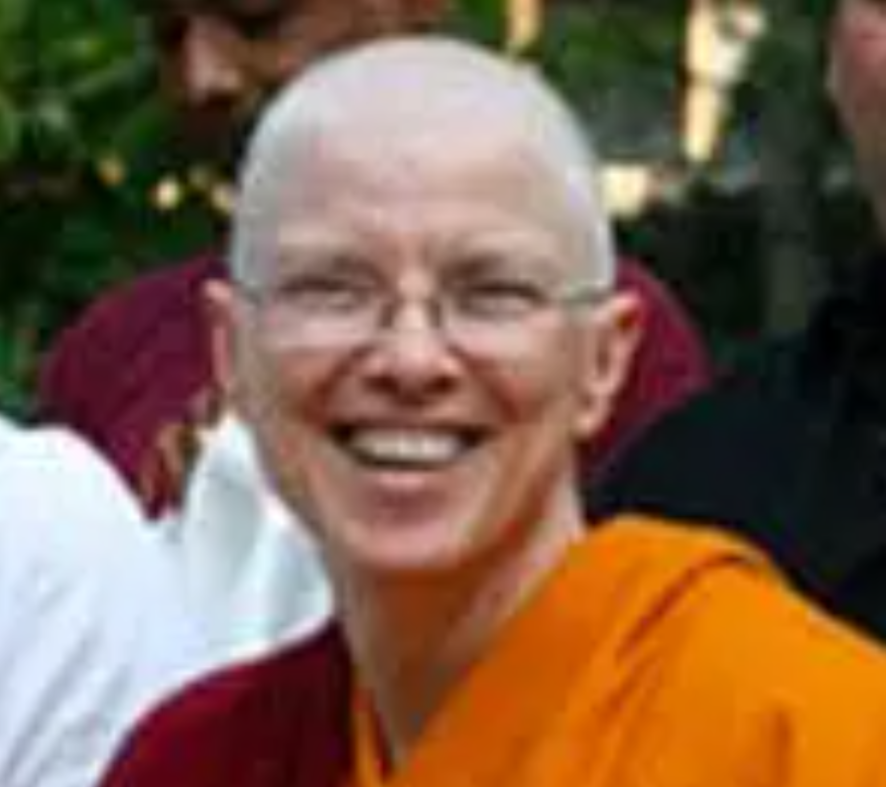
Venerable Lhundub Tendron took refuge at the Kadampa Center in 1997. She requested ordination with the guidance of Geshe Gelek and took ordination in 2002. She later joined the Chenrezig Nuns Community in Australia to learn from senior nuns and build a foundation for living in vows.
She studied the Basic Program there and completed it in 2007. She eventually came back to the Kadampa Center as a teaching assistant and spiritual program coordinator. In 2016, she moved to Deerfield Beach in Florida to be the resident teacher at Thubten Kunga Ling.
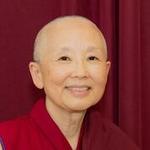
Venerable Ngawang Lhamo joined the Kadampa Center in 2004. She was one of the students who was ordained at the Kadampa Center’s very first ordination ceremony in 2009. She has served in many positions at the center, including chantmaster, puja coordinator, and meditation leader.

Venerable Ngawang Choekyi joined the Kadampa Center in 2003. At first, she was a Discovering Buddhism student, then became a board member and a student of the Basic Program, and finally an ordained nun. From 2009 to 2010, she took ordination with Khensur Rinpoche Jetsun Lobsang Delek in India. She returned in 2018 to take Getsulma vows.
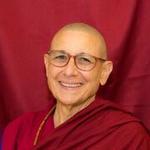
Venerable Ngawang Khando took refuge at the Kadampa Center in 2001. Thanks to the guidance of Geshe Gelek, she became ordained in 2013. Since then, she has studied and practiced the Dharma to the best of her ability.
___
Practices and Events
The Kadampa Center holds Dharma Talks every Sunday from 10:30 to noon. The topics vary from week to week, but some previous talks have been about joy and the benefits of Bodhicitta, anger and the Dharma, and gratitude. At the beginning, everyone present reads selected prayers from the golden prayer books provided. Then, at the end, long life prayers are said for Geshe Gelek and Geshe Sangpo. These talks are offered both in person and over zoom.
Three types of programs are offered as well. Introductory programs serve as a starting point for those new to Buddhism and/or the Kadampa Center. Next, there are foundational programs. These are classes and practices that teach the fundamentals of Tibetan Buddhism. Lastly, there are intermediate programs. The material here is more in-depth so it is suggested (and sometimes required) to have completed the introductory programs first.
The Kadampa Center also offers retreats, visiting teachers, and celebrations and practices on Buddhist holy days.
A children’s program is once again being offered for those ages five and up. A class is offered on the second Sunday of every month where kids say morning prayers and are taught a curriculum based on the 16 guidelines.
New Year’s Eve Purification Practice is done by the Kadampa Center. It’s based on a fire puja which consumes bad karma out of compassion and is open to all ages and levels. Part of the practice includes visualizing one’s negative karma as black sesame seeds and throwing them into a fire. This is a way to start the new year fresh, as you show the regret you have for your old mistakes and your resolution to start anew.
At least once a year, the center holds Animal Blessing and Liberation. This is a ceremony held to bless pets and free animals that would otherwise have been killed, such as bugs sold for bait or pet food. Visitors are also more than welcome to bring their pets to the stupa year-round. Walking around the stupa is a way to bestow very powerful blessings onto your pets.
___
Funding
Everything at the Kadampa Center is offered free of charge. The center runs entirely on voluntary monetary donations, in addition to those who volunteer their time, energy, and talents.
by Cora McCracken