Categories
Uncategorized

Padmasambhava Buddhist Center of Tennessee

Mikaela Hutchinson

Buddhism Research Report

The Padmasambhava Buddhist Center of Tennessee is part of a larger international network of Nyingma Buddhist communities founded by Khenchen Palden Sherab Rinpoche (1938–2010) and Khenpo Tsewang Dongyal Rinpoche. Both brothers grew up in the Dhoshul region of Kham in eastern Tibet near the mountain Jowo Zegyal, in a family deeply connected to the local monastery, Gochen Monastery. Their father handled important administrative responsibilities there, and their grandfather served as chant master in charge of ritual ceremonies. The brothers often mention that they grew up surrounded by constant prayer and mantra recitation, since their father prayed late into the night and early in the morning. This environment shaped their understanding of discipline, devotion, and daily practice long before they began their formal monastic training.

After leaving Tibet, the Rinpoches continued their studies in India and became respected Nyingma scholars and teachers. When they began teaching in the United States, they quickly developed a following among students interested in Tibetan Buddhism and the teachings of Guru Padmasambhava. They first visited Tennessee in 1987, and interest grew fast enough that by 1990 the Tennessee branch officially formed. What started as a small meditation group eventually became one of the most active Tibetan Buddhist communities in the region. Today, members gather at the Yeshe Tsogyal Temple in Nashville and attend retreats and teachings at Padma Gochen Ling, a retreat center located outside Monterey, Tennessee. These two locations function as the physical and spiritual centers of the local community.

Padmasambhava Buddhism Center of Tennessee practices within the Nyingma school of Tibetan Buddhism, which is the oldest of the Tibetan traditions. The Nyingma approach emphasizes early tantric texts, treasure teachings revealed by Padmasambhava’s disciples, and the study of Dzogchen, a system of practice aimed at recognizing the natural state of the mind. Because Nyingma is part of the larger Vajrayana tradition, the center also uses ritual, visualization, mantra, meditation, and symbolic practices. These methods form the foundation for spiritual development in the lineage. Teachings at the center follow the transmissions passed down from the Rinpoches, and there is a strong focus on correct ritual performance, accurate understanding of Buddhist philosophy, and maintaining connection with the lineage.

Although PBC-TN is not a residential monastery, many of its routines mirror the structure found in traditional monastic communities. Members participate in regular meditation sessions, chanting practices, and teachings that help maintain a steady rhythm of spiritual activity throughout the week. This structure makes the center feel grounded in the Tibetan tradition, even though most members are laypeople with jobs, families, and responsibilities outside the center. The community tries to balance authenticity with accessibility, creating a setting where both experienced practitioners and beginners can feel comfortable.

The center draws a mix of students, from long-term practitioners who have followed the Rinpoches for decades to new visitors exploring meditation for the first time. Many attend the weekly meditation sessions or participate in foundational Vajrayana practices such as Ngöndro. Others come to learn about shamatha meditation, Buddhist philosophy, or chanting. The center uses a blend of shedra-style academic study and drubdra-style meditation training, which is common in Nyingma communities. This combination helps students understand the tradition intellectually while also learning how to apply it through practice.

Because PBC is an international organization, PBC-TN has strong connections with centers in Asia, Europe, Russia, and other regions of the United States. Many teachings from the Rinpoches are shared across these centers through recorded talks, online programs, or coordinated retreats. This makes the Tennessee community part of a much larger network that traces back to traditional monastic training in Tibet and India. Students from different countries sometimes attend the same retreats or online teachings, which adds to the sense of belonging to a global Buddhist community.

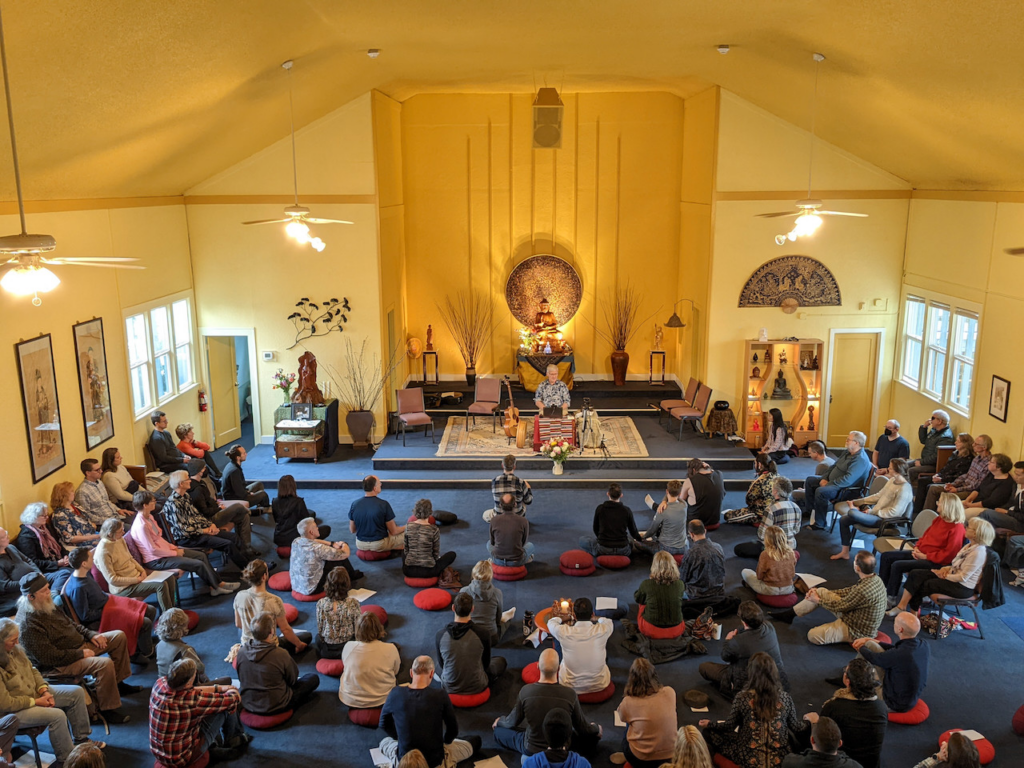
Weekly practice is a central part of the center’s routine. On Saturdays, members gather for Ngöndro practice, which includes refuge, bodhichitta, Vajrasattva mantra recitation, mandala offerings, and guru yoga. The full sadhana is chanted during the first hour, and students who want to continue accumulating their personal practice can stay afterward. On Sunday mornings, the center hosts a calm-abiding meditation session that focuses on developing mental stability and clarity. The Rinpoches often describe this type of meditation as essential for understanding the mind. After meditation, a Buddha sadhana is chanted. On the first and third Sundays, the practice is followed by a Dharma talk that introduces foundational Buddhist concepts for beginners.

Other weekly sessions include a Tuesday evening Heart Sutra practice, which emphasizes compassion and wisdom. This session reflects the Nyingma view that philosophical understanding and ethical conduct go together. The center also holds a full-moon prayer bowl session that follows the Tibetan lunar calendar, as well as a weekly Medicine Buddha practice dedicated to healing. These activities create a steady rhythm of community practice that helps laypeople incorporate Buddhist training into their daily lives.

Inside the shrine room, the center follows traditional Tibetan etiquette. Members enter quietly, avoid placing Dharma texts on the floor, and try not to sit with their feet pointing toward the shrine. Incense is often burned, but the community is mindful of people with sensitivities. Cushions and chairs are arranged neatly, and students can bring personal meditation cushions if they prefer. The atmosphere is calm and respectful, yet relaxed enough to be welcoming for people who may be new to Buddhism. This balance helps make traditional practices accessible to American practitioners without losing their cultural context.

The center is funded through voluntary donations from members and visitors. Support can be given through various methods, including online payments, mailed checks, or monthly memberships. The center also keeps a wish list of needed items, which allows people to contribute in practical ways. This approach reflects the long-standing Buddhist model in which lay supporters help sustain temples and retreat centers through generosity. It also creates a sense of shared responsibility within the community.

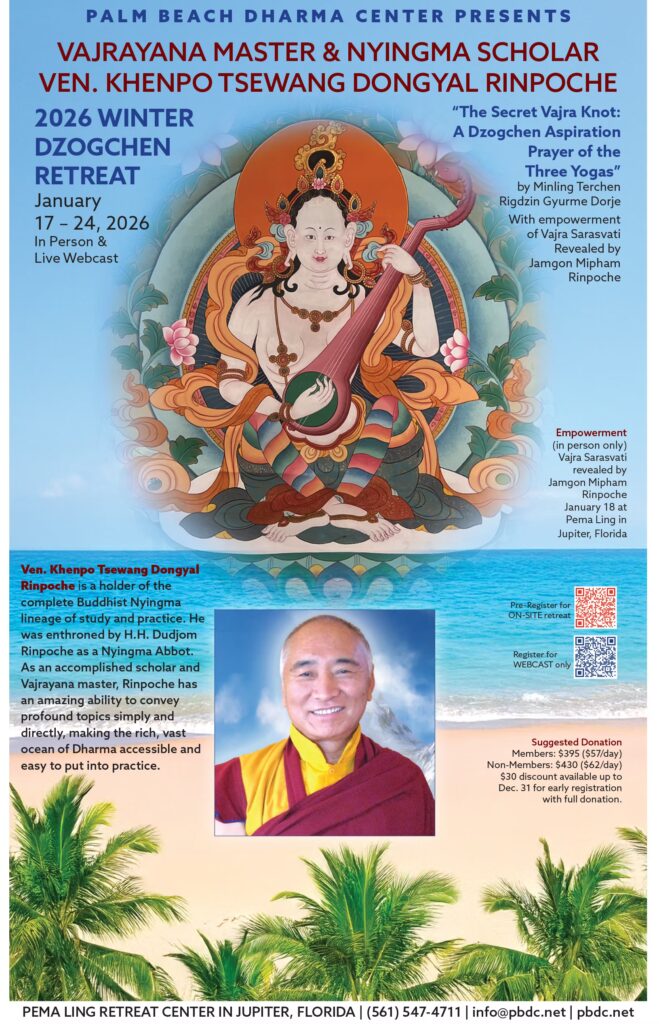
The 2026 Winter Dzogchen Retreat is held from January 17 to the 26th of January where sangha members/laymen can practice meditation and study. The members can donate $395 for the retreat, and nonmembers can donate up to $430 for the entirety of the retreat. People can participate in person or via webcast. This helps fund the center, along with practicing meditation and study, which aids in accessibility. The PBC-TN also has a YouTube account that has talks on Dharma and how to perform meditation. 
Members of PBC-TN generally see themselves as part of a broader movement that brings Tibetan Buddhism into American culture. Many believe that the Dharma can adapt to new cultural settings while remaining connected to its original lineage. Students often express that they appreciate having access to authentic teachings, structured practice opportunities, and a supportive community environment. By participating in meditation, chanting, ritual, and study, they feel they are contributing to the preservation and spread of Tibetan Buddhism.The Padmasambhava Buddhist Center of Tennessee functions as a consistent and accessible space for cultivating Tibetan Buddhist practice. Its weekly schedule, retreats, teachings, and community events give members a clear path for learning and participation. Guided by the legacy of the Rinpoches, the center continues to support both new and long-term practitioners while maintaining its role in the development of Tibetan Buddhism in the United States.

Sources

“Padmasambhava Buddhist Center – Meditation Study Dzogchen – Tibetan Nyingma.” Padmasambhava.Org, www.padmasambhava.org/. Accessed 30 Nov. 2025. 

“Padmasambhava Buddhist Center of Tennessee: Meditation: 419 East Iris Drive Nashville, Tennessee.” Pbc, www.pbc-tn.org/. Accessed 30 Nov. 2025. 

“PBC YouTube.” YouTube, YouTube, www.youtube.com/@PBCInternational. Accessed 30 Nov. 2025. 
Categories
Uncategorized

Mid America Dharma

By: Bridget Giordano

Mid America Dharma is a meditation center located in Kansas City, Missouri. They are entirely dedicated to the practice of insight meditation and strive to make the practice more available to the wider community of the central United States. While it is not a traditional monastic institution, it functions as a contemporary oasis for lay Buddhist practice across the US. Its mission focuses on making meditation instruction, Buddhist teachings, and retreat opportunities open to anyone interested. With an emphasis on volunteer leadership, generosity, and ethical responsibility, Mid America Dharma reflects both Theravada teaching and distinctly western forms of structure and practice. As a result, it has become an example of how Buddhism has adapted to American cultural contexts, particularly in regions where Buddhist communities are particularly sparse.

History and Founding

The origins of Mid America Dharma date back to 1983 when a group from the Menninger Wellness Clinic in Topeka, Kansas invited famed American mindfulness teacher Shinzen Young to lead a meditation retreat. The earliest retreats were intimate gatherings of friends in the home of early supporters Bo and Doug Shafer. Over time, participation grew into a committed group of practitioners, and they continued to study meditation under him throughout numerous retreats over several years.

Shinzen Young himself is a unique and influential figure within modern American Buddhism. A famed mindfulness teacher, he is known for his systematic approach to meditation known as Unified Mindfulness. Born a Jewish-American, he developed an early interest in religious studies. He went on to receive a PhD in Buddhist Studies, and spent three years living as a monk in the Japanese Shingon (Vajrayana) tradition at Mount Koya, where he received the name Shinzen. As he described himself:

“I’m a Jewish-American Buddhist-informed mindfulness teacher who got turned on to comparative mysticism by an Irish-Catholic priest and who has developed a Burmese Japanese fusion practice inspired by the spirit of quantified science”

-Shinzen Young

He continues to lead residential retreats throughout North America.

Eventually, the group began to take on the responsibility of putting together their own meditation retreats throughout the Kansas City Area. In 1992, they began calling themselves the Mid America Dharma Group. Between 1996 and 1997, they incorporated as a nonprofit organization in Kansas City and secured official IRS nonprofit status. Over the years the name has been shortened Mid America Dharma, but the mission remains largely the same: to spread the Buddha’s teaching and the insight meditation tradition while supporting practitioners across the Midwestern United States.

Source: Mid America Dharma website (“History”); Shinzen Young Official Website

Teaching Tradition and Lineage

Mid America Dharma is rooted in the Insight Meditation (Vipassana) lineage. Insight Meditation centers derive their teachings from the Theravada Buddhist tradition of Sri Lanka and Thailand, Burma, and Laos. The Western insight meditation movement largely took off in the 1970s, and today there is a large network of westernized insight meditation centers across the United States. The practice of insight meditation traces back to the original teachings of orthodox Buddhism, but has evolved and developed over time as it took on new forms in the West. At Mid America Dharma however, more or less emphasis may be placed on the Theravada teachings depending on the details of the retreat.

Insight Meditation

Mid America Dharma works to present the Dharma and insight meditation in an accessible and secularized way, often decentering the supernatural elements, and focusing on the psychological benefits of meditation for individuals.

Mid America Dharma defines insight meditation as

“An easily accessible way to free the mind from the distortions of self centeredness, craving, negativity, and confusion,”

Through focused awareness, practitioners can gain insight into the impermanent nature of their life experience, and how every aspect of life can be accepted with increasing balance and equanimity. Rather than release from samsara, they include that the insight gained through meditation leads to the possibility of living each moment fully with goodwill and compassion and with freedom from unsatisfactoriness and suffering.

This is different from Insight Meditation in the classical Theravada tradition, which is where, by focusing on the observation of the impermanence of the 5 aggregates, one can travel a direct path to the realization of Nirvana, escaping the cycle of rebirth. While grounded in Buddhist teachings, Mid America Dharma emphasizes that the reasons for sharing the Buddhist teachings are somewhat different, and they are to be used as a practical guide “for coming to live with more ease and equanimity.

Source: Mid America Dharma website (“What is Insight Meditation?”); Theravada.gr (Insight Meditation Overview)

Values

Mid America Dharma is entirely run by volunteers, and neither teachers or board members receive salaries. Instead, the organization relies on dana (generosity). Teachers offer their instruction for free and participants donate voluntarily to support them. The organization also emphasizes ethical conduct and accountability. Its publicly available ethics policy outlines expectations for the community and its efforts to avoid harm and misconduct. Additionally, the group has a published Statement on Racism and Oppression, which reflects a broader movement within Western Insight Meditation more broadly to address racial, gender, and social inequities, and open their program so that it is available to anyone interested.

Source: Mid America Dharma website (“Ethics Policy”; “Statement on Racism and Oppression”)

Events and Activities:

Mid America Dharma is primarily known for hosting meditation retreats. They offer

  • Residential retreats: typically held at established retreat centers in a variety of locations surrounding Kansas City. These retreats often range from three to seven days and follow a traditional silent retreat structure.
  • Non-residential retreats: participants attend during the day but do not stay overnight. These allow participants to practice without committing to overnight travel.
  • Online retreats: Originating out of the Covid-19 pandemic, online retreats remain popular. They broaden access to the Dharma to practitioners outside the midwest and reduce costs.

Retreats include extended periods of silent practice, structured meditative instructions, dharma talks, and conversations with meditation teachers. Social media and technology are largely discouraged during retreats.

The length of a retreat can vary, making Mid America Dharma accessible to beginners and experienced practitioners as well. In a region of the US where Buddhist communities are few and far between, flexible formats help maintain a steady population of practitioners.

Source: Mid America Dharma website (“Retreats” and event listings)

Funding (Dana)

Mid America Dharma relies on dual funding from retreat fees and voluntary donations. Retreat fees can vary, with online retreats sometimes costing under $100, while longer residential retreats can exceed $1,000. This fee covers facilities, food, and operations, but the teachers themself are not compensated through fees.

Outside of retreat costs, Mid America Dharma relies on donations, which help cover operational expenses, but not staff salaries. All of the teachers participate out of their own compassion commitment to the Dharma. The donations also cover their living expenses and allow them to continue teaching.

Additionally, Mid America Dharma has a scholarship fund, which makes it possible for individuals unable to afford to attend a retreat be able to do so. This fund underscores a commitment to accessibility, especially within the Midwest where access to Buddhist communities is more limited than other areas of the United States.

Source: Mid America Dharma website (“Dana” and retreat information)

Demographics

It is difficult to calculate exact membership numbers for Mid America Dharma because practitioners sign up for retreats and are not required to formally “join” the organization for any ongoing amount of time beyond their retreat. However, we can make some general conclusions consistent with other meditation centers in the Midwest.

  • Predominantly older adult practitioners (30-70 years old)
  • Mostly white, middle or upper-class participants
  • Balanced gender distribution

Demographic information inferred from public retreat listings and organizational descriptions on the Mid America Dharma website

Schedule

Mid America Dharma runs a variety of events, generally offering at least one residential retreat each month. Participants can register online at the Mid America Dharma website, and retreats are held both remotely and in person at a variety of locations, including the Creighton University Retreat Center, Griswold, IA, and the Mercy Center in St. Louis, MO. Online retreats are hosted through video conference, and allow for a wider range of participation beyond the midwest.

Awakening Joy: Online Course (January-June)

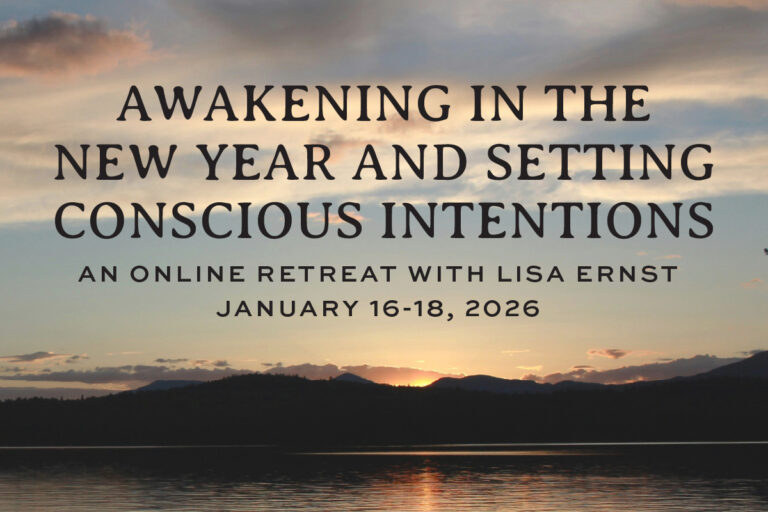
Awakening in the New Year and Setting Conscious Intentions (Online Retreat)

Living the Buddha’s Teachings (Residential Retreat)

Source: Mid America Dharma retreat schedule

Board of Directors

Mid America Dharma operates under a board of directors. The board members come from various states across the MidWest, and operates on a volunteer basis. The board is an administrative body, but is also a community of active insight meditation practitioners, and board members manage committees, plan retreats and oversee general operations.

President: Lucy Freedmen

Vice President: Diana Taylor

Secretary: Joe McCormack

Treasurer: Carl Wingo

Other: Dianne Asher, Erik Hulse, Phil Jones, Kyle Sorys, Mark Wiesman

Source: Mid America Dharma website (“Board of Directors”)

Unique Features

Online Videos: Mid America Dharma has a large library of recorded dharma talks and guided meditations available at no cost on their website.

Biannual Newsletter: the Mid America Dharma Newsletter is published every six months. It contains articles about upcoming retreats and information about meditation teachers leading them. It often includes other information about dana (generosity), the five precepts and other things. It is totally free to subscribe to receive the newsletter.

Source: Mid America Dharma website (“Audio Talks”; “Newsletter”)

How do members situate themselves among the broader monastic community?

Mid America Dharma is part of the broader Western Insight Meditation community, which adapted Theravada Buddhist ideas into Western lay practice. They emphasize mindfulness practices, and are accessible to anyone, no matter their prior knowledge and experience of Buddhist teachings. Thus, they are Theravada influenced but are not a monastic community.

They are very focused on community outreach in the Midwestern United States and have a strong network of teachers. Mid America Dharma’s meditation teachers often also teach at IMS, Spirit Rock, and other insight meditation centers, strengthening their place within the broader insight meditation community.

SOURCES:

  • “About Shinzen Young.” 2023. Shinzen Young. December 5, 2023. https://www.shinzen.org/about/
  • admin. 2024. “Insight Meditation -.” Theravada.gr. April 19, 2024. https://www.theravada.gr/en/practices/insight-meditation/
  • “Mid America Dharma.” 2025. Mid America Dharma. October 23, 2025. https://midamericadharma.org/
Categories
Uncategorized

Wat Buddhametta Mahabaramee

Gautier, Mississippi

Written by Devin Minish

Nestled in the swampy southeastern coast of Mississippi lies the small seaside town of Gautier. With a population of just over 19,000, it is most prominently known for its ecotourism, with many coming to do recreational activities in its sprawling bayous and the Gulf of Mexico, as well as its close proximity to the similar, touristy resort town of Ocean Springs. However, among the typically Christian scenery that dominates much of the Southern United States, especially Bible Belt states like Mississippi, lies a Thai Buddhist temple, the Wat Buddhametta Mahabaramee. This temple and the community it serves may be largely different from the environment around it, but that makes it no less fascinating and rich with history. 

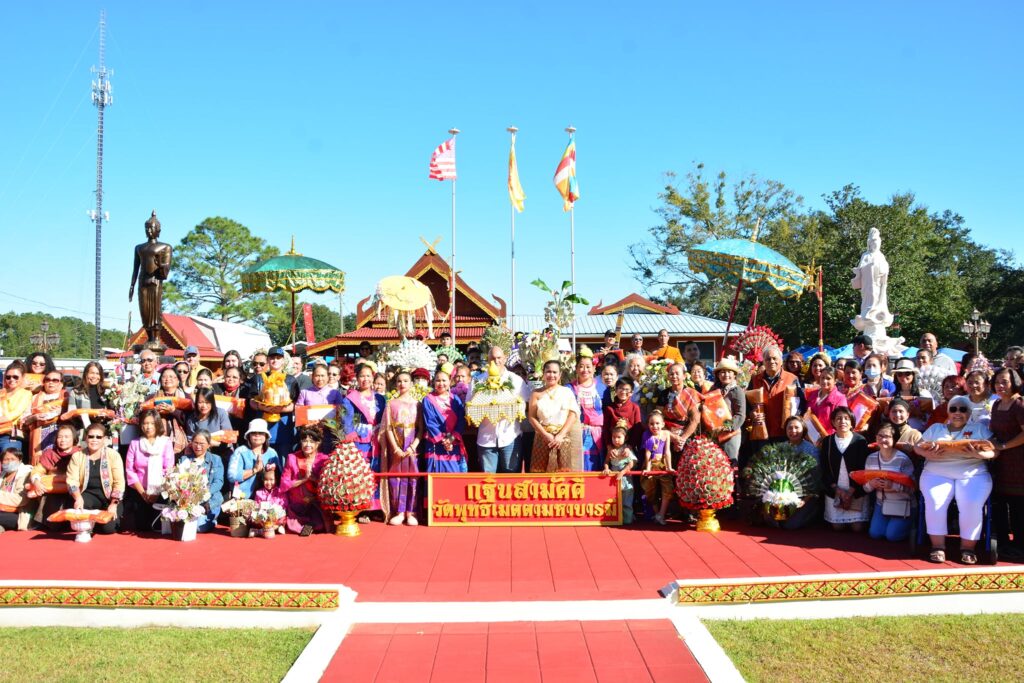
The sangha of the Wat Buddhametta Mahabaramee, 2022.

Wat Buddhametta Mahabaramee is a newer temple, whose name means “Temple of the Buddha’s Great Merit.” It was founded in July 2016 by Pisit Opnititanit, a monk from Thailand who left his home country to help establish a place of worship for Theravada Buddhism in Mississippi; a major reason why he did so was because the area around Gautier and especially in the neighboring town of Biloxi has a significant Asian population: Gautier at about 270, Ocean Springs at about 560, and Biloxi at over 2,100, many of whom are Vietnamese or Thai Buddhists. Prior to the construction of Opnititanit’s temple, followers would have to travel to the neighboring states of Louisiana or Alabama if they wished to worship at a temple. Although it was built with that community in mind, the Wat Buddhametta Mahabaramee is open to anyone and welcomes both visitors who seek to practice meditation and enhance their spiritual journey, as well as those who simply wish to engage with the community and enjoy the food that volunteers at the temple prepare.   

Practices and Structure

The Wat Buddhametta Mahabaramee has the distinction of being the only Theravada temple in Mississippi. It was originally a suburban house on a large, open field next to a cow pasture, later purchased by Pisit Opnititanit for $500. Self-taught by YouTube videos and internet guides, Opnititanit largely constructed the temple on his own, teaching himself how to cut and style wood, as well as shipping statues and ornaments from Thailand to decorate the compound with. Seven statues of Buddha deities are spread around the compound, each representing a day of the week. 

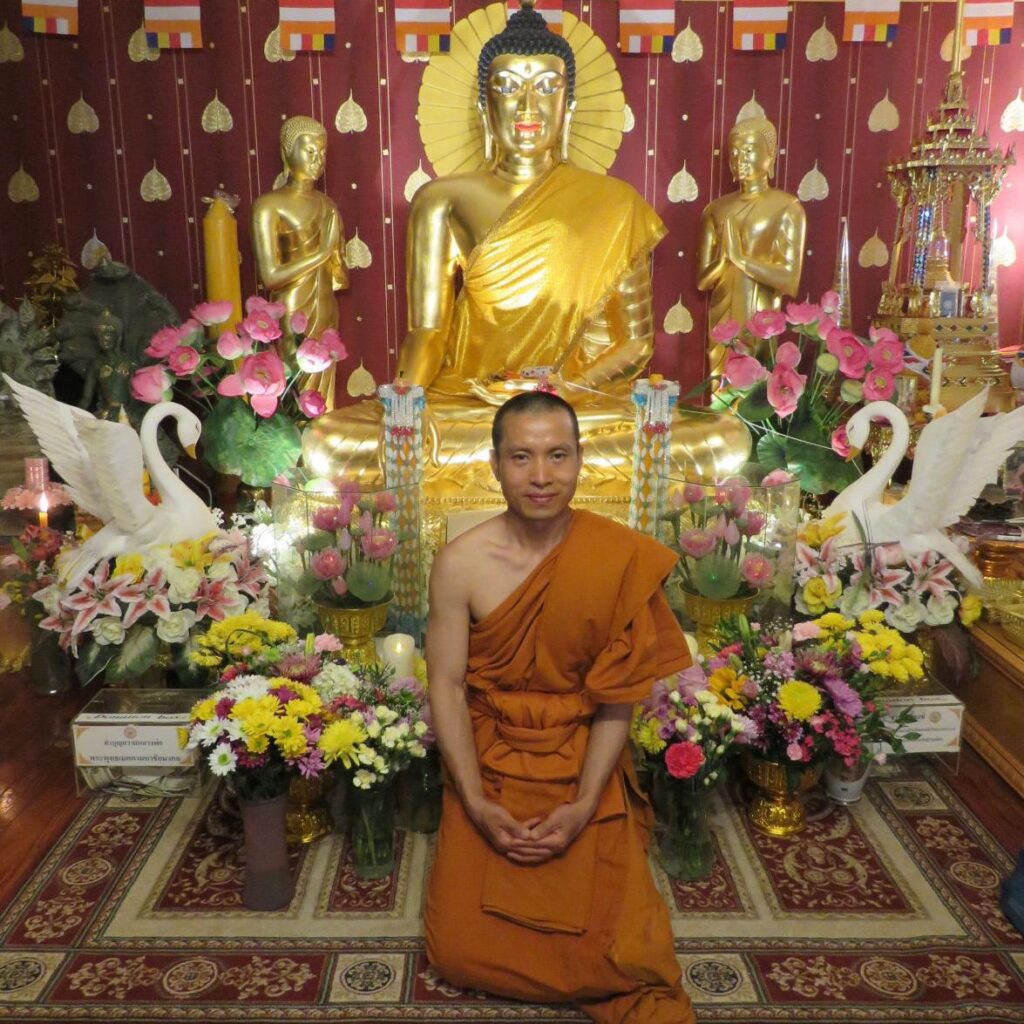
Pisit Opnititanit, a monk from Thailand, founded the temple in 2016.

The temple’s religious practices are rather standard: Opnititanit serves as the abbot of the small sangha of just five other monks at the temple, and they engage in meditation each day at 6:00 am and 6:00 pm. Their meditation involves deep concentration as well as reciting sutras in Pali, the ancient and sacred language that the Buddha’s teachings were originally written in. Throughout the day, the temple is open to visitors, who are encouraged to engage in similar meditative practices on their own accord or with others within the main temple building and throughout the complex around it. Each day, the monks will also come to venerate one of the aforementioned seven Buddha statues, switching to a different one the following day. One of the temple’s most important annual celebrations is the Thai New Year, which typically lasts from April 13 to April 15. During that time, visitors from all over Mississippi, neighboring states, and even other communities across the nation will come to celebrate the occasion. Such festivities include donation drives, water fights (a way of being “made clean”), and prayer, as well as an event where attendees will pour water on the Buddha statues and then on the monks during meditation times, symbolizing purification and cleansing of the body and mind. The Thai New Year celebrations also serve as a time for heartfelt family reunions, as many Thai families whose children have left the mostly rural Mississippi to live in more urban areas for work are given the opportunity to reunite with their loved ones. 

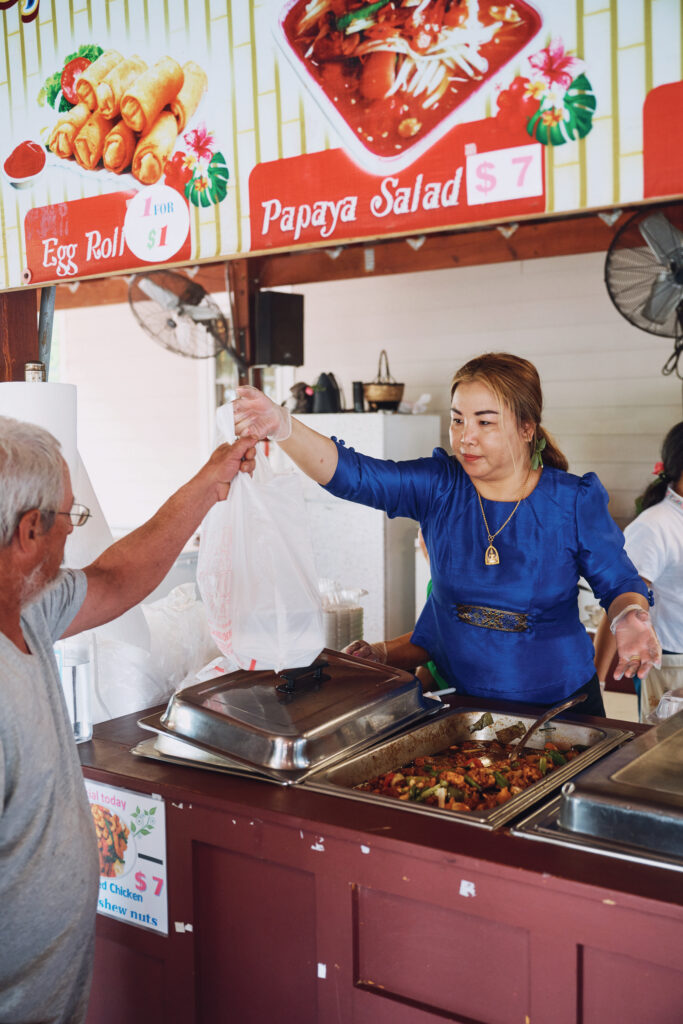
A volunteer serves Thai food at a weekly Sunday sale.

The Wat Buddhametta Mahabaramee is appreciated not just by Buddhist followers, though: it is popular in Gautier and other nearby towns. Every Sunday, from 10:00 am to 3:00 pm, volunteers from the community will come to help prepare a buffet of authentic Thai, Vietnamese, and Laotian food. The weekly food sale is quite popular among Buddhists and non-Buddhists alike and serves as one of the temple’s primary sources of funding, with all revenue being used to help further expand the temple and hopefully one day turn it into a full-fledged community center that can offer public services and places to socialize for the people of Gautier. 

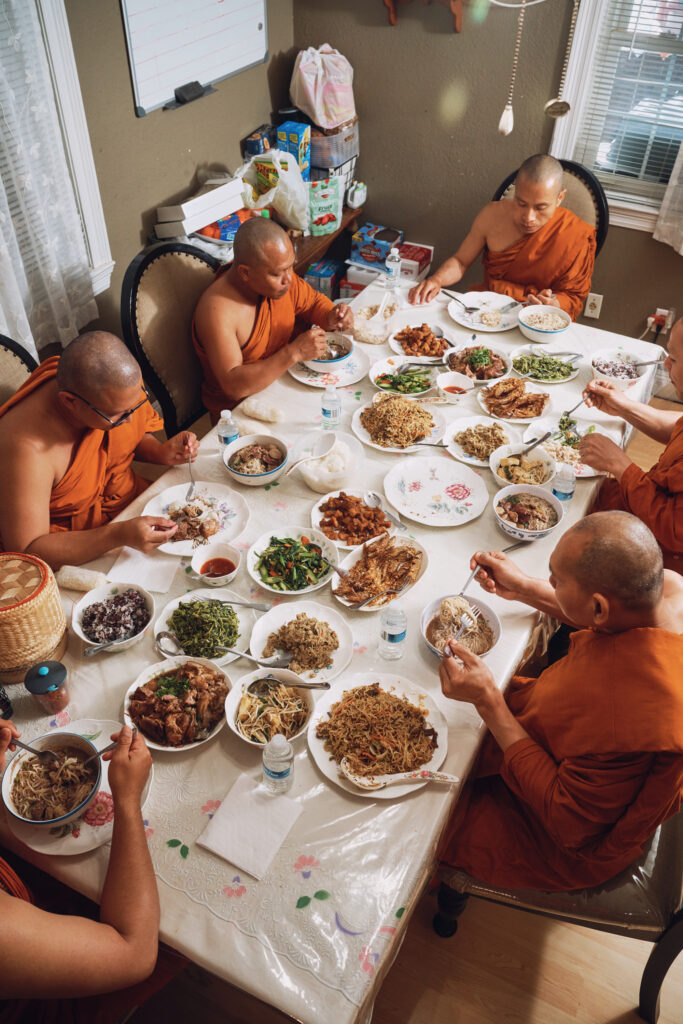
The monks of the temple sharing a meal.

Theravada Buddhism

The temple’s founder, Pisit Opnititanit, is a Thai native and practices Theravada Buddhism. Theravada, meaning “Way of the Elders,” is the oldest school of Buddhism. It is known for being more conservative and traditional compared to its main counterpart, Mahayana Buddhism, as it is considered to be more faithful and strict to the original teachings of the Buddha. Its core writings are collectively known as the Pali Canon, which is composed of the Tripitaka; the Sutra, which are the written teachings of the Buddha; the Vinaya, which provides instructions for monastic life; and the Abhidharma, which is the metaphysical analysis of Buddha’s teachings. The primary goal of Theravada is centered on the individual, a self-liberation through the arhat path – the quest to become an enlightened being who can reach nirvana through heavy meditation and mindfulness.

Theravada Buddhism is most prominent in Southeastern Asian nations like Sri Lanka, Laos, Cambodia, and especially Thailand, where nearly 95% of the population practices the religion. Theravada is not as popular as Mahayana Buddhism, and it is only in the last century that it has seen a resurgence in the overall Buddhist community. In Thailand, Theravada’s popularity can be attributed to the efforts of 19th- and 20th-century monks who were displeased with the more progressive and lax paths to enlightenment that were offered by more popular Mahayana schools at the time.

Theradava Buddhism is the dominant religion of Thailand, with over 64 million followers.

One such Thai monk named Acharn Mun was a heavily influential figure who followed a life of extreme discipline, emphasizing the importance of deep, uninterrupted meditation and asceticism. He taught both monastics and laypeople alike that liberation from the cycle of samsara could be achieved in a single lifetime through such an intense lifestyle, which is now referred to as the “Forest Retreat” path, as it encourages distancing oneself from civilization and using their isolation as a way to improve their mindfulness and their self-control, relying on the generosity of laypeople to survive. Acharn Mun also emphasized the importance of chanting as an important element of meditation, as uttering syllables in repetition can help calm one’s mind and better focus on what they are trying to accomplish; this in particular is seen at the Wat Buddhametta Mahabaramee, as the daily meditation practiced by the temple’s monks involves long, repetitive chanting of excerpts from the Pali Canon.

Theravada in the U.S.

Buddhism initially popped up in the United States in the mid-19th century, when Asian immigrants established small communities in frontier locations like California and South Dakota. However, it was not until the 1960s and 1970s that Theravada’s presence became more significant, as an influx of refugees from the Vietnam War came to the United States, bringing the Theravada traditions of their Southeastern Asian homelands with them. The Gulf Coast in particular began to see the arrival of Theravada Buddhists in the late 1970s, with many Cambodians, Laotians, and Vietnamese immigrants coming to Alabama, Louisiana, and Mississippi to work in the seafood industry in and around the swampy bayous that define that region of the South.

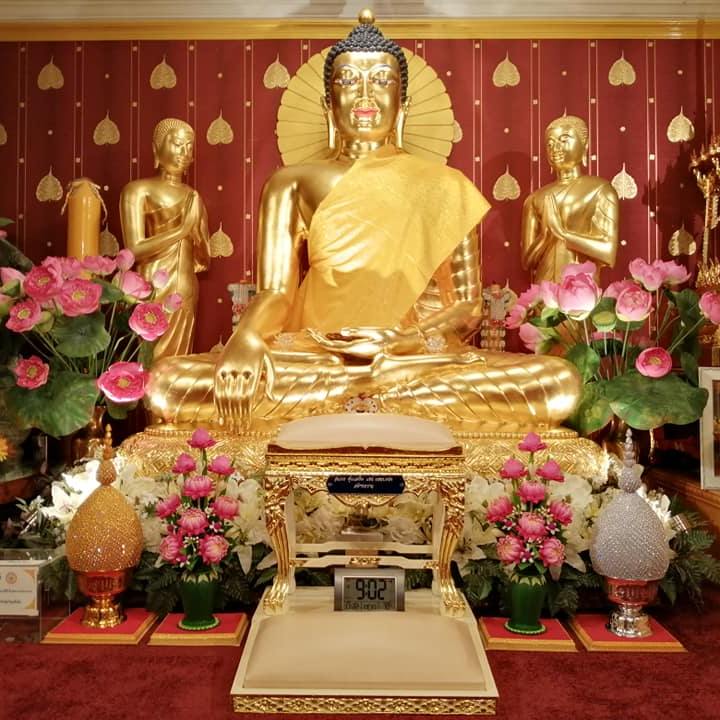
A statue of the Buddha inside the Wat Buddhametta Mahabaramee.

The construction of Buddhist temples, however, was hindered for several decades due to insufficient funding and the Buddhist community being largely overshadowed by the massive presence of Christianity in the Deep South. Although it may seem like an objectively small number, more than 30,000 Asians live in Mississippi alone, with 11,000 of those being Vietnamese and another 2,000 belonging to predominantly Theravada heritage. It was not until the turn of the 21st century that dedicated Theravada temples were constructed, first in Georgia and later in surrounding states. One such temple, the Wat Wimuttayaram in New Orleans, was founded by Joe Khotwong, who later became its head monk and also currently serves as a legal advisor for the Wat Buddhametta Mahabaramee.

Conclusion

The Wat Buddhametta Mahabaramee may lie in an unlikely place, but it serves a community rich with a history that stretches far beyond the United States and all the way to Thailand. It serves as a stronghold for Theravada culture in the South, a place that both offers an opportunity for reflection and spiritual growth, and supports the people of Gautier, Biloxi, Ocean Springs, and beyond through their open-door policy and their incredible weekly food sale. The efforts of one monk who left his homeland to give other Buddhists the opportunity to enjoy a place of worship have paid off greatly, creating a temple that can nurture faith and community for both Theravada followers and non-Buddhists alike.

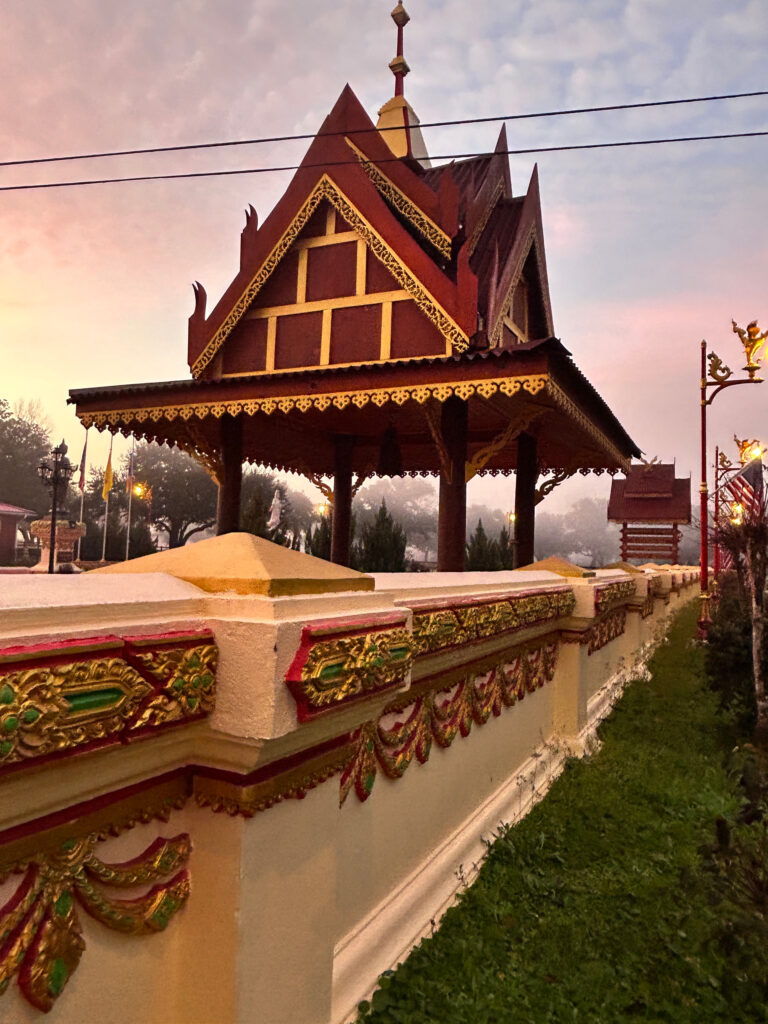
The outer wall of the Wat Buddhametta Mahabaramee.

Sources

Gomez-Misserian, Gabriela. “In Gautier, Mississippi, a Communal Feast Draws Buddhists and Non-Buddhists Alike.” Garden & Gun, 11 Aug. 2025, gardenandgun.com/articles/in-gautier-mississippi-a-communal-feast-draws-buddhists-and-non-buddhists-alike.

Opnititanit, Pisit. Wat Buddhametta Mahabaramee. web.archive.org/web/20230405092344/https://www.watbuddhamississippi.org/buddhist-monks. (Archived, the original site is no longer active.)

Vo, Tri. “Seeking Buddha in the Bible Belt – Asia Matters for America.” Asia Matters for America, 1 Oct. 2021, asiamattersforamerica.org/articles/seeking-buddha-in-the-bible-belt.

“Theravada: The Way of the Elders.” The Pluralism Project, pluralism.org/theravada-the-way-of-the-elders.

Taft, Isabelle. “From Thailand to Gautier, Monk Transforms Suburban Home Into Temple for Coast Buddhists.” Sun Herald, 13 Apr. 2021, www.sunherald.com/news/local/counties/jackson-county/article250606864.html.

U.S. Census Bureau. “ACS DEMOGRAPHIC AND HOUSING ESTIMATES.” American Community Survey, ACS 1-Year Estimates Data Profiles, Table DP05, https://data.census.gov/table/ACSDP1Y2019.DP05?q=mississippi+population. 

Categories
Uncategorized

Light of Truth Universal Shrine (LOTUS)

Founder of LOTUS: 

Light of Truth Universal Shrine, or LOTUS, is located in Buckingham, VA. Construction on the lotus-shaped shrine began in 1982, and it opened for use in 1986. It is a non-profit organization that offers programs and training sessions for members of all faiths interested in learning about yoga and meditation in the pursuit of a fulfilling life. The shrine was founded by the world-renowned Sri Swami Satchidananda. He became an ordained monk in 1949 in India. He is largely known for his participation in the interfaith movement. His motto, “Truth is One, Paths are Many,” is integral to the teachings at LOTUS.  In addition to founding LOTUS, he is also the founder of  Integral Yoga International, which has grown very popular with individuals of all backgrounds due to its interfaith foundation. In the United States, Sri Swami Satchidananda is well known as “the Woodstock Guru” because he opened the music festival with a prayer promoting interfaith peace, love, and community in front of over 400,000 people. Since then, American interest in Eastern religions like Buddhism has only grown, and Sri Swami Satchidananda’s interfaith doctrine has allowed for an easier transition for Americans who wish to participate in his meditation-focused interfaith practice. Although LOTUS is officially recognized as an interfaith organization, its roots can be traced back to Buddhist teachings of compassion, prayer, and meditation. Sri Swami Satchidananda’s global influence is not to be understated. He has a large following in both the east and the west regarding his yoga practice. He has written several books on integral yoga and the importance of mindfulness and meditation to the fulfillment and happiness on both the individual and the communal level. There is also a biography detailing his life and spiritual journey called Apostle of Peace.  


“Truth is One, Paths are Many”

– Sri Swami Satchidananda

The all faiths yantra:

This is a physical representation of the religious practice at LOTUS. It is said that this image came to Sri Swami Satchidananda during one of his deep meditation sessions, and it has become a visual representation of religious and meditative practices at LOTUS. The building itself is modeled to look and feel like a three-dimensional version of the yantra. Much like mandalas used in Buddhist meditation practice, the yantra is a meditative tool used to enhance visualization.   

Construction of the Shrine:

The shrine’s construction began in 1982. Along with the construction of the shrine itself, Sri Swami Satchidananda included a manmade lake in the construction plan. One of Satchidananda’s students and an architect, Jim Jagadish McCabe, contributed greatly to the planning and construction of the shrine. Every aspect of the construction revolved around the building’s function as a universal shrine and multi-use religious space. Both the building and the location reinforce the shrine’s connection to the five elements: earth, air, fire, water, and ether. While the shrine was being constructed in the U.S., work for the shrine was also being done in India. Artisans from several workshops worked on creating statues, various design details, and even the central altar for the shrine. Finally, on March 3, 1986, construction on the lotus shrine was completed. The shrine’s shape is modeled after that of a lotus flower or a yantra design, which also holds great significance in Buddhist meditative practices. The architecture was so striking that even architect Robert Venturi, one of the authors of Learning From Las Vegas, commented on its unique design. He comments frequently on how the design of the building makes it an inherently religious space, which is reinforced by the use of color, shape, and light throughout the shrine. Much like the chakras of the body, the construction of the shrine was built to imitate the flow of energy through the body.   

Dedication ceremony: 

The dedication of the shrine took place a few months later, and around 3,000 people attended the ceremony, which speaks to the popularity of Sri Swami Satchidananda in the United States after his iconic appearance at Woodstock, as well as a rise in interest for meditative and yogic practices. There was a grand procession that included world religious leaders. The procession was then followed by an all-faiths service, and the dedication day closed with a fireworks show to celebrate the successful ceremony.    

Finances:

Yogaville, and by extension Light of Truth Universal Shrine, are categorized as non-profit organizations. They rely on the generosity of those who choose to donate money and those who participate in yoga and training programs at the shrine. 

Current leadership:

Yogaville’s Light of Truth Universal Shrine currently consists of a “spiritual life board” that oversees the functioning of the shrine as a religious space to ensure its programs run smoothly. LOTUS also has a board of trustees, which oversees more administrative and legal activities for the shrine, as well as a “leadership team” that works in conjunction with the board of trustees. These three teams ensure the day-to-day operations of the shrine run successfully and develop long-term goals for the organization.   

Programs and training:

Visitation hours to the shrine are currently shortened due to its ongoing restoration. Their hours of operation are as follows:

Friday: 2:00 – 4:00 PM, 

Saturday and Sunday 10:00 AM- 4:00 PM 

They are open every day from 12:00 – 12:30 for noon meditation

Visitation costs begin at $54.00 for a basic day pass and increase depending on the kind of training or retreat you are interested in. They offer a variety of retreats, including silent retreats, personal retreats, and group retreats. They have an upcoming New Year’s silent retreat with a cost of $980. This includes 3 vegetarian meals per day, 2 yoga classes, and 3 group meditations per day for the duration of the stay. Some of the more costly programs are the 200-hour yoga teacher training, which has a price tag of $4,950, and the meditation teacher training, which costs $3,650. Financial aid applications can be submitted for any of their retreats or programs to help make these classes more affordable. Numerous programs run throughout the year, all with meditative or yogic practice at their core.  

Connection to broader community:

Because the founder of the Light of Truth Universal Shrine was so famous before he even began construction on the shrine, the site gained automatic and global traction with 3,000 individuals in attendance at the opening ceremony in 1986. To stay connected to a broader audience they have multiple social media platforms including facebook, instagram, twitter, and even a youtube account. Yogaville also recently started an etsy shop with merch relating to the shrine and Sri Swami Satchidananda. Yogaville also created a program to aid those who are in prison by making yoga available to them while incarcerated by sending books and corresponding with inmates regarding spiritual advice. This program honors Sri Swami Satchidananda’s wish to help those who are in prison achieve peace of mind through meditation and yoga. Yogaville also created YES which stands for Yogaville environmental solutions. This program was launched in 2015 to support sustainable energy management in the wider Virginia community. They have been very active in the community since their founding in 2015; their involvement ranges from protecting Virginia residents from commercial gold mining to protesting the Atlantic coast pipeline.    

sources: