Gautier, Mississippi
Written by Devin Minish
Nestled in the swampy southeastern coast of Mississippi lies the small seaside town of Gautier. With a population of just over 19,000, it is most prominently known for its ecotourism, with many coming to do recreational activities in its sprawling bayous and the Gulf of Mexico, as well as its close proximity to the similar, touristy resort town of Ocean Springs. However, among the typically Christian scenery that dominates much of the Southern United States, especially Bible Belt states like Mississippi, lies a Thai Buddhist temple, the Wat Buddhametta Mahabaramee. This temple and the community it serves may be largely different from the environment around it, but that makes it no less fascinating and rich with history.
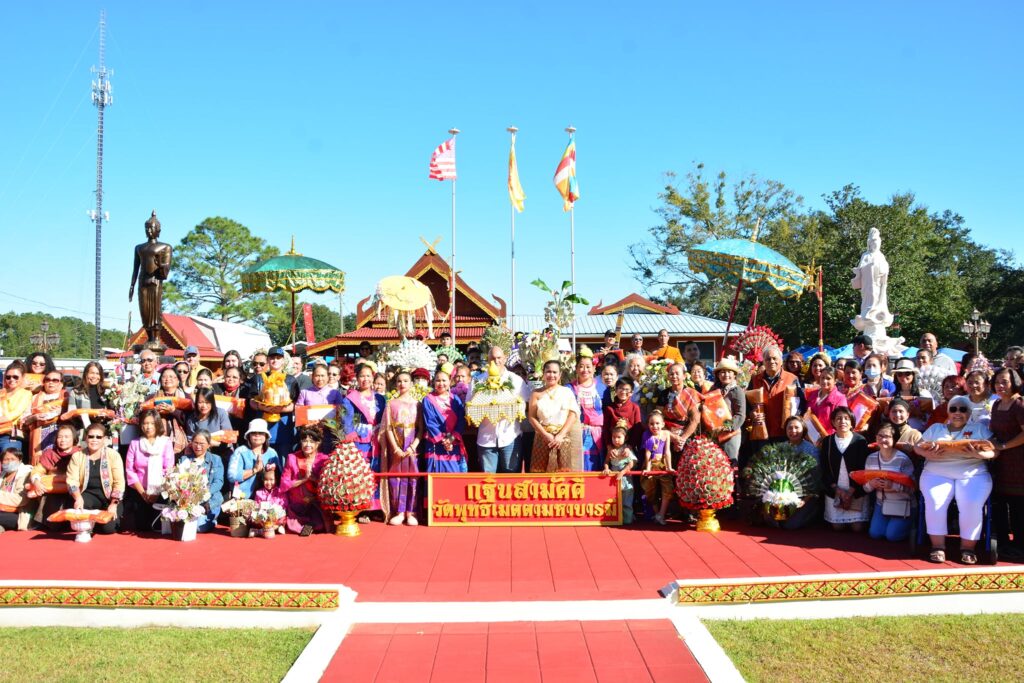
Wat Buddhametta Mahabaramee is a newer temple, whose name means “Temple of the Buddha’s Great Merit.” It was founded in July 2016 by Pisit Opnititanit, a monk from Thailand who left his home country to help establish a place of worship for Theravada Buddhism in Mississippi; a major reason why he did so was because the area around Gautier and especially in the neighboring town of Biloxi has a significant Asian population: Gautier at about 270, Ocean Springs at about 560, and Biloxi at over 2,100, many of whom are Vietnamese or Thai Buddhists. Prior to the construction of Opnititanit’s temple, followers would have to travel to the neighboring states of Louisiana or Alabama if they wished to worship at a temple. Although it was built with that community in mind, the Wat Buddhametta Mahabaramee is open to anyone and welcomes both visitors who seek to practice meditation and enhance their spiritual journey, as well as those who simply wish to engage with the community and enjoy the food that volunteers at the temple prepare.
Practices and Structure
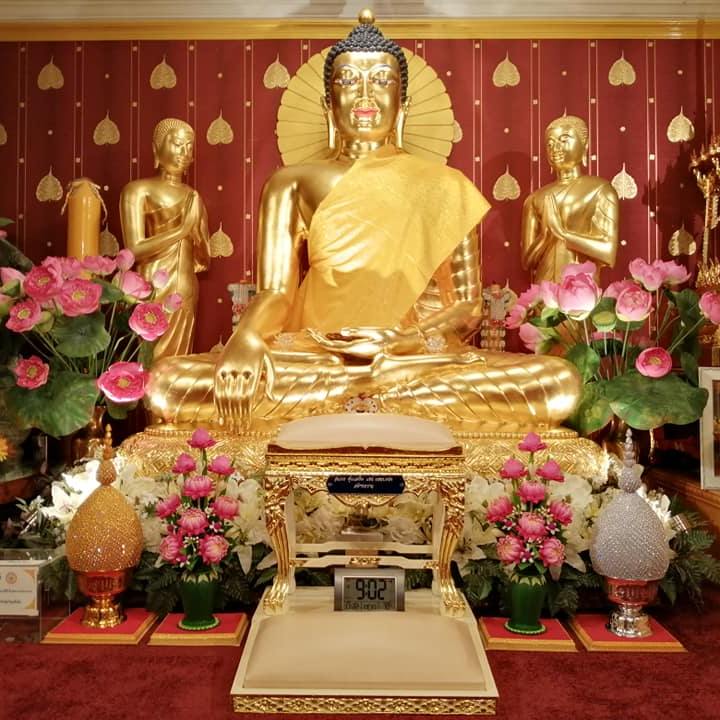
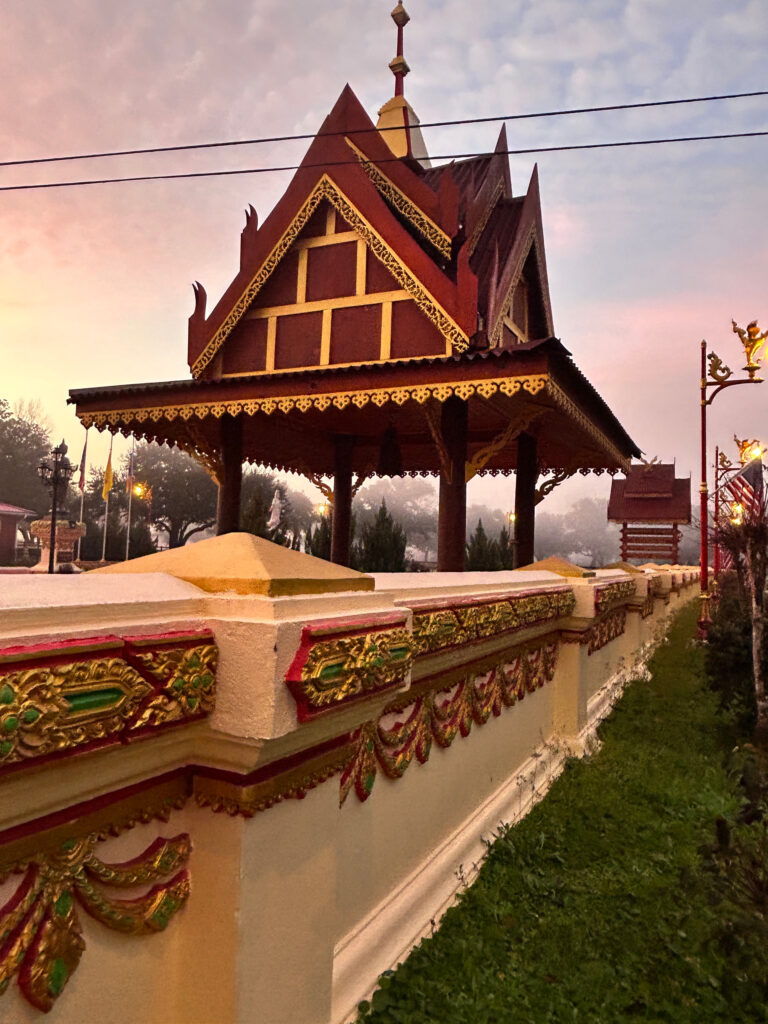
The Wat Buddhametta Mahabaramee has the distinction of being the only Theravada temple in Mississippi. It was originally a suburban house on a large, open field next to a cow pasture, later purchased by Pisit Opnititanit for $500. Self-taught by YouTube videos and internet guides, Opnititanit largely constructed the temple on his own, teaching himself how to cut and style wood, as well as shipping statues and ornaments from Thailand to decorate the compound with. Seven statues of Buddha deities are spread around the compound, each representing a day of the week.
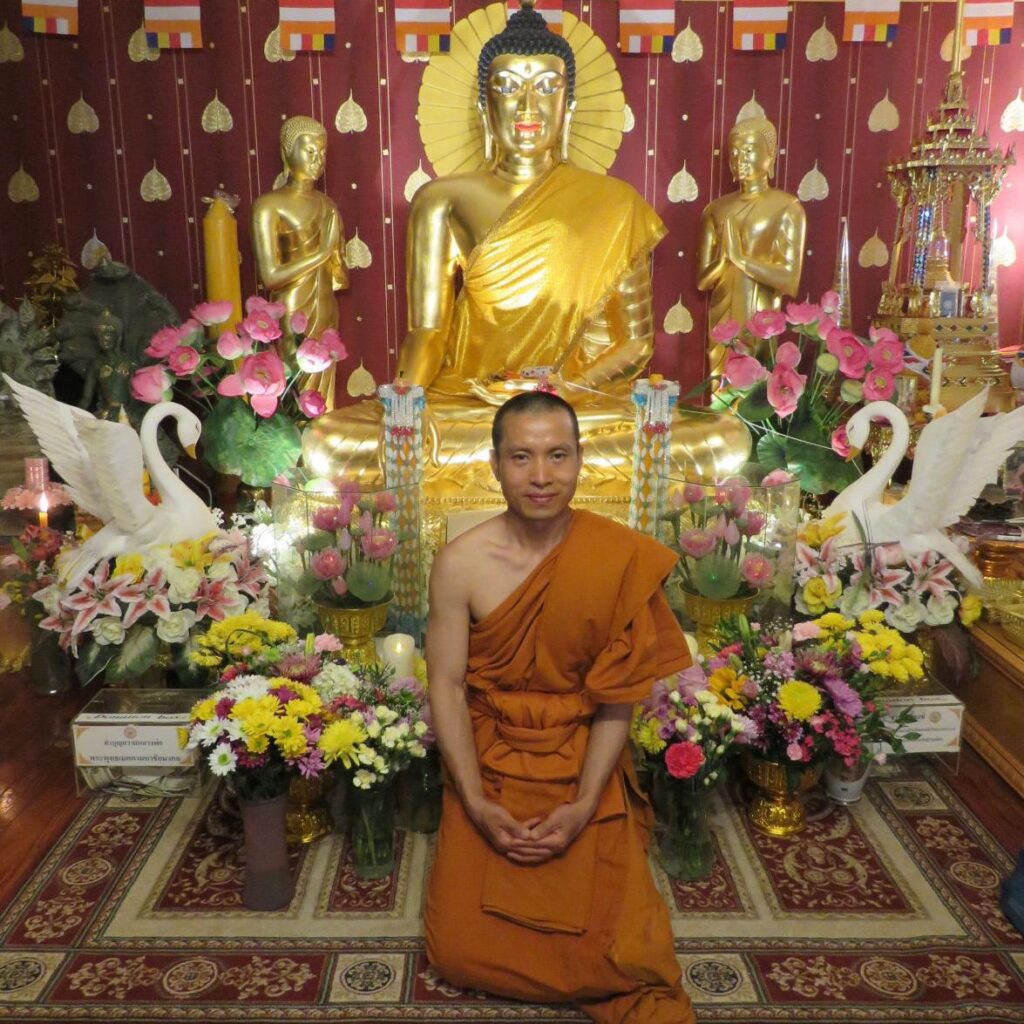
The temple’s religious practices are rather standard: Opnititanit serves as the abbot of the small sangha of just five other monks at the temple, and they engage in meditation each day at 6:00 am and 6:00 pm. Their meditation involves deep concentration as well as reciting sutras in Pali, the ancient and sacred language that the Buddha’s teachings were originally written in. Throughout the day, the temple is open to visitors, who are encouraged to engage in similar meditative practices on their own accord or with others within the main temple building and throughout the complex around it. Each day, the monks will also come to venerate one of the aforementioned seven Buddha statues, switching to a different one the following day. One of the temple’s most important annual celebrations is the Thai New Year, which typically lasts from April 13 to April 15. During that time, visitors from all over Mississippi, neighboring states, and even other communities across the nation will come to celebrate the occasion. Such festivities include donation drives, water fights (a way of being “made clean”), and prayer, as well as an event where attendees will pour water on the Buddha statues and then on the monks during meditation times, symbolizing purification and cleansing of the body and mind. The Thai New Year celebrations also serve as a time for heartfelt family reunions, as many Thai families whose children have left the mostly rural Mississippi to live in more urban areas for work are given the opportunity to reunite with their loved ones.
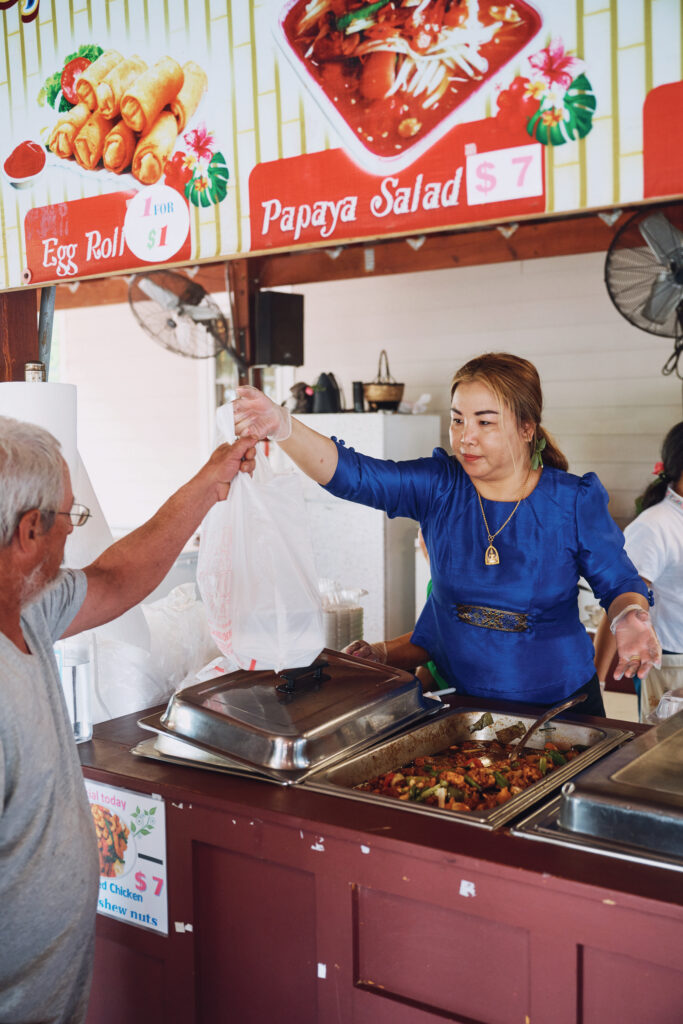
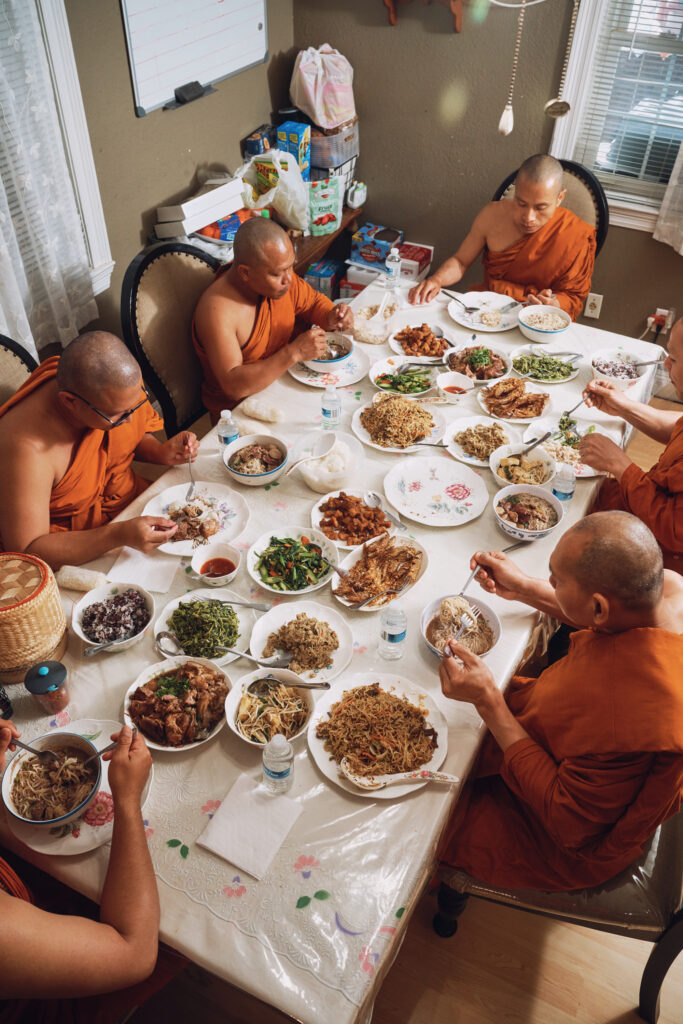
The Wat Buddhametta Mahabaramee is appreciated not just by Buddhist followers, though: it is popular in Gautier and other nearby towns. Every Sunday, from 10:00 am to 3:00 pm, volunteers from the community will come to help prepare a buffet of authentic Thai, Vietnamese, and Laotian food. The weekly food sale is quite popular among Buddhists and non-Buddhists alike and serves as one of the temple’s primary sources of funding, with all revenue being used to help further expand the temple and hopefully one day turn it into a full-fledged community center that can offer public services and places to socialize for the people of Gautier.
Theravada Buddhism
The temple’s founder, Pisit Opnititanit, is a Thai native and practices Theravada Buddhism. Theravada, meaning “Way of the Elders,” is the oldest school of Buddhism. It is known for being more conservative and traditional compared to its main counterpart, Mahayana Buddhism, as it is considered to be more faithful and strict to the original teachings of the Buddha. Its core writings are collectively known as the Pali Canon, which is composed of the Tripitaka; the Sutra, which are the written teachings of the Buddha; the Vinaya, which provides instructions for monastic life; and the Abhidharma, which is the metaphysical analysis of Buddha’s teachings. The primary goal of Theravada is centered on the individual, a self-liberation through the arhat path – the quest to become an enlightened being who can reach nirvana through heavy meditation and mindfulness.
Theravada Buddhism is most prominent in Southeastern Asian nations like Sri Lanka, Laos, Cambodia, and especially Thailand, where nearly 95% of the population practices the religion. Theravada is not as popular as Mahayana Buddhism, and it is only in the last century that it has seen a resurgence in the overall Buddhist community. In Thailand, Theravada’s popularity can be attributed to the efforts of 19th- and 20th-century monks who were displeased with the more progressive and lax paths to enlightenment that were offered by more popular Mahayana schools at the time.

One such Thai monk named Acharn Mun was a heavily influential figure who followed a life of extreme discipline, emphasizing the importance of deep, uninterrupted meditation and asceticism. He taught both monastics and laypeople alike that liberation from the cycle of samsara could be achieved in a single lifetime through such an intense lifestyle, which is now referred to as the “Forest Retreat” path, as it encourages distancing oneself from civilization and using their isolation as a way to improve their mindfulness and their self-control, relying on the generosity of laypeople to survive. Acharn Mun also emphasized the importance of chanting as an important element of meditation, as uttering syllables in repetition can help calm one’s mind and better focus on what they are trying to accomplish; this in particular is seen at the Wat Buddhametta Mahabaramee, as the daily meditation practiced by the temple’s monks involves long, repetitive chanting of excerpts from the Pali Canon.
Theravada in the U.S.
Buddhism initially popped up in the United States in the mid-19th century, when Asian immigrants established small communities in frontier locations like California and South Dakota. However, it was not until the 1960s and 1970s that Theravada’s presence became more significant, as an influx of refugees from the Vietnam War came to the United States, bringing the Theravada traditions of their Southeastern Asian homelands with them. The Gulf Coast in particular began to see the arrival of Theravada Buddhists in the late 1970s, with many Cambodians, Laotians, and Vietnamese immigrants coming to Alabama, Louisiana, and Mississippi to work in the seafood industry in and around the swampy bayous that define that region of the South.
The construction of Buddhist temples, however, was hindered for several decades due to insufficient funding and the Buddhist community being largely overshadowed by the massive presence of Christianity in the Deep South. Although it may seem like an objectively small number, more than 30,000 Asians live in Mississippi alone, with 11,000 of those being Vietnamese and another 2,000 belonging to predominantly Theravada heritage. It was not until the turn of the 21st century that dedicated Theravada temples were constructed, first in Georgia and later in surrounding states. One such temple, the Wat Wimuttayaram in New Orleans, was founded by Joe Khotwong, who later became its head monk and also currently serves as a legal advisor for the Wat Buddhametta Mahabaramee.
Conclusion
The Wat Buddhametta Mahabaramee may lie in an unlikely place, but it serves a community rich with a history that stretches far beyond the United States and all the way to Thailand. It serves as a stronghold for Theravada culture in the South, a place that both offers an opportunity for reflection and spiritual growth, and supports the people of Gautier, Biloxi, Ocean Springs, and beyond through their open-door policy and their incredible weekly food sale. The efforts of one monk who left his homeland to give other Buddhists the opportunity to enjoy a place of worship have paid off greatly, creating a temple that can nurture faith and community for both Theravada followers and non-Buddhists alike.
Sources
Gomez-Misserian, Gabriela. “In Gautier, Mississippi, a Communal Feast Draws Buddhists and Non-Buddhists Alike.” Garden & Gun, 11 Aug. 2025, gardenandgun.com/articles/in-gautier-mississippi-a-communal-feast-draws-buddhists-and-non-buddhists-alike.
Opnititanit, Pisit. Wat Buddhametta Mahabaramee. web.archive.org/web/20230405092344/https://www.watbuddhamississippi.org/buddhist-monks. (Archived, the original site is no longer active.)
Vo, Tri. “Seeking Buddha in the Bible Belt – Asia Matters for America.” Asia Matters for America, 1 Oct. 2021, asiamattersforamerica.org/articles/seeking-buddha-in-the-bible-belt.
“Theravada: The Way of the Elders.” The Pluralism Project, pluralism.org/theravada-the-way-of-the-elders.
Taft, Isabelle. “From Thailand to Gautier, Monk Transforms Suburban Home Into Temple for Coast Buddhists.” Sun Herald, 13 Apr. 2021, www.sunherald.com/news/local/counties/jackson-county/article250606864.html.
U.S. Census Bureau. “ACS DEMOGRAPHIC AND HOUSING ESTIMATES.” American Community Survey, ACS 1-Year Estimates Data Profiles, Table DP05, https://data.census.gov/table/ACSDP1Y2019.DP05?q=mississippi+population.