By Megan Pruitt
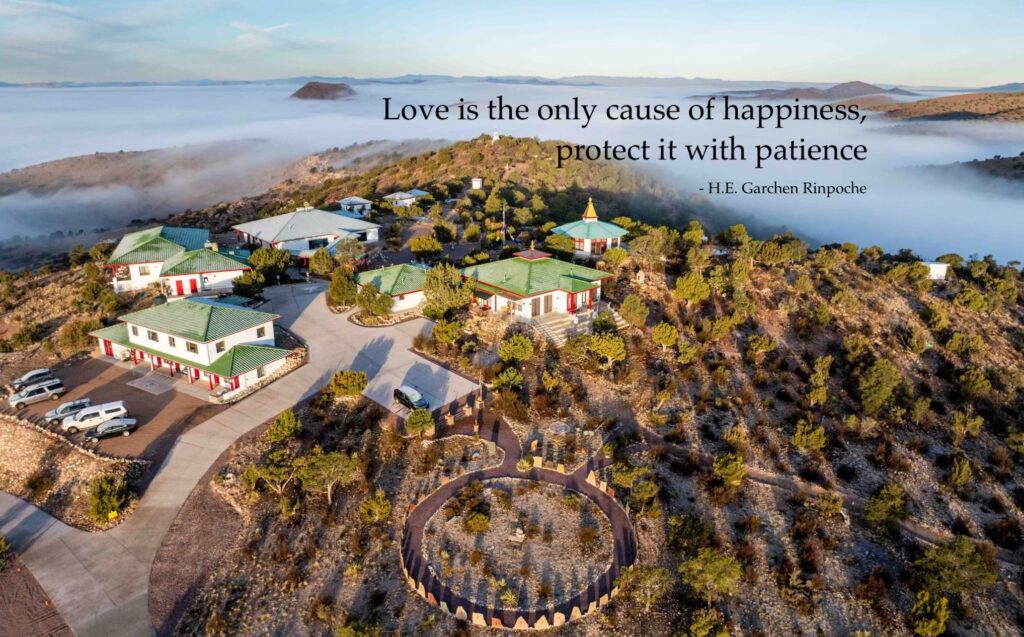
The Garchen Buddhist Institute is a dharma center in the Drikung Kagyu tradition. Located in Chino Valley, Arizona, the Institute offers a place for meditation practice, Buddhist teachings, and retreats. It hosts teachers from many traditions, although its main spiritual director is His Eminence Garchen Rinpoche.
Founder and Origin of the Institute
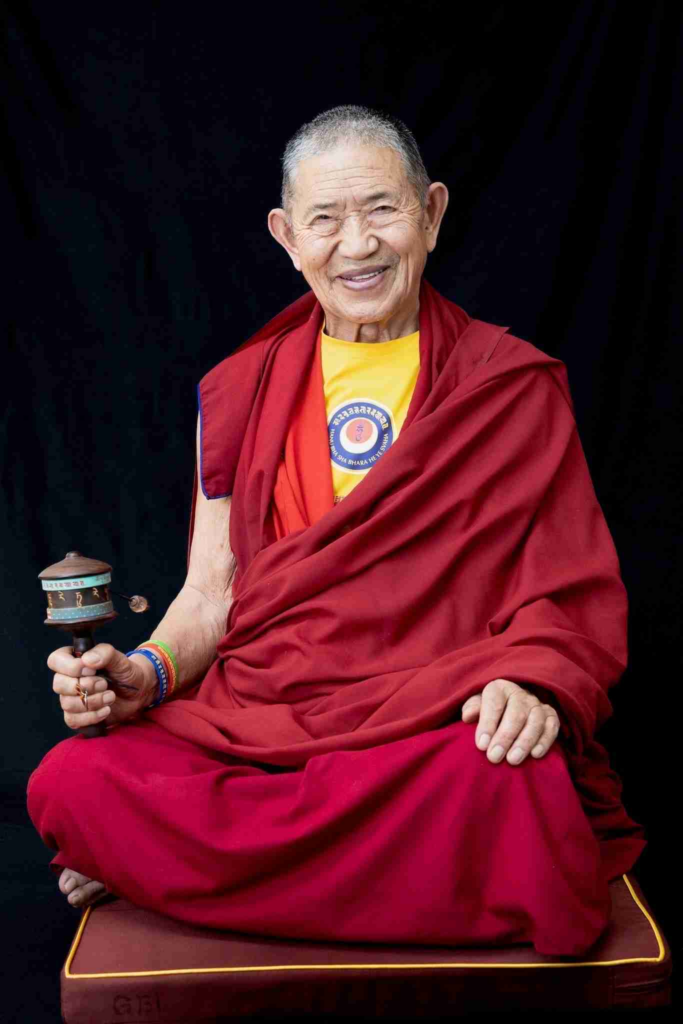
The Garchen Buddhist Institute is one of many Buddhist institutions founded by Garchen Rinpoche. Garchen Rinpoche himself has settled at the Garchen Buddhist Institute permanently, where he offers teachings and Dharma events. His Eminence is regarded as the Eighth Garchen Rinpoche in the Kagyu tradition; his emanation lineage is said to trace back to Chenrezig, the Bodhisattva of compassion.
Garchen Rinpoche was born in Nangchen, Kham, and at the age of seven was brought to a monastery where he was given the ordination name of Könchok Gyaltsen. Here, he was instructed by several high lamas of the Drikung Kagyu lineage. At the age of 22, he was imprisoned and met Khenpo Munsel, a Nyingma Master, who became his root guru. He was imprisoned for 20 years, practicing in secret, and eventually achieved the wisdom-mind which his guru recognized as “an emanation of a Bodhisattva.”
Once released in 1979, Garchen Rinpoche reestablished many Drikung Kagyu monasteries, schools, and other institutions in order to spread Buddhist teachings. This includes many locations in Asia, Europe, and North America. Today, Garchen Rinpoche teaches from the Garchen Buddhist Institute, also sharing his wisdom with the world via films and YouTube.
The Garchen Buddhist Institute was established in 1997, when Garchen Rinpoche came to America for the first time. Garchen Rinpoche himself speaks on the “auspicious” nature of the founding of the institute in a short YouTube documentary. He reflects on how perfect the setting in Arizona is for practitioners to grow in virtues such as generosity and patience. Additionally, he speaks of fortunate circumstances in which great leaders of the Kagyu tradition were able to visit the Institute early in its establishment.
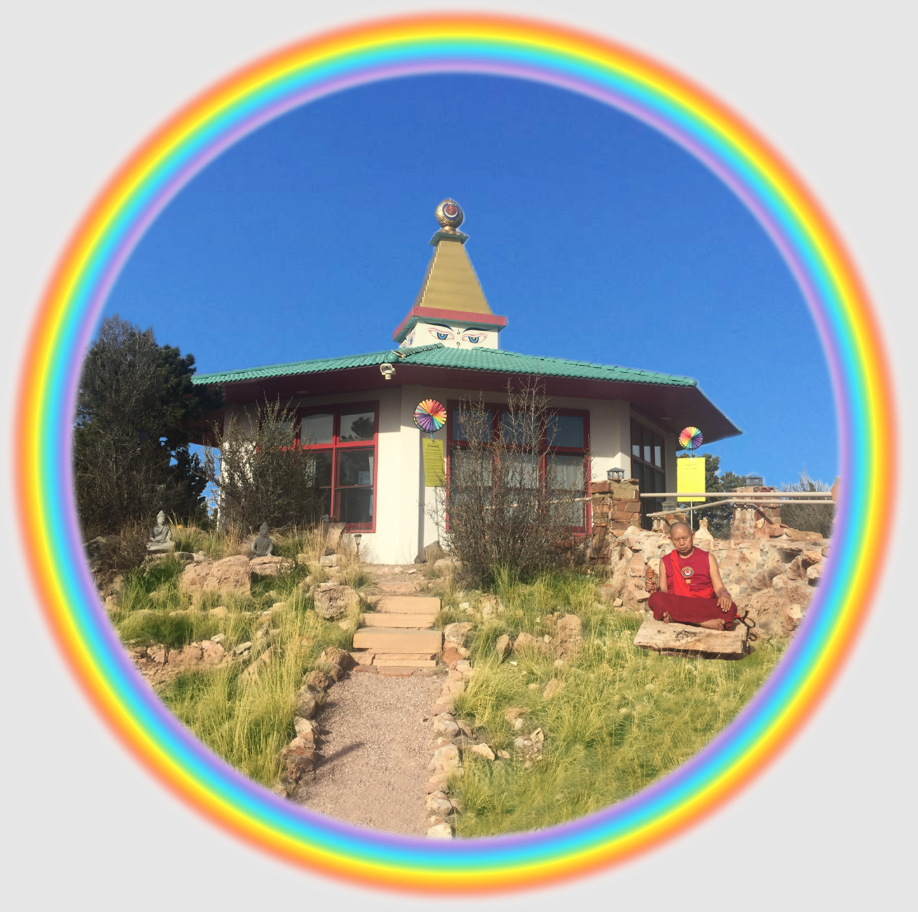
The Institute has all of the facilities needed for a practitioner to go on a retreat or practice many forms of meditation. Their facilities include many different housing options, the main retreat center, temple and shrine buildings, as well as Stupas which include Buddha relics.
Tradition
The lineage practiced by the Garchen Buddhist Institute is “Kagyu,” meaning “the lineage of the oral instructions.” The practice of teachings being passed down from teacher to student is especially important in this branch of Tibetan Buddhism. Drikung Kagyu is one of the eight sub-lineages. Each sub-lineage can trace its history back to Tilopa and Naropa. Specifically, Drikung Kagyu emphasizes the importance of the golden rosary lineage of the incomparable Drikung Kagyupas. This is an unbroken line of realized masters.
The main practices in Drikung Kagyu are known as “The Five-fold Profound Path of Mahamudrā,” which is a structured path of Buddhist teachings.
The Five-fold path consists of:
- Bodhicitta – cultivating compassion
- Yidam deity practice- visualization of oneself as a deity
- Guru yoga- devotion to one’s teacher
- Mahāmudrā meditation- experiencing the mind’s true nature
- Dedication of merit- realizing the worth of others
Another practice common in Drikung Kagyu is “The Six Dharmas of Nāropa,” which are completion-stage tantric practices aimed at using subtle body practices. It is said that by using this technique, a practitioner may experience bliss, presence, and non-thought, experiencing the first glimpse of Awakening.
Relationships and Constituents
The Garchen Buddhist Institute hosts many visiting teachers, mostly from the Drikung Kagyu lineage. Additionally, the Garchen Buddhist Institute commonly invites teachers from other lineages, for example, Kathog Rinpoche from the Nyingma school of Buddhism. In 2026, Kathog Rinpoche will be teaching a multi-year series at the Institute, both in person and online. Another notable collaboration is an online exclusive event in which Garchen Rinpoche will speak with Menpa Phuntsog Wangmo from the Shang Hung Institute of the School of Tibetan Medicine. The inter-lineage collaborations hosted by the Garchen Buddhist Institute create a diverse environment and connect the Institute to a broader network of Buddhist teachers who specialize in different practices. In the case of the Shang Hung Institute collaboration, there will be a discussion of healing in times of uncertainty.
The Garchen Buddhist Institute offers many opportunities for constituents to go on pilgrimages, including those that venture into other countries. Because of the Institute’s deep connections with important figures in the Drikung Kagyu lineages, it holds relationships with other monasteries in Asia. These pilgrimages often include visiting sacred sites associated with historical Drikung Kagyu masters.
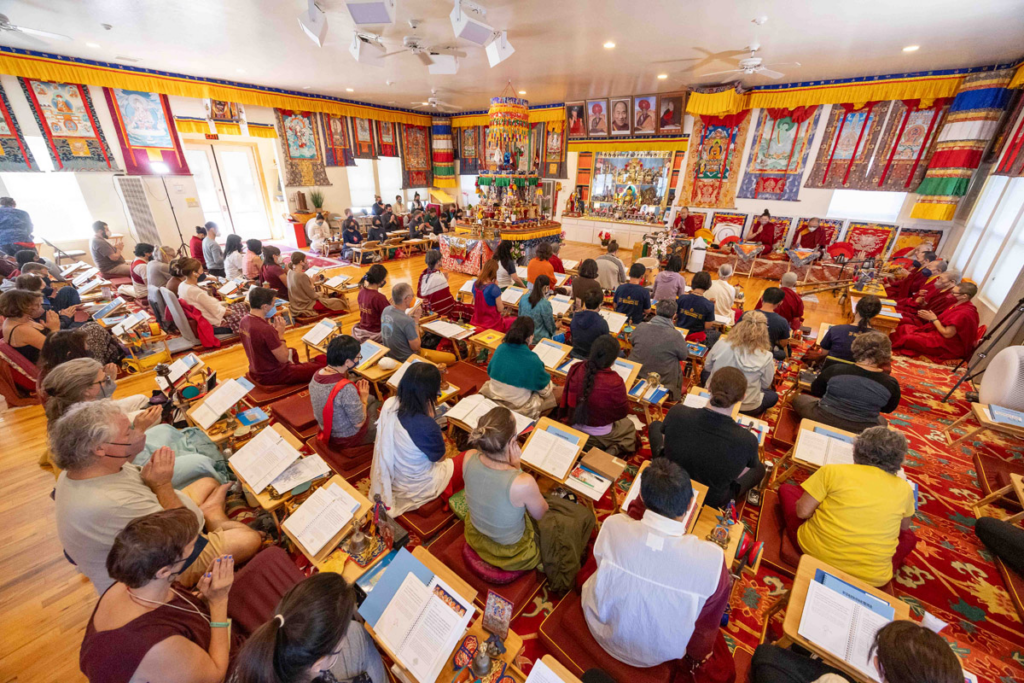
Specific demographics for the Institute are not available, but it is safe to say that the community is healthy and flourishing. From YouTube videos and films published by the Institute, it appears that a mix of Western converts and Heritage Buddhist practitioners are welcomed to practice at the Institute. As well as an in-person community, the Institute also has influence online, having over twenty-five thousand subscribers on YouTube, many of their videos having well above ten thousand views each. The Institute offers teachings and films in many languages, also supporting subtitles, which implies a diverse constituency.
Online Community
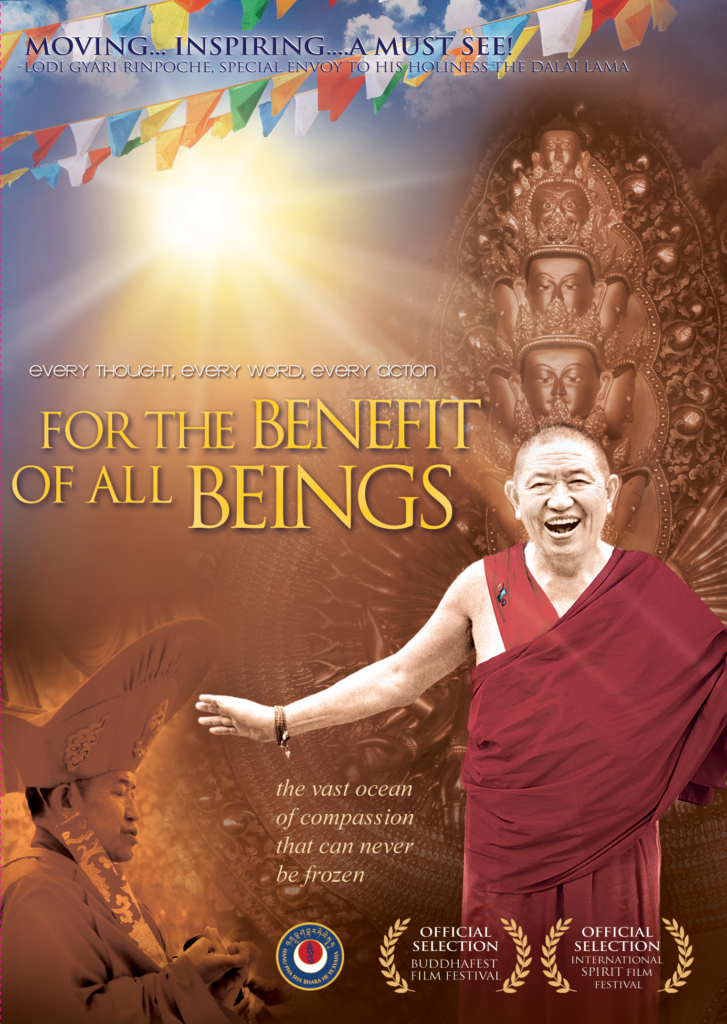
As mentioned before, the Garchen Buddhist Institute has a strong online presence. Many free films are available via their website, including “For the Benefit of All Beings,” a one-hundred-minute film available in English, Vietnamese, Russian, French, Spanish, and German. The film shares the life story of Garchen Rinpoche and showcases interviews from Kagyu figures and Western converts. Several other films, Garchen Rinpoche uses to share the story of the importance and origin of the institute.
Uniquely, taking vows online is a service offered by the Institute. Garchen Rinpoche explains that the ultimate nature of the three Jewels (the Buddha, the Dharma, and the Sangha) is pervasive, which enables one to take vows without being physically present in a ceremony. A refuge vow can be taken as a first step on the Buddhist path and is said to represent one turning toward a life of benefit for themselves and also for others. After the Refuge vow has been taken, a Bodhisattva vow may be taken. This represents one’s desire for enlightenment to benefit all sentient beings. This vow may also be renewed.
When looking at a list of upcoming events, almost every program available is offered both in person and online. (livestreamed on YouTube) The Garchen Institute has both English and Chinese YouTube channels with a combined three thousand and six hundred videos available to watch for free. Beyond this, there is also evidence of Garchen Rinpoche owning other YouTube channels with more specific purposes. For example, one channel focuses on the prayer wheel1.
Practices and Events
Many kinds of practices are offered every week at the Garchen Buddhist Institute. Led by Khenpo Tenzin, Arya Tara Practice is believed to promote protection and longevity for all beings. Sometimes, more specifically, the Arya Tara Practices are offered for the dead. Also led by Khenpo Tenzin, a Meditation Series on Mindfulness is offered weekly. For Holy Days such as Lama Je Tsong Khapa Day, there are special prayers recited.
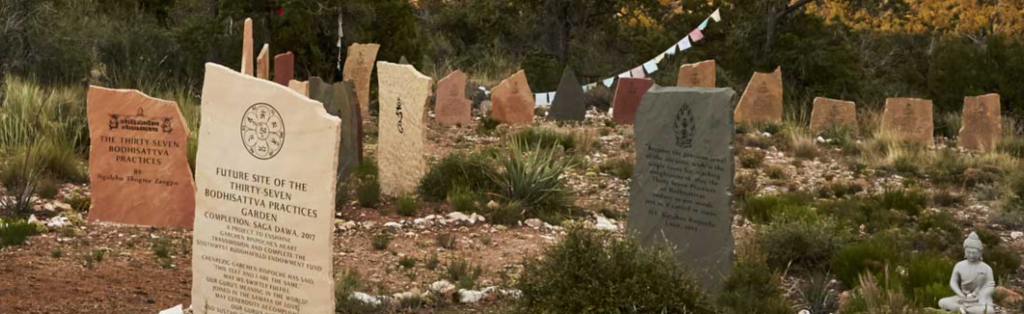
The Institute also provides many resources for individual practice. One example is the in-progress garden of thirty-seven Bodhisattva Practices. This will provide an example of how a Bodhisattva lives, providing a meditative experience for visitors to the Garchen Buddhist Institute.
Several-day-long retreats are also important to the Garchen Buddhist Institute experience. Kinds of retreats include solitude retreats, nature retreats, and intensive retreats. These retreats could also involve sleeping outside or in smaller retreat housing. Shorter retreats operate on a month basis, whereas longer retreats and pilgrimages operate on a yearly basis.
The greatest number of events happen on Sunday; the schedule is as follows:
| 8:30am-9:30am | Guided Meditation |
| 10am-12pm | Sunday Practice |
| 1:30pm-3pm | Sunday Afternoon Teachings |
| 3pm-4pm | Dharma Discussion |
Proper conduct is also required for everyone on the property of Garchen Buddhist Institute. The rules are as follows:
- Protect all life2.
- Protect others’ property.
- Refrain from divisive speech and creating discord in the sangha.
- Refrain from sexual misconduct.
- Remain sober by not using drugs or alcohol.
Funding
From the information that is available, it appears that the majority of Garchen Buddhist Institute’s funding comes from donations. They have an endowment fund set up with the purpose of sustaining the Institute for as long as possible. Other sources of funding come from their own gift store as well as offering sponsored puja services. Lay people can request a sort of prayer ritual for a living or deceased person in exchange for a sum of money.
View of Buddhism in America
Based on the available and popular teachings as well as their accessibility, it can be said that constituents of Garchen Buddhist Institute view Buddhism through the lens of personal transformation and betterment. Many embrace the types of practices that are said to heal spiritual or physical existence. Clearly, they also value lineage transmission as Garchen Rinpoche is a very important figure and happens to be seated at the Garchen Institute in Arizona permanently. Constituents value teachings from someone they see as a Bodhisattva.
Garchen Rinpoche speaks of his ability to practice Buddhism in America as “fortunate karma.” This reflects the Institute’s view of its place in the spread of Tibetan Buddhism in the West. The specific lineage of Drikung Kagyu Buddhism is not as common in the West as other subdivisions of Buddhism. It is clear that the community values being able to reach anyone willing to listen, as evidenced by their request for volunteer translators and their large collection of translated online media.
1Garchen Rinpoche is rarely seen without a prayer wheel. It is a small handheld object with 20 billion mantras printed on the inside. The prayer wheel is held and spun around and is believed to help accumulate merit since each spin of the wheel can be equated to reciting these mantras.
2Based on a short film about the Garchen Buddhist Institute, it is clear that guests are expected to respect animals. Since it does not rain in Chino Valley, Arizona regularly, a small pond was constructed to provide water for the animals in the surrounding area.
References:
All photos from Garchen Buddhist Institute website
Garchen Buddhist Institute. Home Page. https://garchen.net/
Accessed November 30, 2025.
Garchen Buddhist Institute. YouTube Channel. https://www.youtube.com/@GarchenBuddhistInstituteAZ
Accessed November 30, 2025.
Drikung Kagyu Official Website. https://www.drikung.org. Accessed November 30, 2025.