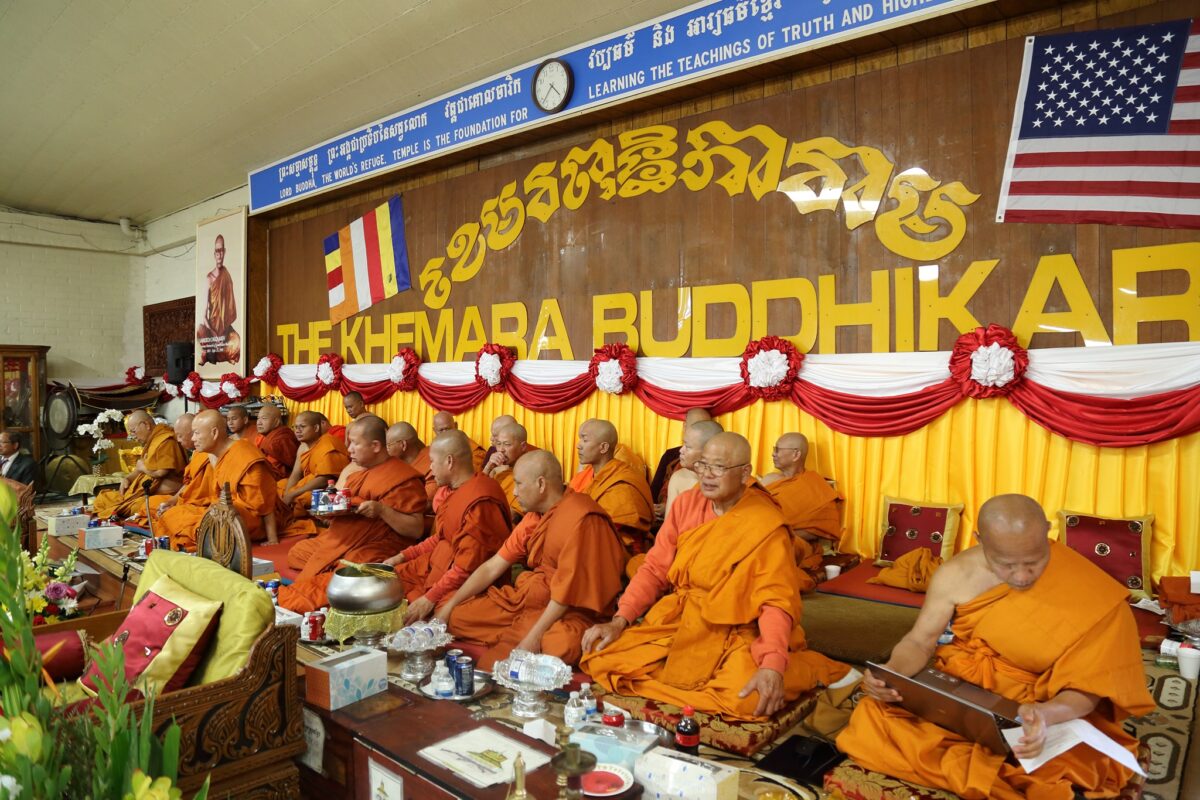
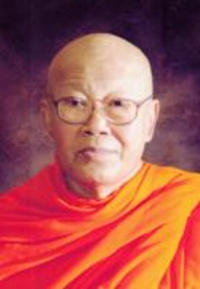
In the 1970’s, the devastating effects of the Khmer Rouge regime in Cambodia put tens of thousands of Buddhists within the country at risk of persecution or death due to the regime’s abolition of religion to create a “utopian” society. This genocide of monastic followers of all religions forced many citizens of Cambodia to migrate away from their homes to evade capture or potential death. Within this community of migrants is Rev. Chhean Kong, the founder of Khemara Buddhikaram. In 1979, to flee from the violent regime of Pol Pot, Chhean Kong was sponsored to migrate to Southern California in order to preserve and spread the teachings of Buddhism he was practicing in Cambodia. In 1982, Kong founded Khemara Buddhikaram as a place to foster other Cambodian migrants and curate the first Cambodian Buddhist community in Long Beach, California. On top of founding Khemara Buddhikaram, Chhean Kong also worked to receive a PhD in clinical psychology so he could work with fellow Cambodian refugees who suffered from PTSD or other mental illnesses that may have stemmed from traumatic experiences under the Khmer Rouge. Due to his work, Cambodian migrants within Long Beach, California, a community that was estimated to be about 26,000, had a place of worship and a foundation to build a religious community in the United States.
Khmer Buddhism
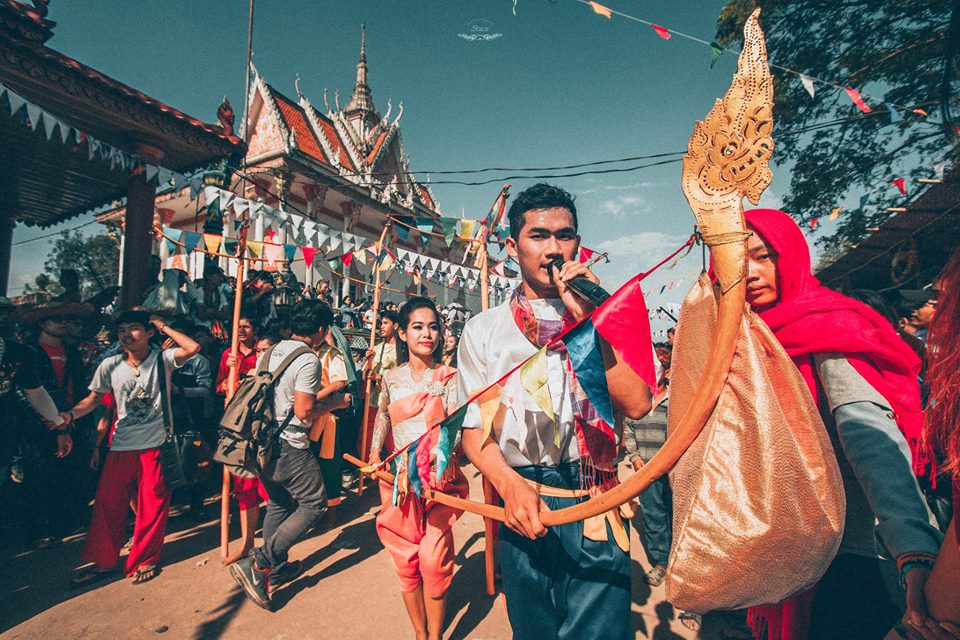
Being the predominant religion in Cambodia, Khmer Buddhism is made up of mostly Theravada beliefs and practices, with emphasis being placed on Cambodian-specific customs and national identity. As Theravada Buddhism became the main religion of the country, with 95% of the population falling under this religion, certain cultural evolutions took place that highlight Cambodian culture within this sect of Buddhism; this is what formed Khmer Buddhism. With the same practices and vinaya as Theravada, Khmer Buddhism differs along the lines of national pride and celebration being integrated. Celebrations such as the Khmer New Year and Magha Puja are culturally significant holidays of Cambodia that have been integrated into common Khmer Buddhist celebrations. Overall, a common way to think of Khmer Buddhism is Theravada practices that have been integrated into Cambodian culture and are now being brought over into the United States.
Ideals of Khemara Buddhikaram
Khemara Buddhikaram offers a safe space for all Cambodians. However, the main traditions that are practiced and taught within this temple fall under Khmer Buddhism, a sect of Buddhism that is primarily defined by Theravada Buddhism and made up 97% of the Cambodian population before the Khmer Rouge took power. Before having to leave Cambodia, Chhean Kong studied and practiced this form of Buddhism and brought these ideas with him in order to form and establish Khemara Buddhikaram.
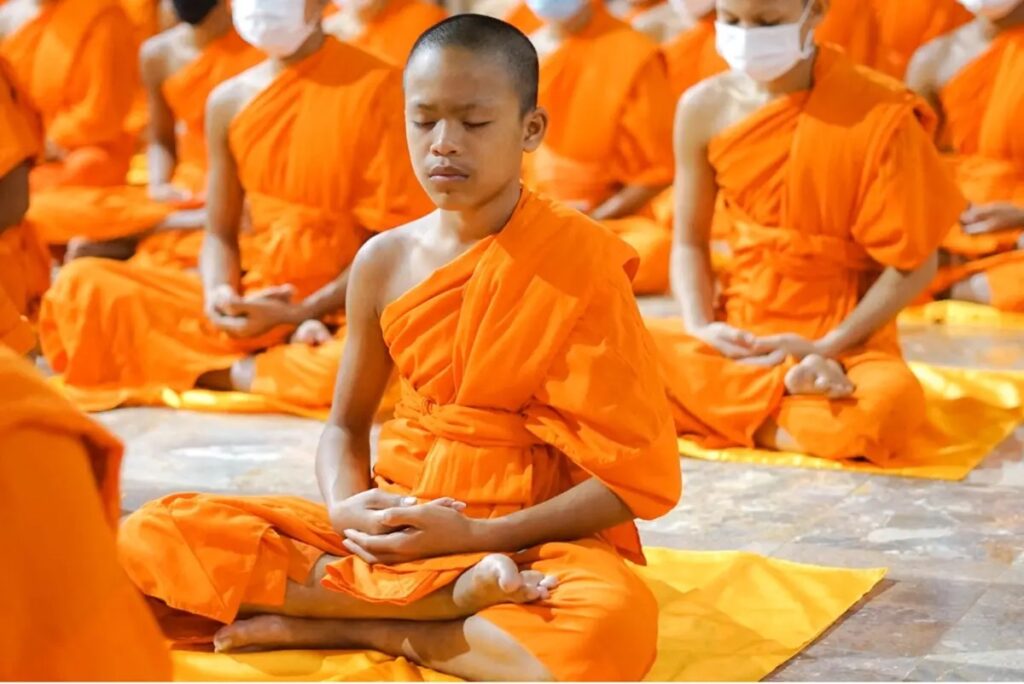
What makes this temple especially unique is its incorporation of Khmer Buddhism and community service. While Khemara Buddhikaram is centered around ideas and traditions of Theravada/Khmer Buddhism which involves veneration of the Buddha, insightful meditation, and following the Vinaya in order to achieve personal enlightenment, Khemara Buddhikaram also focuses on providing a space for all Cambodians, even those who do not follow Buddhism monastically. These services include sheltering the homeless, taking care of elderly citizens when their families work, and even taking in past gang members to rehabillitate them and allow them to better themselves. The temple prides itself on acting as a foundational temple for Theravada Buddhists within the area while also caring for those who are in need.
Practices and Events
In order to preserve and further spread the practices of Theravada Buddhism in Long Beach, CA, Khemara Buddhikaram hosts daily meditation sessions that focus on Theravada methods. Forms of meditation such as insight meditation and calming meditation are commonly practiced, involving chanting mantras, lighting incense, and focusing on single points in order to hone one’s awareness as well as thought processes. Before his passing in 2011, Chhean Kong emphasized the importance of utilizing practices such as calming meditation in order to work with Cambodian migrants that are struggling with mental illness or PTSD from past trauma. In order to care for the monks that live within the temple, it is also common practice for member of the community to donate and pay tribute to the monks. Donations include food, water, and other living necessities that are accessible to those who live in the area.
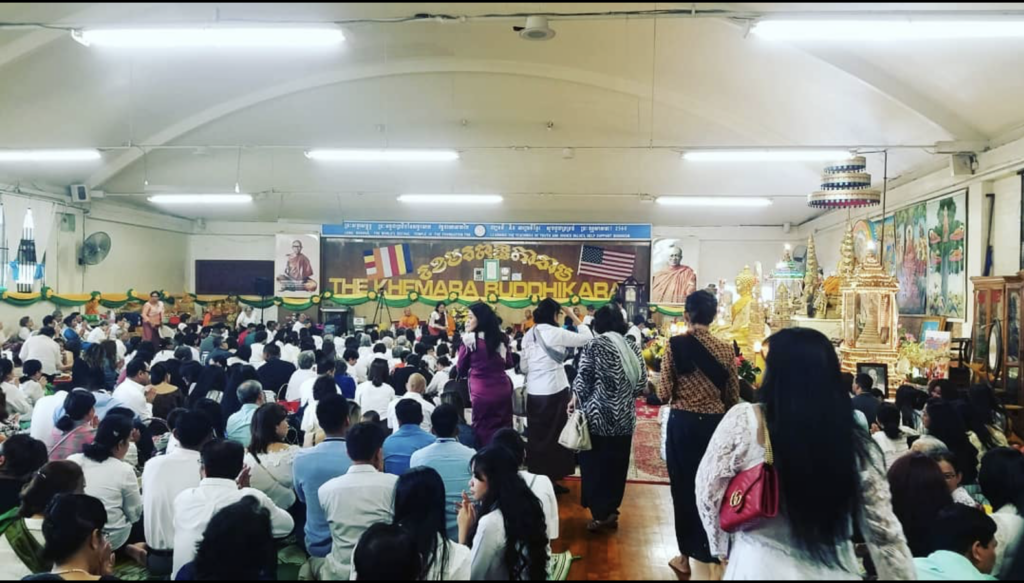
On top of having daily sessions of meditation/veneration and donation collecting, the temple also hosts yearly events that celebrate Cambodian culture and heritage. Yearly events such as Pchum Ben and Bun Kathin are conducted and hosted by Khemara Buddhikaram and serve as open community events that allow the surrounding Cambodian community to celebrate traditional holidays. Pchum Ben serves as an opportunity for Cambodians to venerate their previous ancestors by gathering and making offerings of food to them in order to grant them blessings after death. While Khemara Buddhikaram does not host gatherings for all 15 days of this celebration, it does host one large community event, this year on October 10th, that allows families to congregate and place their offerings. To further these offerings, it is also common for monks to join this gathering and accepting these offerings while chanting mantras so that past ancestors can be reached. The temple’s second large event is Bun Kathin that celebrates the monks of Khemara Buddhikaram by offering new robes in celebration of the 3 month long rainy season ending. Bun Kathin is also believed to be a source of good merit for those who participate and make offerings to the Buddha, allowing Cambodians to not only celebrate monastic life but to generate positive karma while doing so. While Khemara Buddhikaram does not offer large scale retreats, large community centered celebrations such as these allow Cambodians in the area to have a place to relish their traditions and possibly open the public to Cambodian Buddhist practices.
Funding For Khemara Buddhikaram
While funding has been a controversial topic in recent years due to the management of funds by the temple’s board, the establishment and expansion of Khemara Buddhikaram has been based around community donations and donations from the city board of Long Beach, CA. Due to the lack of any large retreats or paid events, these donations usually come in varying amounts that depend on the affordability of the surrounding community and city funding, usually ranging in donations that stem in the $2,000 area.
Constituency
The community that Khemara Buddhikaram has curated is one deeply rooted in Cambodian culture. Since the temple’s founding, it has served as a place to not only celebrate Cambodian culture but to also act as a safe haven for those who migrated away from the violence brought by the Khmer Rouge. This community has valued bringing the culture of Cambodian Buddhism into the United States and creating an area where it can be practiced effectively through this temple. Naturally, due to many of these community members being immigrants or raised by immigrants from Cambodia, deeply rooted ties are apparent between Khemara Buddhikaram and western Buddhist communities. Even from the beginning, Chhean Kong was sponsored by the United Cambodian Community in order to receive a visa into the United States in order to foster and build the Buddhist Cambodian community. Now, since many migrants can trace back their heritage to cities such as Phnom Penh, Battambang, or the Angkor region of Cambodia, the culture and influence in teachings are prevalent with the practices that are shared at Khemara Buddhikaram.
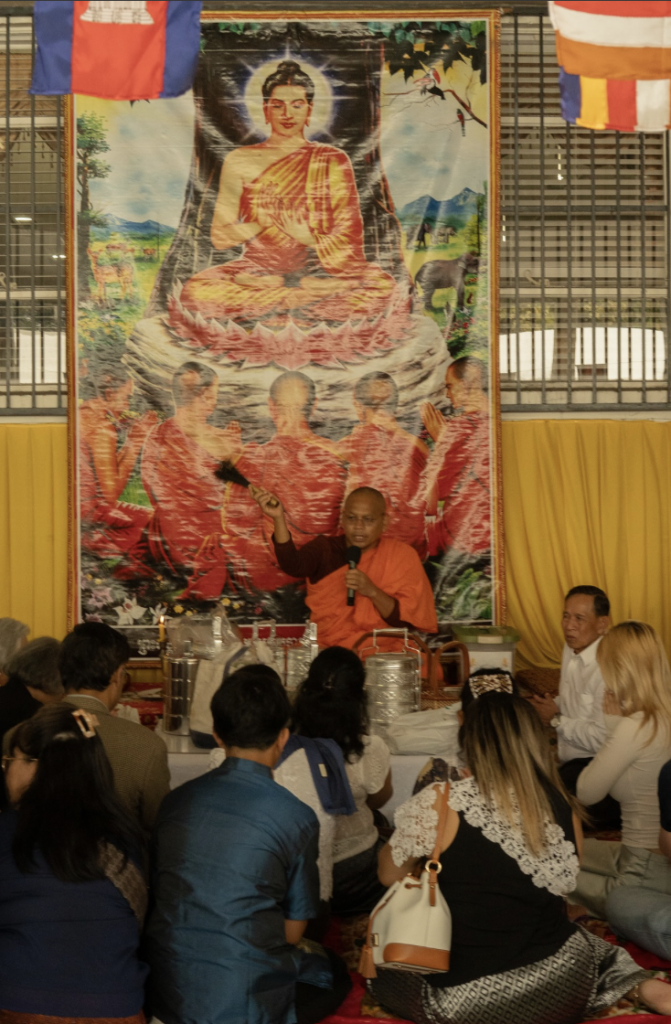
Even though overall turnout to daily practices is modest, ranging from around 20-30 members, the temple still encourages the preservation and spread of Cambodian culture within the area.
From Street Gangs to Temple | The Pluralism Project. (2025). Pluralism.org. https://pluralism.org/from-street-gangs-to-temple
HALDANE, D. (1987, August 23). Modest Buddhist Temple Serves as Heart of Cambodian Community. Los Angeles Times. https://www.latimes.com/archives/la-xpm-1987-08-23-cb-2990-story.html
Interview Series on Buddhism and Cambodia: Monasteries, Education, and Poverty | Canal | World Languages & Cultures | Fine Arts Humanities & Social Sciences | UMass Lowell. (n.d.). Www.uml.edu. https://www.uml.edu/fahss/languages-cultures/canal/2022/interviews-buddhism-cambodia/
Cambodian American Profiles – Historical Society of Long Beach. (2024, January 11). Historical Society of Long Beach. https://hslb.org/cambodian-american-collection/cambodian-profiles/?v=0b3b97fa6688
Buddhist Channel | US West. (2024). Buddhistchannel.tv. https://www.buddhistchannel.tv/index.php?id=65
LB Wat Willow abbot was 66. (2019). Blogspot.com. https://ki-media.blogspot.com/2011/01/lb-wat-willow-abbot-was-66.html
IBCWORLD: Home. (2024). Ibcworld.org. https://www.ibcworld.org/home/diaspora/Cambodia
Rivera, S. (2019, October 29). Wat Willow Buddhist temple tentatively reopens without monks as protests continue. Long Beach Post News; LBPOST News. https://lbpost.com/news/wat-willow-buddhist-temple-tentatively-reopens-without-monks-as-protests-continue/
Khmer Renaissance បដិសន្ធិ on Instagram: “The Khemara Buddhikaram Buddhist Temple” Instagram. https://www.instagram.com/p/DIXbciOSrlC/?hl=en
Celebrating Pchum Ben | We Are California. (2023). Ucdavis.edu. https://camodelcurricula.ucdavis.edu/cambodian-american-studies/celebrating-pchum-ben
WLB. (2024, November 11). Sout Mon Kham Pee New Year’s Eve Chanting. Watbuddhavong.org. https://www.watbuddhavong.org/wlb-updates/tempo/