Introduction and History
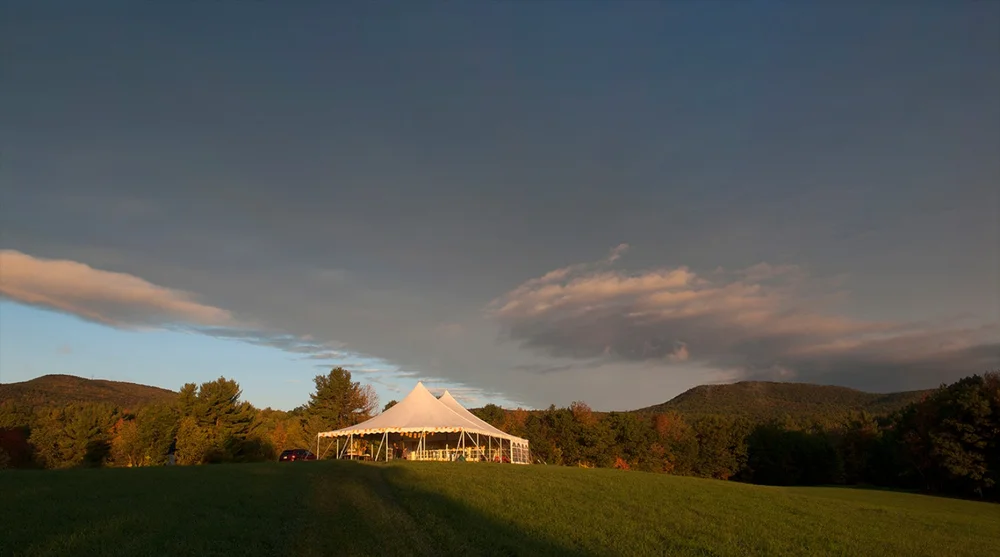
The Temple Forest Monastery in New Hampshire, otherwise known as Jetavana, is located at 32 Derbyshire Ln, Temple, NH. The monastery exists as the second U.S branch to Arjahn Chah’s teachings which originates from Northeast Thailand. Arjahn Chah, the man who’s credited with the spread of Theravada Buddhism in the West, was born on June 17th of 1918 and ordained as a monk in 1939 at the Wat Ko Noi Monastery in Tambon, That. In 1946, after his Father’s death, he begins his journey as a monastic ascetic monk receiving teachings from renowned teachers such as Ajahn Mun and adopting the Thai Forest Monk Tradition.
In 1954, Ajahn Chah establishes the Wat Nong Pah Pong monastery, teaching his practice-based meditations and focuses on Insight Meditation. He firmly believed in both community living and utilization of self-realization, rather than the utilization of texts. During this period, Ajahn Chah accepted Ajahn Sumedho, an American-born monk, into his monastery. Then in 1998, a large group of Buddhists, largely based around Boston, self-named the Buddhaparisa invited Ajahn Sumedho to establish a monastery in New England after the success of Abhayagiri Buddhist Monastery in California. Unfortunately, due to Ajahn Sumedho’s sangha being spread thinly during the time, he was reluctant to establish a new monastery in New England.
New Beginnings
The Buddhaaparisa kept their invitation open, often supporting visiting monks and nuns by both hosting and providing necessary transportation. It was in 2009, when Ajahn Jayanto, a student of Ajahn Sumedho, expressed interest in establishing a monastery within New England, but lacked the funding nor location. Finally, in 2014 Ajahn Jayanto found a property in Temple, New Hampshire to officially establish their monastery. Now the Temple Forest Monastery primarily trains monks in the Thai Forest Tradition, but also provide laypeople with opportunities to both learn from monks and participative within the daily life of the sangha.
Now, The Temple Forest Monastery in New Hampshire is led by two different co-abbots. The first being Ajahn Jayanto, a man born in 1967 in Boston. He pursued an education at the University of Wisconsin at Madison, and through traveling the world found his love in spiritual life. He started at the Insight Meditation Society in Barre, Massachusetts and continued his journey at Amaravati Monastery in England where he became a postulant. Pursuing higher ordination he traveled to the Cittaviveka Monastery in 1991 and at Aruna Ratanagiri Monastery until 1997. Jumping around Thailand and practicing across multiple Buddhist-practicing Asian Countries he finally arrives to the Temple in 2014. Our second co-abbot, Ajahn Anando was born in Blackheath, London in 1966. He started by serving as a soldier in the British Army, turning to East London University to study health and fitness. He started his Buddhist-journey in 1992 training at Amaravati Monastery, Wat Pah Nanachat, and Tan Ajahn Anan’s Monastery. He’s become a resident of the Temple in 2020 and currently serves as their co-abbot.
Practices
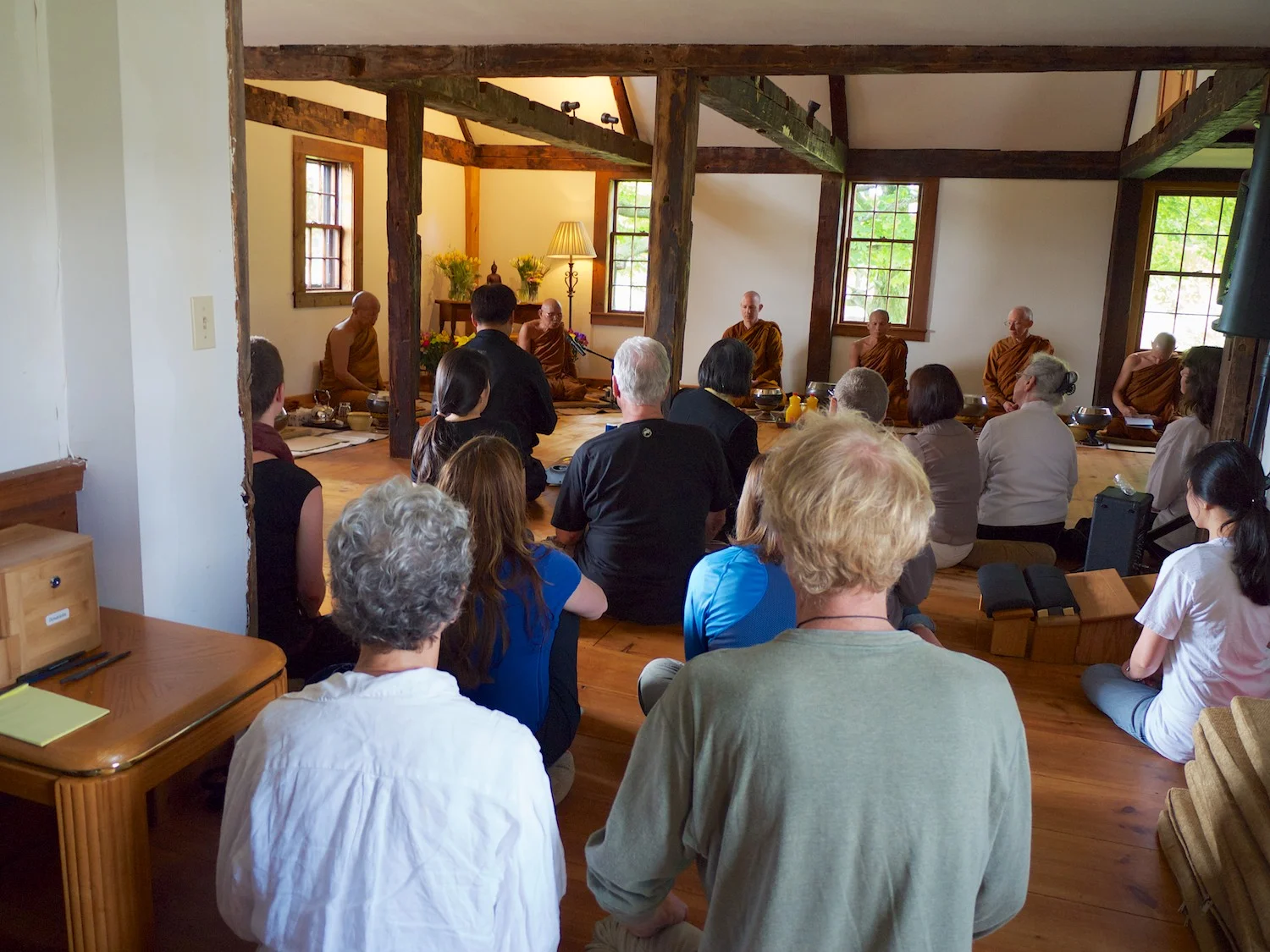
The Temple provides stays for all individuals. First time guests within the New England area are permitted to stay for a week-long, while individuals outside the New England area can be permitted to two weeks. During this period, guests must abide to the daily practices as detailed by the visitors guide. The guide begins by outlining the Eight Precepts, adding three more precepts to the original five. Their precepts are outlined as such…
- To refrain from taking the life of any living creature
- To refrain from taking that which is not given
- To refrain from any kind of sexual activity
- To refrain from false and harmful speech
- To refrain from consuming intoxicating drink or drugs which lead to carelessness
Then the additional three…
- To refrain from eating at inappropriate times (after midday)
- To refrain from entertainment, beautification and adornment (such as music, makeup, and jewelry)
- To refrain from sleeping on a high or luxurious sleeping place (not overindulging in sleep)
Along with outlining the Temple’s Eight Precepts, the visitors guide emphasizes the sixth precept. The guide highlights restrictions to eating after the “Main Meal” ending around noon. However, it’s noted that tea, juice, and possible sweets are available after 5:00pm with their next meal starting at 7:00am the next morning. Therefore two meals are present for residents throughout the entire day, breakfast at 7:00am and the Main Meal starting at 11:00am.
The daily practices of the Temple are outlined as such,
5:00am: Morning Puja – Chanting and Meditation
6:15am: Morning Chores
7:00am: Light Breakfast and Tea
7:30am: Discussion of the Tasks for the Morning
8:00am: Meal Preparation and General Work Period Begins
11:00am: The Main Meal
1:00pm: Period for Personal Practice
7:00pm: Evening Puja – Chanting and Meditation
From observing the Temple’s daily practice’s we notice the utilization of two separate times for “Puja,” a moment for chanting and meditation. The Forest Temple emphasizes the utilization of Insight Meditation, even providing an E-book titled Introduction to Insight Meditation. The book explores the ideas of setting, Awareness of Body, Mindfulness of Breathing, Walking and Standing, Lying Down, Cultivation of the Heart, and Reflection as key components to Insight Meditation. The book takes a step further suggesting the usage of companions and regular times to further the effectiveness of meditation. The book even provides solutions to common issues such as drowsiness, tension and headaches, and for posture. For example, the book recommends meditating with the eyes-fully open or even standing-up and walking mindfully to combat drowsiness. It’s important to note, that the ideas of no-self are absent from overviews, perhaps in efforts to better accommodate American ideologies.
The Temple also puts emphasis on respect within the monastery. It’s crucial that guests remove their shoes before entering a shrine room or living space. Although guests aren’t bound to bowing to the shrine or teacher, it’s customary to undergo the Triple bow. A bow before the Buddha, Dhamma, and Sangha when leaving and entering a room. Additionally, it’s imperative within the Meditation Hall to minimize the amount of sound produced, while also avoiding “lolling or lounging.” Finally, feet should not be pointed towards the shrine or individuals as a form of respect.
Bowing and terms of address are essential within the monastery. Individuals ordained for ten years or more are addressed as Ajahn, other monks addressed as Tan. However, all monks can be addressed as Bhante as a general address. Bowing, or Anjali, is specifically described with one kneeling, buttocks reaching the heel and with their hands in a prayer-like fashion with a slightly lowered head. Finally, one’s palms must be spaced four inches on the floor, with elbows close to your knees and bringing one’s forehead to touch the floor between palms and bow three times.
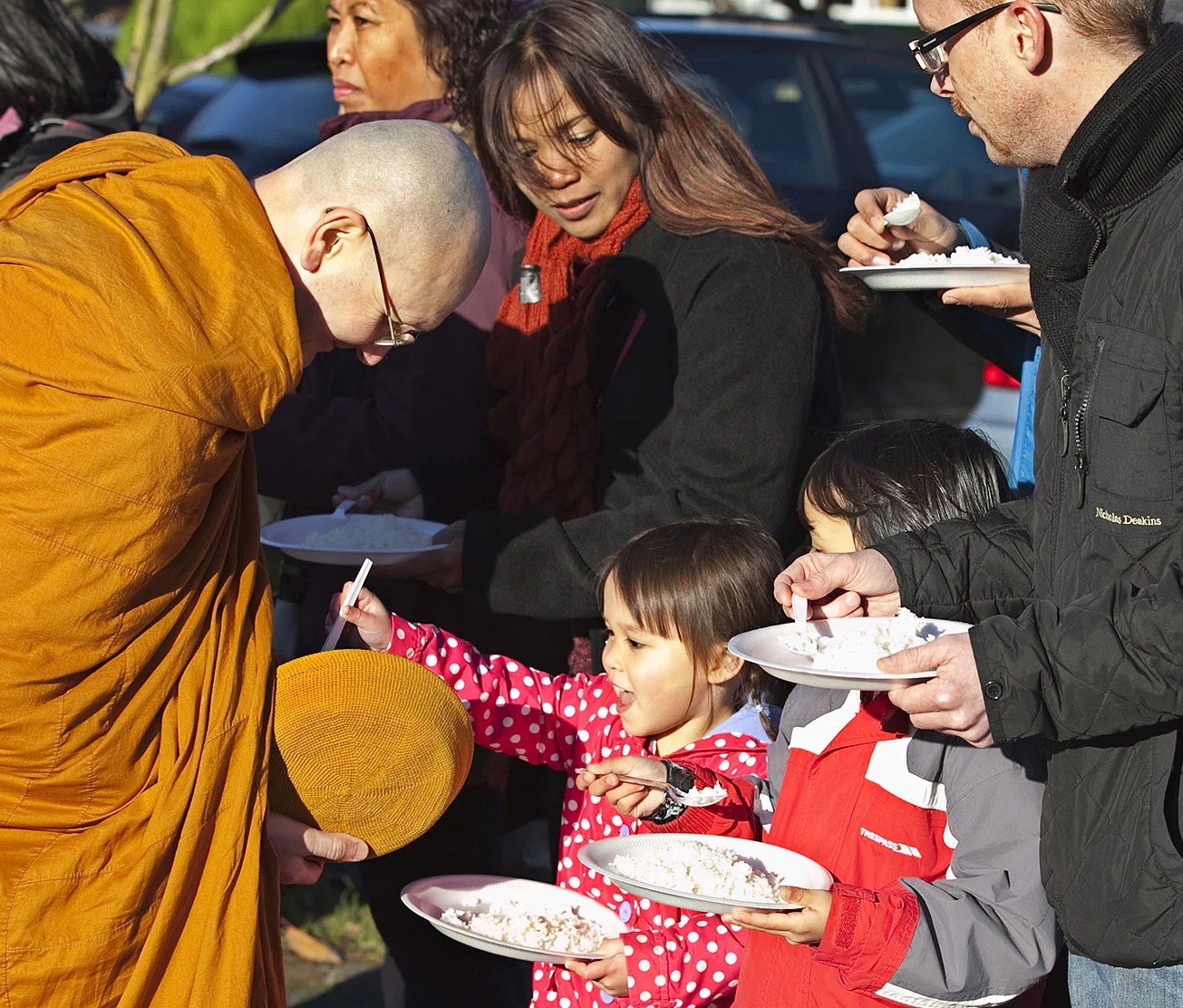
Meal preparation may be a striking addition to the daily rituals due to the forbidden nature of meal preparation, however it pertains to the laypeople rather than the monks and nuns affiliated with the Temple. This brings another point, the monks themselves are unable to possess money or store food and therefore depends on donations from laity. Everyday a pot-luck styled buffet occurs with the dishes that’s offered by the laity. During the Main Meal, all people are welcome to share the buffet with the monks. The monastic community also accept offerings through the form of an almsround.
Events
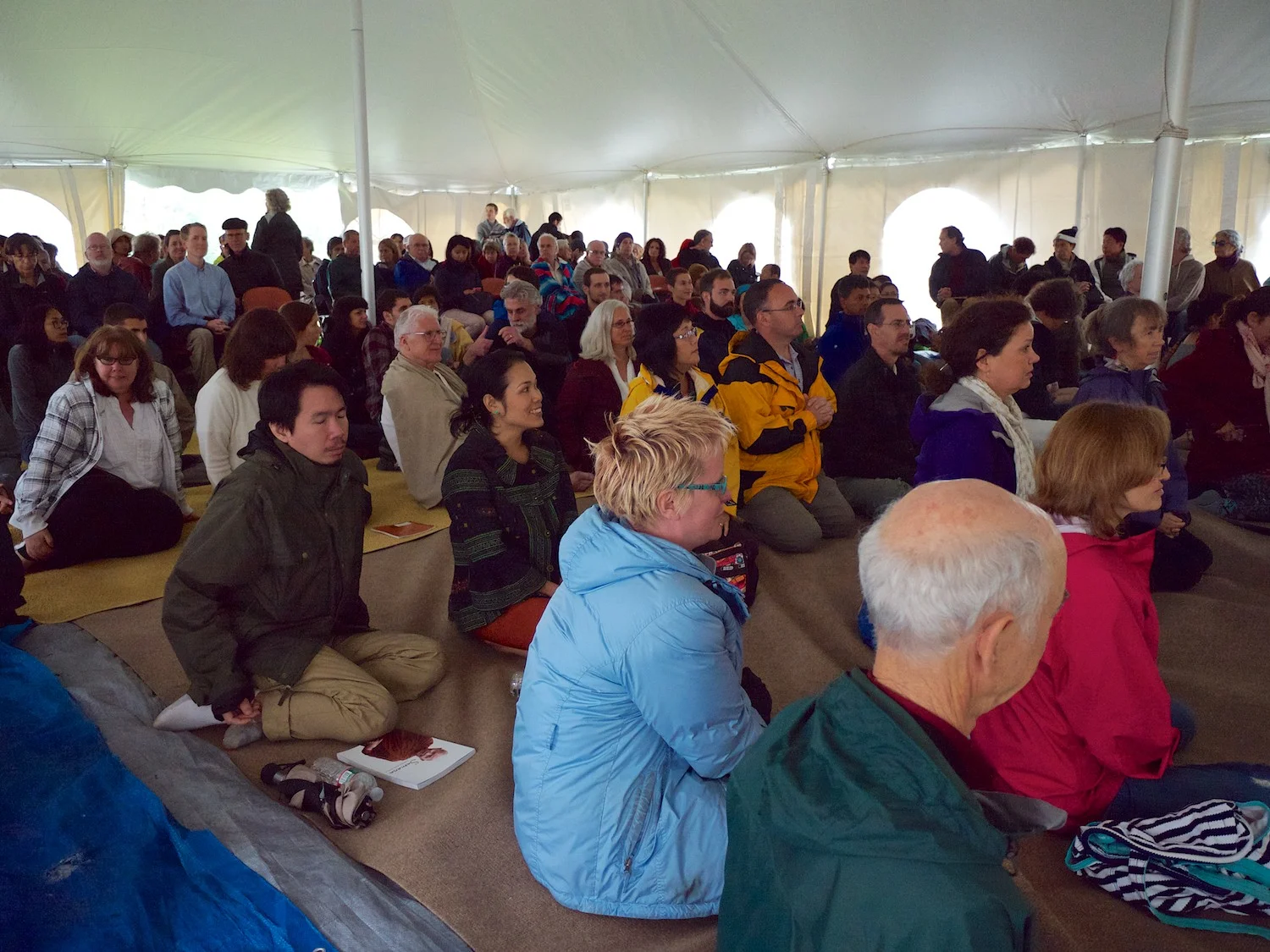
The Temple reserves weekly events every Saturday and Sunday. On Saturdays, the Dhamma Talk occurs after the evening Puja from 7:00 to 9:00pm. On Sundays, after the Main Meal occurs, both meditation and the Dhamma Talk happens from 1:00 to 3:00pm. So what is a Dhamma Talk? By watching their Dhamma Talks, posted on their website, the talks starts with the same chant in Pali from an Ajahn and continues in the format of a sermon which lasts around an hour. The talks cover multiple topics with titles ranging from “Even Aliens are Impermanent” to “Hitting the Wall.” These talks seem to cater towards laypeople or people with interests in Buddhism gathering many individuals who’re not monks nor nuns.
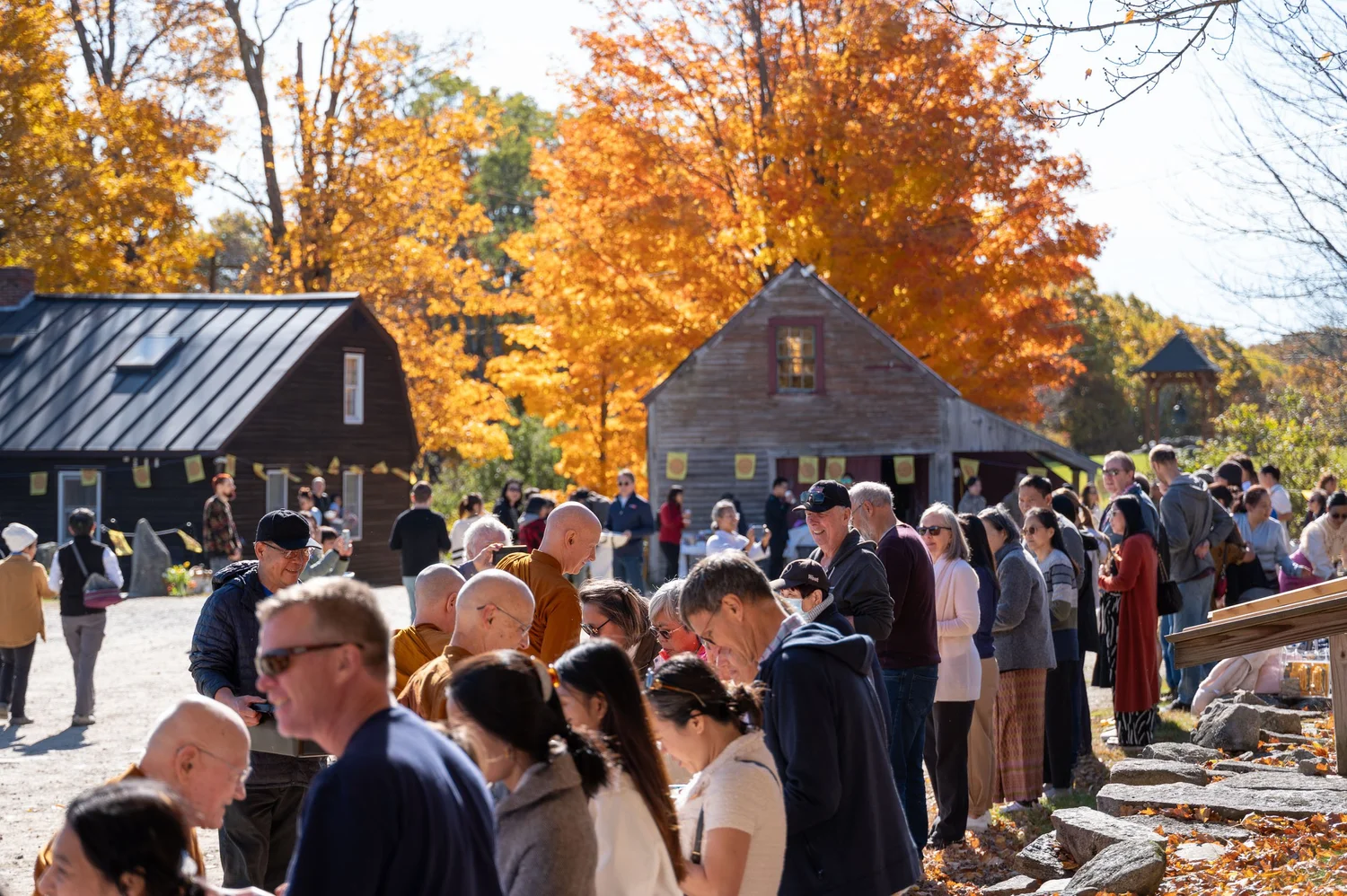
As for Annual Events the monastery recently celebrated Kathina Day on the First of November. The trademark of the ceremony being the receival of offered cloth to the sangha, which they’ll sew into a finished robe before the next dawn for a chosen elder. The day even serves as a community event for both the monastic and lay community to come together and celebrate. The day starts at 10:20am with introductory remarks and ending promptly at 2:00pm.
Along with Kathina Day, the monastery offers a Winter retreat for monastics between the months of January and March. During this period, guests are not permitted to stay overnight, however day visitors are accepted. Although the events of this period are left obscure, the three months seem to be utilized for intensive monastic practice.
Constituency and Finances
The Temple currently holds fifteen different monastics. A majority being American-born from the East-Coast. However, their co-abbot, Ajahn Anando, as mentioned previously was born in London and Ajahn Pesalo born in Japan but raised in Pasadena, California. Now what about their lay community? From pictures it seems that a majority of these individuals are from Buddhist-practicing Asian countries such as Thailand or either American-born Caucasian people. The relationship between these two communities seem incredibly strong as demonstrated through images and strong attendance between the lay community.
As for the finances of the Temple, they’re handled by a non-profit organization that was formed concurrently with the establishment of the Forest Temple Monastery. The Jeta Grove Foundation handles both receiving and handling of all online and cash donations and operate as a “steward” to the monastics. The Jeta Grove members are chosen by the monks and work closely to manage expenditures and financial projects of the sangha.
Relationships and Understanding Buddhism’s Spread
The Forest Temple Monastery as mentioned before have deep ties with Arjahn Chah’s network of related monasteries. As aforementioned, the Abhayagiri Monastery in California were the first of the Thai Forest Tradition to migrate to the U.S. Now, the Pacific Hermitage in the Pacific Northwest acts as the third U.S monastery and as a branch of the Abhayagiri Monastery. Their connections don’t end there, extending to three monasteries in Canada, six in the U.K, five in Europe, six in Thailand, six in Australia, two in New Zealand, and one in South America. The most notable monastery being the Wat Nong Pah Pong, the original monastery where Ajahn Chah had started his teachings.
As demonstrated by the wide spread of Ajahn Chah’s teachings of Thai Forest Tradition of Theravada Buddhism. The monastery firmly believes in building relationships with not only the laypeople but extending their knowledge across the globe and the U.S. In a July 2022 newsletter, mentions of establishing a meditation center in Asheville, North Carolina occurred between Elisha, a layperson, and Ajahn Kumero, due to the local interests of the people. That meditation center came-to-be on May 1, 2022. Demonstrating that the people of the Temple are deeply interested in spreading Buddhism across the U.S and are devote to building beautiful intra-country relationships.
Sebastian Lee