Christopher Pharr
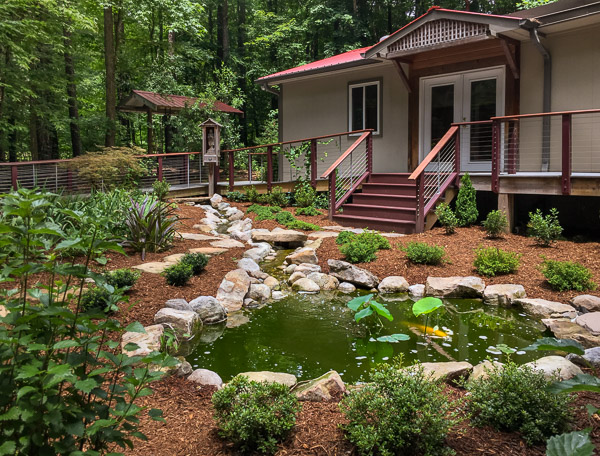
The Chapel Hill Zen Center (CHZC) is a Buddhist community located in Chapel Hill, North Carolina, that practices and teaches Soto Zen Buddhism. The community began in 1981 as a small group of individuals who met to practice meditation in their homes in the Chapel Hill and Durham area. In 1997, the group formally adopted the name Chapel Hill Zen Center. Today, the center offers regular meditation sessions, Buddhist instruction, study groups, and retreats. It maintains connections with other Zen Buddhist organizations in the United States, particularly the prominent San Francisco Zen Center, as well as with Soto Zen institutions in Japan. The Chapel Hill Zen Center provides an example of an American Buddhist community rooted in Japanese religious traditions.
History and Founding
The Chapel Hill Zen Group was established in 1981 by a small group of friends who met to practice meditation in one another’s homes in the Durham and Chapel Hill area. Among the early organizers were Frank and Mo Ferrell, Lois Bateson, and Tom Hardison, several of whom had previously practiced at the San Francisco Zen Center in California. During its early years, the group relied on borrowed or temporary meeting spaces rather than having a permanent location of its own.
An important development came in 1991, when the group invited Taitaku Josho Patricia Phelan to lead its practice. Phelan had begun practicing Zen meditation in 1969 and had spent many years training at the San Francisco Zen Center and Tassajara Zen Mountain Center. Her arrival provided the growing community with a resident teacher who could oversee its religious instruction and continued development. In 1995, Phelan received Dharma Transmission from Sojun Mel Weitsman Roshi, formally recognizing her as a Dharma successor within the Soto Zen tradition.
In October 1995, the group moved into its first permanent location at 5322 North Carolina Highway 86, just outside Chapel Hill. As its membership and activities expanded, the Board of Directors voted in December 1997 to change the organization’s legal name from the Chapel Hill Zen Group to the Chapel Hill Zen Center. Phelan was officially installed as its abbess in October 2000. Since then, the center has continued to expand its facilities, religious programs, and teaching activities.
Buddhist Tradition and Teachings
This community follows the Soto school of Zen Buddhism, a Japanese tradition within Mahayana Buddhism associated with the thirteenth-century teacher Eihei Dogen. Soto Zen places particular importance on zazen, or seated meditation, which is considered the central practice through which practitioners express and realize their Buddha nature. Buddha nature refers to the inherent enlightened nature present in all beings. In her article “The Buddha We Are,” the center’s abbess, Josho Pat Phelan, quotes the influential Zen teacher Shunryu Suzuki: “To be a human being is to be a Buddha.” This reflects a central Soto Zen teaching that enlightenment is not something people must acquire, but something already inherent in human existence.
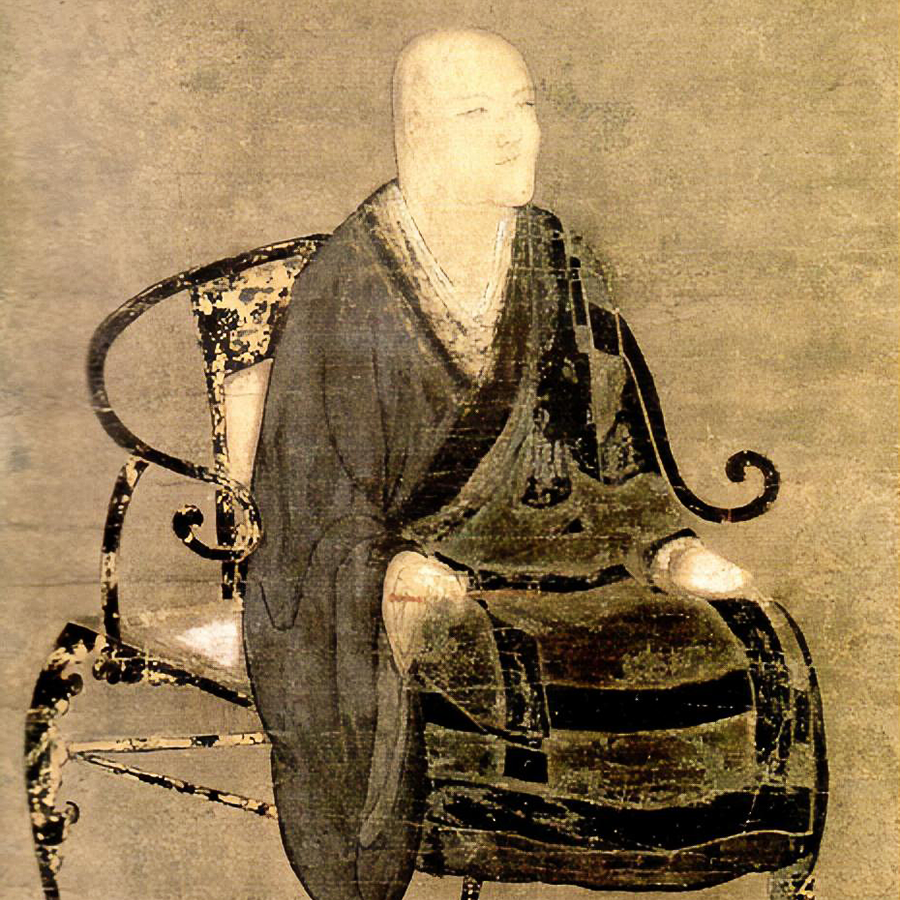
Phelan explains that meditation is therefore not simply a means of achieving relaxation or a particular mental state. Rather, it is a way of expressing one’s inherent nature through practice. This understanding follows the teachings of Dogen, who emphasized the relationship between practice and realization. Phelan also stresses that Zen practice extends beyond meditation into everyday activities, explaining that “we have the opportunity to practice” wherever we are and whatever we are doing. The center also emphasizes the Bodhisattva Precepts, which provide ethical guidelines for practitioners and encourage compassion and responsibility toward others. Through meditation, ethical conduct, and the study of Buddhist teachings, the Chapel Hill Zen Center maintains the central principles of the Soto Zen tradition.
Practice
The central religious practice at the Chapel Hill Zen Center is zazen, or seated meditation. In Soto Zen Buddhism, zazen is understood as form of Buddhist practice through which individuals realize their Buddha nature. As Josho Pat Phelan explains in her article “Zazen Posture,” the practice involves bringing attention to the present moment through awareness of one’s posture, breathing, physical sensations, and state of mind. The center also incorporates kinhin, or walking meditation, which takes place between periods of seated meditation.
A regular weekly schedule of meditation sessions is maintained at the center. In-person zazen is offered Monday through Friday mornings at 6:00 and 6:50 AM, Tuesday evenings at 7:00 and 7:50 PM, and Sunday mornings at 9:00 and 9:50 AM. Walking meditation takes place between the two sitting periods. Sutra chanting services follow the weekday morning and Sunday morning sessions. The center also offers weekday morning meditation through Zoom, allowing individuals to participate remotely. Newcomers can attend orientation and meditation instruction on Sunday mornings or Tuesday evenings.
In addition to its regular weekly schedule, the center holds several special events and retreats throughout the year. One of its most important annual observances is Rohatsu Sesshin, an intensive meditation retreat commemorating the Buddha’s enlightenment. The center also holds a New Year’s Eve program that includes meditation, a Bodhisattva Ceremony, and a fire ceremony. Beyond its religious events, members participate in community service, including volunteering at the Inter-Faith Council Community Kitchen and supporting the Prison Book Donation Program.
Membership
The Chapel Hill Zen Center is open to anyone interested in participating in Zen meditation, and formal membership is not required to attend its regular practices. The center offers three categories of membership for individuals who wish to become more involved in the community. General Membership is intended for those who want to provide basic support through financial contributions or volunteer work. Sustaining Membership is designed for individuals who have an established relationship with one of the center’s teachers but may live outside the area or otherwise be unable to participate in its regular organizational activities. Participating Membership is the most involved category. Applicants are expected to attend regularly for at least three months, meet privately with a priest, make a financial pledge, and assist with the maintenance of the center and its religious services. Participating members also have a role in organizational decisions, including electing the Board of Directors.
The center emphasizes an inclusive approach to membership. Its Affirmation of Welcome expresses a commitment to embracing diversity and making every member of the community feel valued and respected. Although the center does not publish a specific membership total or detailed demographic breakdown, its membership structure accommodates both regular local practitioners and individuals who maintain connections to the community from elsewhere. This allows the Chapel Hill Zen Center to serve as both a local religious congregation and part of a wider network of Soto Zen practitioners.
Funding and Organization
The Chapel Hill Zen Center operates as a nonprofit religious organization and relies primarily on voluntary contributions from its members and supporters. Membership pledges form the foundation of its operating budget, allowing the Board of Directors to plan expenses and maintain the center’s facilities and activities. The organization is registered as a 501(c)(3) nonprofit in North Carolina, making financial contributions tax-deductible. Donations can be made as one-time payments or recurring monthly contributions, and the center maintains separate funds for general expenses, property maintenance, and membership support. The center also invites individuals to offer dāna, or offerings to its teachers, through a separate donation process.
In addition to regular contributions, the center collects fees for certain activities, including meditation retreats and workshops. These fees help cover the costs of organizing programs, although the center also offers scholarships to ensure that financial circumstances do not prevent individuals from participating. Members contribute to the organization in ways beyond financial support, including volunteering to maintain the building, organize religious services, and assist with community activities. This combination of financial donations and volunteer participation allows the center to sustain its religious and organizational activities.
Leadership
The Chapel Hill Zen Center’s religious leadership is headed by Josho Pat Phelan, who has served as its abbess since October 2000. Phelan’s involvement with Zen began in 1969, and she moved to the San Francisco Zen Center in 1971 to pursue more intensive training. She was ordained as a priest in 1977 by Zentatsu Richard Baker, then the successor to Shunryu Suzuki at the San Francisco Zen Center. Over the following years, she continued studying with other senior teachers in Suzuki’s lineage, including Sojun Mel Weitsman and Tenshin Reb Anderson. In the spring of 1991, the Chapel Hill Zen Group asked the abbots of the San Francisco Zen Center to send Phelan to lead its growing community. She received Dharma Transmission from Sojun Weitsman in 1995, formally recognizing her as his Dharma successor and authorizing her to teach within their Soto Zen lineage.
Alongside Phelan, the center’s religious leadership includes Zenki Kathleen Batson, who serves as vice abbess. Batson began practicing Zen in 1990 and joined the Chapel Hill Zen Center in 2000. Phelan ordained her as a priest in 2015, and she later served as shuso, or head monk, during a period of intensive training in 2019. In 2023, Batson received Dharma Transmission from Phelan and was installed as vice abbess in September of that year.
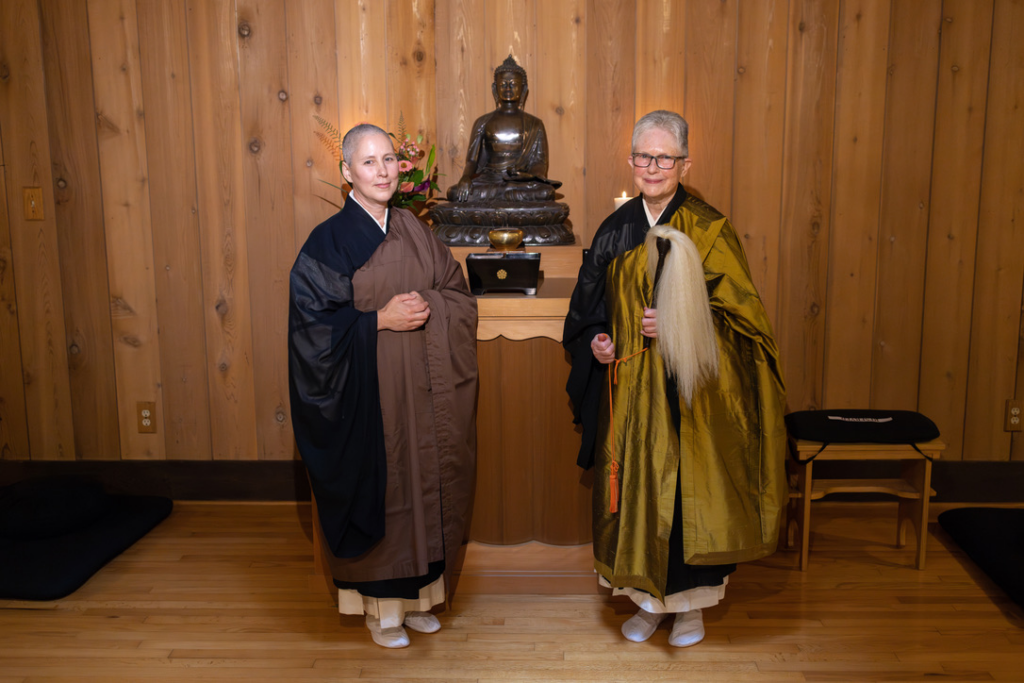
Abbess Josho Pat Phelan (right) and Vice Abbess Zenki Kathleen Batson (left).
Relationships with Other Buddhist Communities
The Chapel Hill Zen Center is closely connected to the San Francisco Zen Center (SFZC), an important institution in the development of Soto Zen Buddhism in the United States. Its history is rooted in the teachings of Shunryu Suzuki Roshi, a Japanese Soto Zen priest who arrived in San Francisco in 1959 to serve a Japanese Buddhist congregation. In 1962, he established the San Francisco Zen Center, which became an important center for the development of Soto Zen in America. Suzuki also helped establish Tassajara Zen Mountain Center in California, the first Soto Zen training monastery in the United States. Several of the original members of the Chapel Hill Zen Group had previously practiced at SFZC, bringing this tradition with them when they began meeting in North Carolina in 1981. The relationship became even closer in 1991, when the group invited Pat Phelan, who had trained at SFZC for approximately twenty years, to lead its practice. Today, Chapel Hill Zen Center remains formally affiliated with SFZC through its Branching Streams network, which connects Zen centers and meditation communities that follow Suzuki’s lineage. The network provides opportunities for affiliated communities to share teachings, support one another, and maintain relationships with other practitioners.
The center also maintains connections with the Japanese institutions from which Soto Zen originated. It is registered with Soto Zen Headquarters in Japan as an Overseas Soto Zen Temple, formally connecting it to the wider Soto Zen organization. In 2008, Pat Phelan traveled to Japan to participate in ceremonies at Eihei-ji and Soji-ji, the two principal temples of the Soto Zen tradition. These connections are also reflected in the center’s teaching lineage, which follows the traditions transmitted through both Shunryu Suzuki and Dainin Katagiri, another influential Japanese Soto Zen teacher who helped establish Zen communities in the United States. Beyond these larger institutions, the Chapel Hill Zen Center maintains relationships with other regional Buddhist communities, including the Richmond Zen Group, which it identifies as a friend of the center. It also recognizes several other Zen groups throughout North Carolina. Through these relationships, the Chapel Hill community remains connected to a broader network of Buddhist practitioners while maintaining its own local congregation and religious activities.
Community
The Chapel Hill Zen Center represents one example of how a Buddhist tradition with roots in Japan has become established in the United States. Although its practices follow the Soto Zen tradition, the center has developed a local community in North Carolina that welcomes people interested in meditation and Buddhist study. Its Affirmation of Welcome states: “Embracing diversity, the Chapel Hill Zen Center expresses the fundamental connection of all beings by welcoming everyone to the practice of zazen.” It continues, “We vow to work together to make every member of our community feel valued and respected.” This statement reflects the center’s emphasis on inclusivity and its understanding of the connection between all living beings. The center also makes its practices accessible to newcomers by offering meditation instruction and opening its regular services to the public.