Categories
Uncategorized

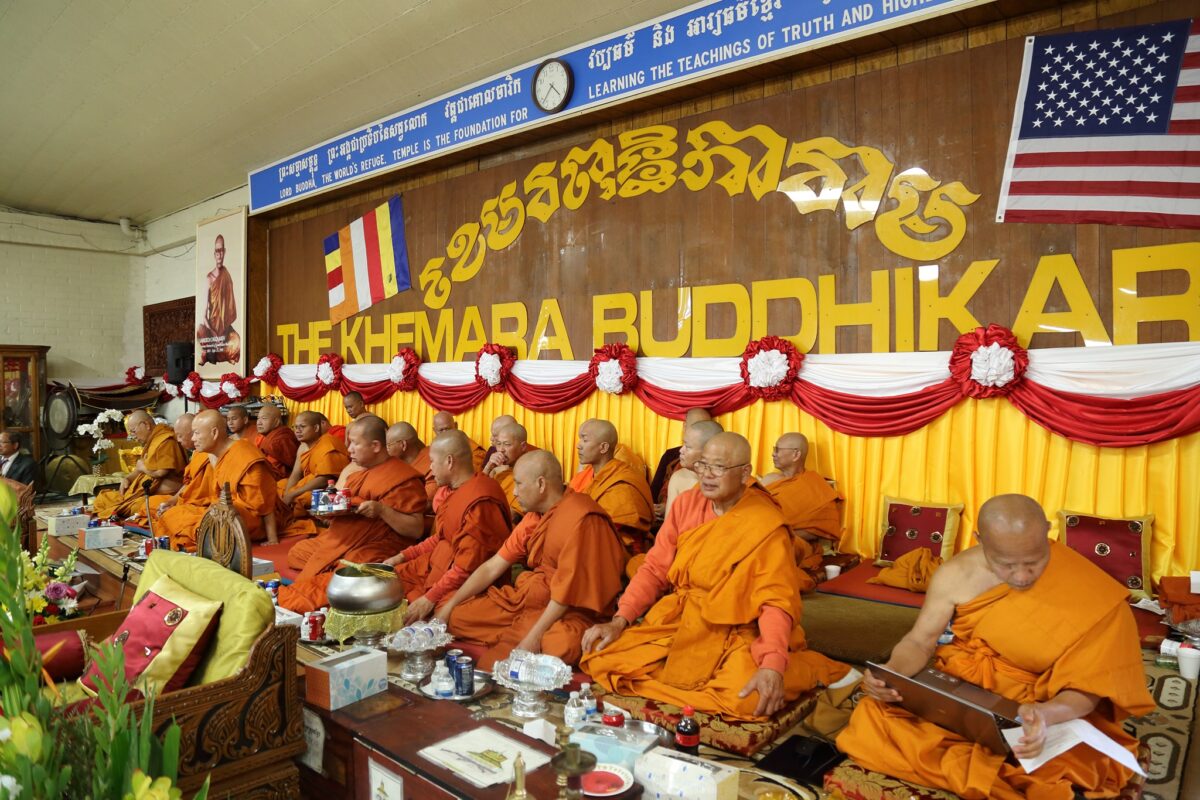
 Khemara Buddhikaram

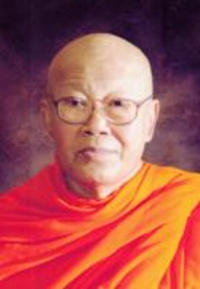
In the 1970’s, the devastating effects of the Khmer Rouge regime in Cambodia put tens of thousands of Buddhists within the country at risk of persecution or death due to the regime’s abolition of religion to create a “utopian” society. This genocide of monastic followers of all religions forced many citizens of Cambodia to migrate away from their homes to evade capture or potential death. Within this community of migrants is Rev. Chhean Young, the founder of Khemara Buddhikaram. In 1979, to flee from the violent regime of Pol Pot, Chhean Young was sponsored to migrate to Southern California in order to preserve and spread the teachings of Buddhism he was practicing in Cambodia. In 1982, Young founded Khemara Buddhikaram as a place to foster other Cambodian migrants and curate the first Cambodian Buddhist community in Long Beach, California. On top of founding Khemara Buddhikaram, Chhean Kong also worked to receive a PhD in clinical psychology so he could work with fellow Cambodian refugees who suffered from PTSD or other mental illnesses that may have stemmed from traumatic experiences under the Khmer Rouge. Due to his work, Cambodian migrants within Long Beach California, a community that was estimated to be about 26,000, had a place of worship and a foundation to build a religious community in the United States.

Rev. Chhean Kong

Khmer Buddhism

Being the predominant religion in Cambodia, Khmer Buddhism is made up of mostly Theravada beliefs and practices, with emphasis being placed on Cambodian-specific customs and national identity. As Theravada Buddhism became the main religion of the country, with 95% of the population falling under this religion, certain cultural evolutions took place that highlight Cambodian culture within this sect of Buddhism; this is what formed Khmer Buddhism. With the same practices and vinaya as Theravada, Khmer Buddhism differs along the lines of national pride and celebration being integrated. Celebrations such as the Khmer New Year and Magha Puja are culturally significant holidays of Cambodia that have been integrated into common Khmer Buddhist celebrations. Overall, a common way to think of Khmer Buddhism is Theravada practices that have been integrated into Cambodian culture and are now being brought over into the United States.

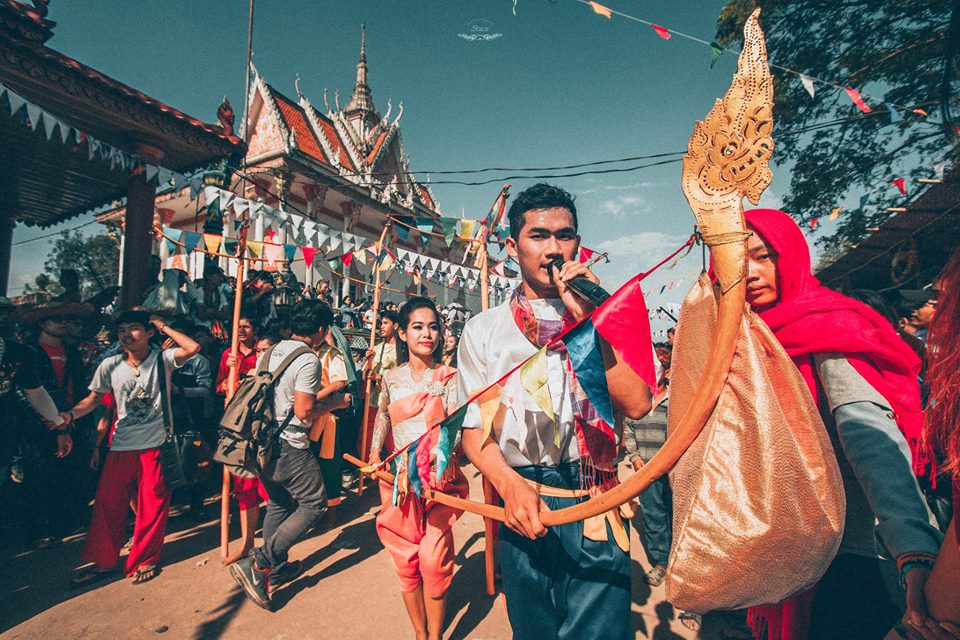
Common celebrations of Khmer New Year in Cambodia include festivals all around the country as well as familial gatherings

Ideals of Khemara Buddhikaram

Khemara Buddhikaram offers a safe space for all cambodians however, the main traditions that are practiced and taught within this temple fall under Khmer Buddhism, a sect of buddhism that is primarily defined by Theravade Buddhism and made up 97% of the Cambodian population before the Khmer Rouge took power. Before having to leave Cambodia, Chhean Kong studied and practiced this form of Buddhism and brought these ideas with him in order to form and establish Khemara Buddhikaram.

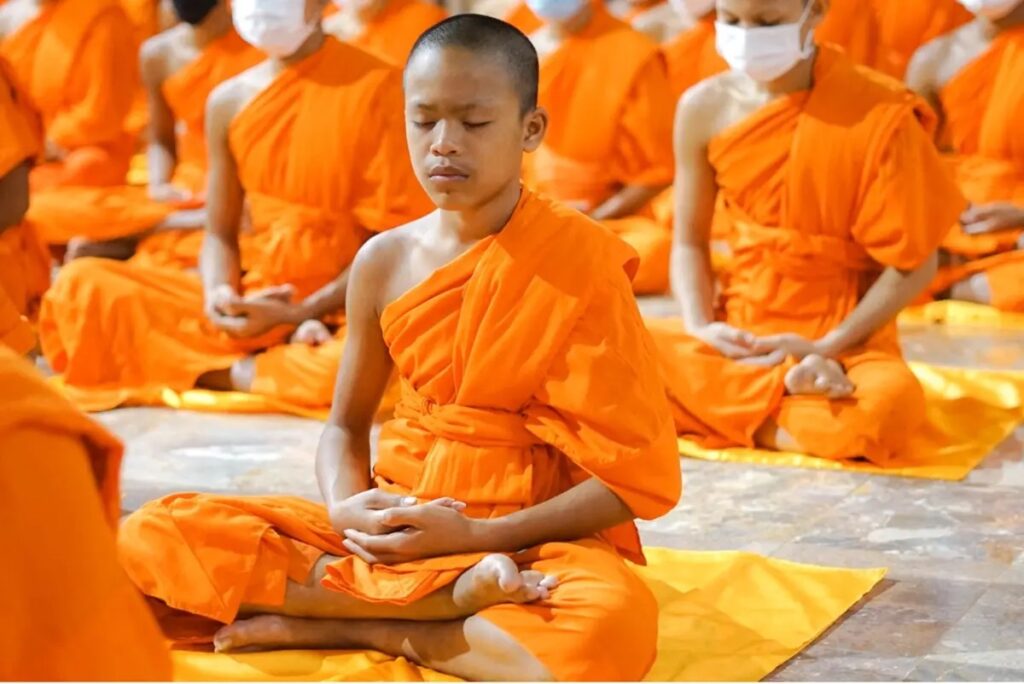
Novice monk Sarom Nhor practicing daily meditation at his residing Varin Prek Leab monastery, Phnom Penh, Cambodia.

What makes this temple especially unique is it’s incorporation of Khmer Buddhism and community service. While Khemara Buddhikaram is centered around ideas and traditions of Theravada/Khmer Buddhism which involves veneration of the Buddha, insightful meditation, and following the Vinaya in order to achieve personal enlightenment, Khemara Buddhikaram also focuses on providing a space for all Cambodians, even those who do not follow Buddhism Monastically. These services include sheltering the homeless, taking care of elderly citizens when their families work, and even taking in past gang members to rehabillitate them and allow them to better themselves. The temple prides itself on acting as a foundational temple for Theravada Buddhists within the area while also caring for those who are in need.

Practices and Events

In order to preserve and further spread the practices of theravada buddhism in Long Beach, CA, Khemara Buddhikaram hosts daily meditation sessions that focus on Theravada methods. Forms of meditation such as insight mediation and calming meditation are commonly practiced that involve chanting mantras, lighting incense, and focusing on single points in order to hone one’s awareness as well as thought processes. Before his passing in 2011, Chhean Kong emphasized the importance of utilizing practices such as clamining meditation in order to work with Cambodian migrants that are struggling with mental illness or PTSD from past trauma. In order to care for the monks that live within the temple, it is also common practice for member of the community to donate and pay tribute to the monks. Donations include food, water, and other living necessities that are accessible to those who live in the area.

Members of the Long Beach Community meditating at Khemara Buddhikaram

On top of having daily sessions of meditation/veneration and donation collecting, the temple also hosts yearly events that celebrate Cambodian culture and heritage. Yearly events such as Pchum Ben and Bun Kathin are conducted and hosted by Khemara Buddhikaram and serve as open community events that allow the surrounding Cambodian community to celebrate traditional holidays. Pchum Ben serves as an opportunity for Cambodians to venerate their previous ancestors by gathering and making offerings of food to them in order to grant them blessings after death. While Khemara Buddhikaram does not host gatherings for all 15 days of this celebration, it does host one large community event, this year on October 10th, that allows families to congregate and place their offerings. To further these offerings it is also common for monks to join this gathering and accepting these offerings while chanting mantras so that past ancestors can be reached. The temple’s second large event is Bun Kathin that celebrates the monks of Khemara Buddhikaram by offering new robes in celebration of the 3 month long rainy season ending. Bun Kathin is also believed to be a source of good merit for those who participate and make the offerings to the Buddha, allowing Cambodians to not only celebrate monastic life but to generate positive karma while doing so. While Khemara Buddhikaram does not offer large scale retreats, large community centered celebrations such as these allow Cambodians in the area to have a place to relish their traditions and possibly open the public to Cambodian Buddhist practices.

Funding For Khemara Buddhikaram

While funding has been a contreversial topic in recent years due the management of funds by the temple’s board, the establishment and exanpansion of Khemara Buddhikaram has been based around community donations and donations from the city board of Long Beach, CA. Due to the lack of any large retreats or paid events, these donations usually come in varying amounts that depend on the affordability of the surrounding community and city funding usually ranges in donations that stem in the $2,000 area.

Constituency

The community that Khemara Buddhikaram has curated is one deeply rooted in Cambodian culture. Since the temple’s founding, it has served as a place to not only celebrate Cambodian culture but to also act as a safe haven for those who migrated away from the violence brought by the Khmer Rouge. This community has valued bringing the culture of Cambodian Buddhism into the United States and creating an area where it can be practiced effectively through this temple. Naturally, due to many of these community members being immigrants or raised by immigrants from Cambodia, deeply rooted ties are apparent between Khemara Buddhikaram and western buddhist communities. Even from the beginning, Chhean Kong was sponsored by the United Cambodian Community in order to receive a visa into the United States in order to foster and build the Buddhist Cambodian community. Now, since many migrants can trace back their heritage to cities such as Phnom Penh, Battambang, or the Angkor region of Cambodia, the culture and influence in teachings are prevalent with the practices that are shared at Khemara Buddhikaram.

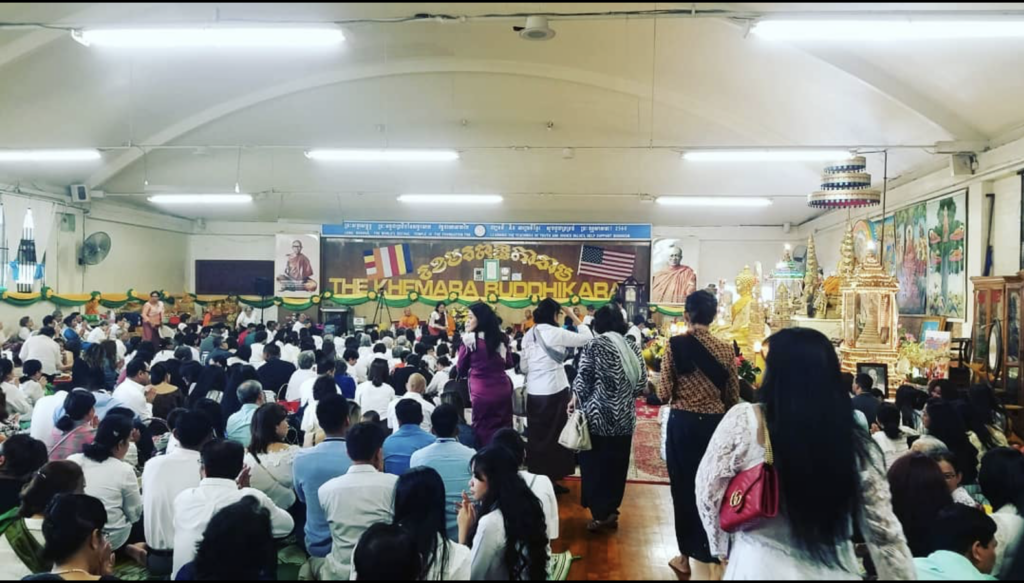
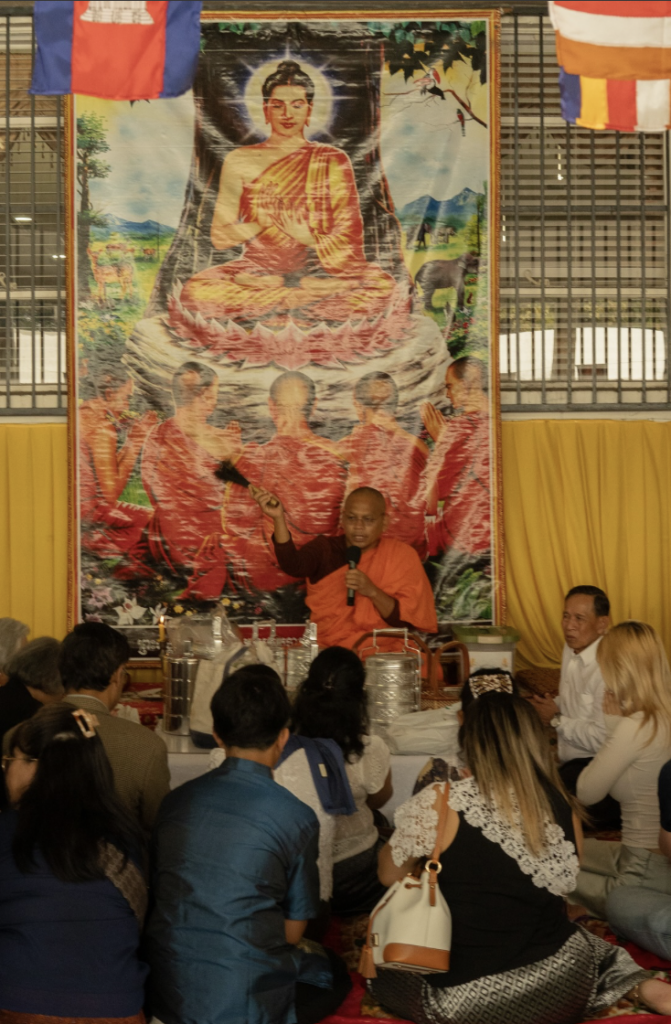
Members of the community gathered around a monk at Khemara Buddhikaram

Even though overall turnout to daily practices is modest, ranging from around 20-30 members, the temple still encourages the preservation and spread of Cambodian culture within the area.

From Street Gangs to Temple | The Pluralism Project. (2025). Pluralism.org. https://pluralism.org/from-street-gangs-to-temple

HALDANE, D. (1987, August 23). Modest Buddhist Temple Serves as Heart of Cambodian Community. Los Angeles Times. https://www.latimes.com/archives/la-xpm-1987-08-23-cb-2990-story.html

Interview Series on Buddhism and Cambodia: Monasteries, Education, and Poverty | Canal | World Languages & Cultures | Fine Arts Humanities & Social Sciences | UMass Lowell. (n.d.). Www.uml.edu. https://www.uml.edu/fahss/languages-cultures/canal/2022/interviews-buddhism-cambodia/

Cambodian American Profiles – Historical Society of Long Beach. (2024, January 11). Historical Society of Long Beach. https://hslb.org/cambodian-american-collection/cambodian-profiles/?v=0b3b97fa6688

Buddhist Channel | US West. (2024). Buddhistchannel.tv. https://www.buddhistchannel.tv/index.php?id=65

LB Wat Willow abbot was 66. (2019). Blogspot.com. https://ki-media.blogspot.com/2011/01/lb-wat-willow-abbot-was-66.html

IBCWORLD: Home. (2024). Ibcworld.org. https://www.ibcworld.org/home/diaspora/Cambodia

‌Rivera, S. (2019, October 29). Wat Willow Buddhist temple tentatively reopens without monks as protests continue. Long Beach Post News; LBPOST News. https://lbpost.com/news/wat-willow-buddhist-temple-tentatively-reopens-without-monks-as-protests-continue/

Khmer Renaissance បដិសន្ធិ on Instagram: “The Khemara Buddhikaram Buddhist Temple” Instagram. https://www.instagram.com/p/DIXbciOSrlC/?hl=en

Celebrating Pchum Ben | We Are California. (2023). Ucdavis.edu. https://camodelcurricula.ucdavis.edu/cambodian-american-studies/celebrating-pchum-ben

‌WLB. (2024, November 11). Sout Mon Kham Pee New Year’s Eve Chanting. Watbuddhavong.org. https://www.watbuddhavong.org/wlb-updates/tempo/

Categories
Uncategorized

Garchen Buddhist Institute 

By Megan Pruitt

The Garchen Buddhist Institute is a dharma center in the Drikung Kagyu tradition. Located in Chino Valley, Arizona, the Institute offers a place for meditation practice, Buddhist teachings, and retreats. It hosts teachers from many traditions, although its main spiritual director is His Eminence Garchen Rinpoche.

Founder and Origin of the Institute

The Garchen Buddhist Institute is one of many Buddhist institutions founded by Garchen Rinpoche. Garchen Rinpoche himself has settled at the Garchen Buddhist Institute permanently, where he offers teachings and Dharma events. His Eminence is regarded as the Eighth Garchen Rinpoche in the Kagyu tradition; his emanation lineage is said to trace back to Chenrezig, the Bodhisattva of compassion. 


Garchen Rinpoche was born in Nangchen, Kham, and at the age of seven was brought to a monastery where he was given the ordination name of Könchok Gyaltsen. Here, he was instructed by several high lamas of the Drikung Kagyu lineage. At the age of 22, he was imprisoned and met Khenpo Munsel, a Nyingma Master, who became his root guru. He was imprisoned for 20 years, practicing in secret, and eventually achieved the wisdom-mind which his guru recognized as “an emanation of a Bodhisattva.”


Once released in 1979, Garchen Rinpoche reestablished many Drikung Kagyu monasteries, schools, and other institutions in order to spread Buddhist teachings. This includes many locations in Asia, Europe, and North America. Today, Garchen Rinpoche teaches from the Garchen Buddhist Institute, also sharing his wisdom with the world via films and YouTube. 

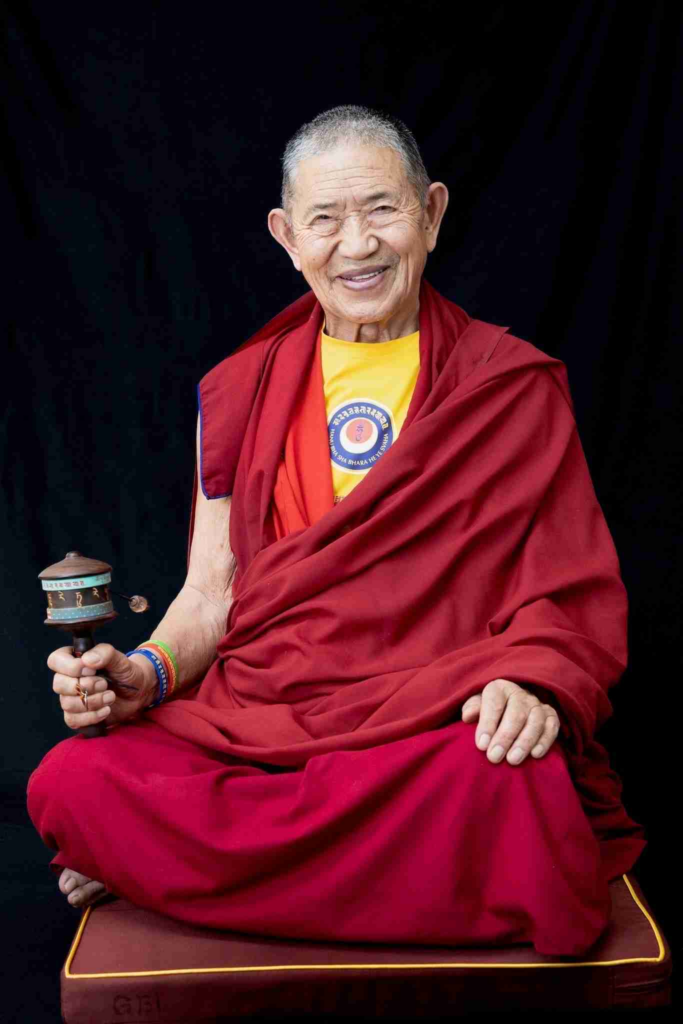
Garchen Rinpoche

The Garchen Buddhist Institute was established in 1997, when Garchen Rinpoche came to America for the first time. Garchen Rinpoche himself speaks on the “auspicious” nature of the founding of the institute in a short YouTube documentary. He reflects on how perfect the setting in Arizona is for practitioners to grow in virtues such as generosity and patience. Additionally, he speaks of fortunate circumstances in which great leaders of the Kagyu tradition were able to visit the Institute early in its establishment. 


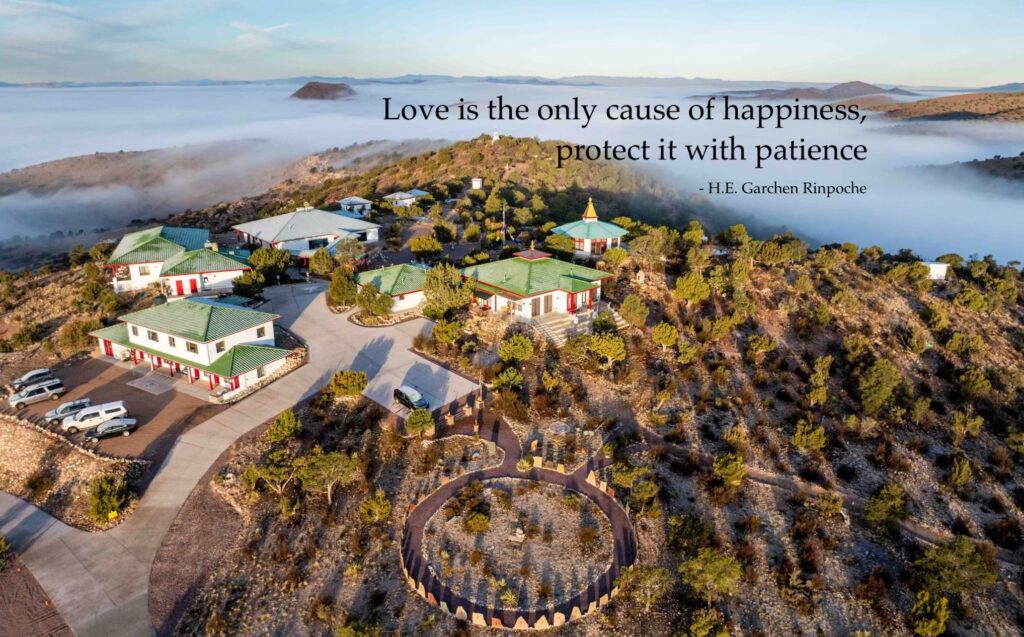
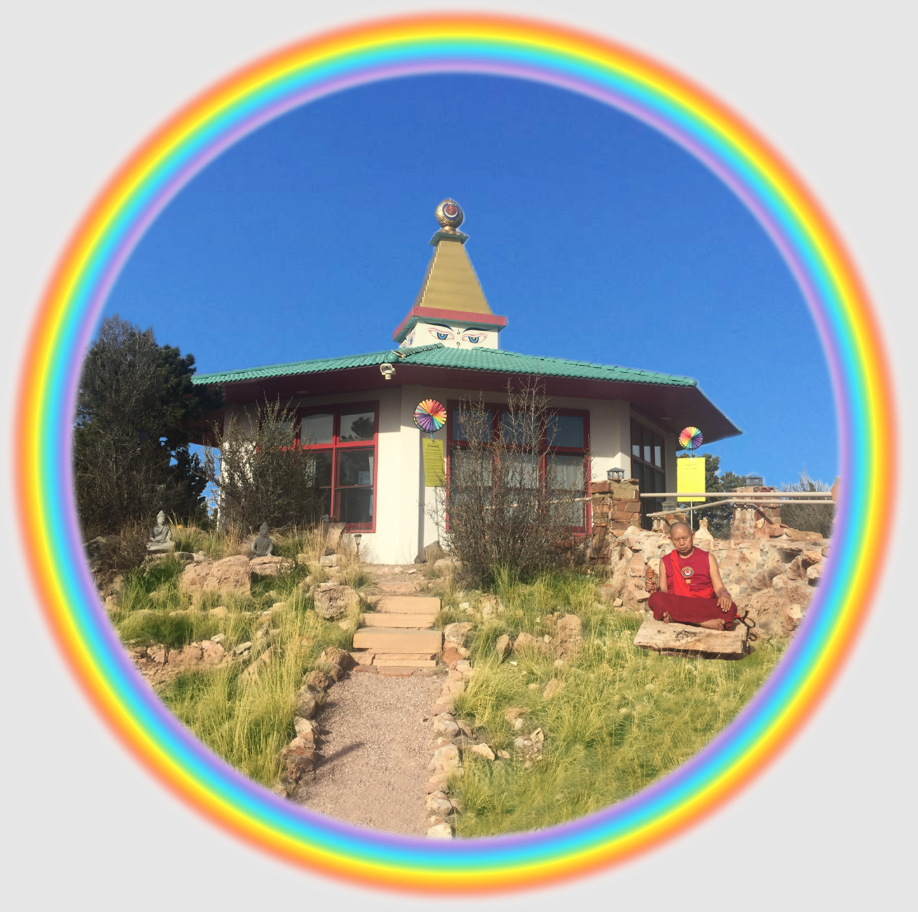
The Institute has all of the facilities needed for a practitioner to go on a retreat or practice many forms of meditation. Their facilities include many different housing options, the main retreat center, temple and shrine buildings, as well as Stupas which include Buddha relics.

Tradition

The lineage practiced by the Garchen Buddhist Institute is “Kagyu,” meaning “the lineage of the oral instructions.” The practice of teachings being passed down from teacher to student is especially important in this branch of Tibetan Buddhism. Drikung Kagyu is one of the eight sub-lineages. Each sub-lineage can trace its history back to Tilopa and Naropa. Specifically, Drikung Kagyu emphasizes the importance of the golden rosary lineage of the incomparable Drikung Kagyupas. This is an unbroken line of realized masters. 

The main practices in Drikung Kagyu are known as “The Five-fold Profound Path of Mahamudrā,” which is a structured path of Buddhist teachings. 

The Five-fold path consists of:

  1. Bodhicitta – cultivating compassion
  2. Yidam deity practice- visualization of oneself as a deity
  3. Guru yoga- devotion to one’s teacher
  4. Mahāmudrā meditation- experiencing the mind’s true nature
  5. Dedication of merit- realizing the worth of others

Another practice common in Drikung Kagyu is “The Six Dharmas of Nāropa,” which are completion-stage tantric practices aimed at using subtle body practices. It is said that by using this technique, a practitioner may experience bliss, presence, and non-thought, experiencing the first glimpse of Awakening.

Relationships and Constituents

The Garchen Buddhist Institute hosts many visiting teachers, mostly from the Drikung Kagyu lineage. Additionally, the Garchen Buddhist Institute commonly invites teachers from other lineages, for example, Kathog Rinpoche from the Nyingma school of Buddhism. In 2026, Kathog Rinpoche will be teaching a multi-year series at the Institute, both in person and online. Another notable collaboration is an online exclusive event in which Garchen Rinpoche will speak with Menpa Phuntsog Wangmo from the Shang Hung Institute of the School of Tibetan Medicine. The inter-lineage collaborations hosted by the Garchen Buddhist Institute create a diverse environment and connect the Institute to a broader network of Buddhist teachers who specialize in different practices. In the case of the Shang Hung Institute collaboration, there will be a discussion of healing in times of uncertainty.

The Garchen Buddhist Institute offers many opportunities for constituents to go on pilgrimages, including those that venture into other countries. Because of the Institute’s deep connections with important figures in the Drikung Kagyu lineages, it holds relationships with other monasteries in Asia. These pilgrimages often include visiting sacred sites associated with historical Drikung Kagyu masters.

Specific demographics for the Institute are not available, but it is safe to say that the community is healthy and flourishing. From YouTube videos and films published by the Institute, it appears that a mix of Western converts and Heritage Buddhist practitioners are welcomed to practice at the Institute. As well as an in-person community, the Institute also has influence online, having over twenty-five thousand subscribers on YouTube, many of their videos having well above ten thousand views each. The Institute offers teachings and films in many languages, also supporting subtitles, which implies a diverse constituency. 

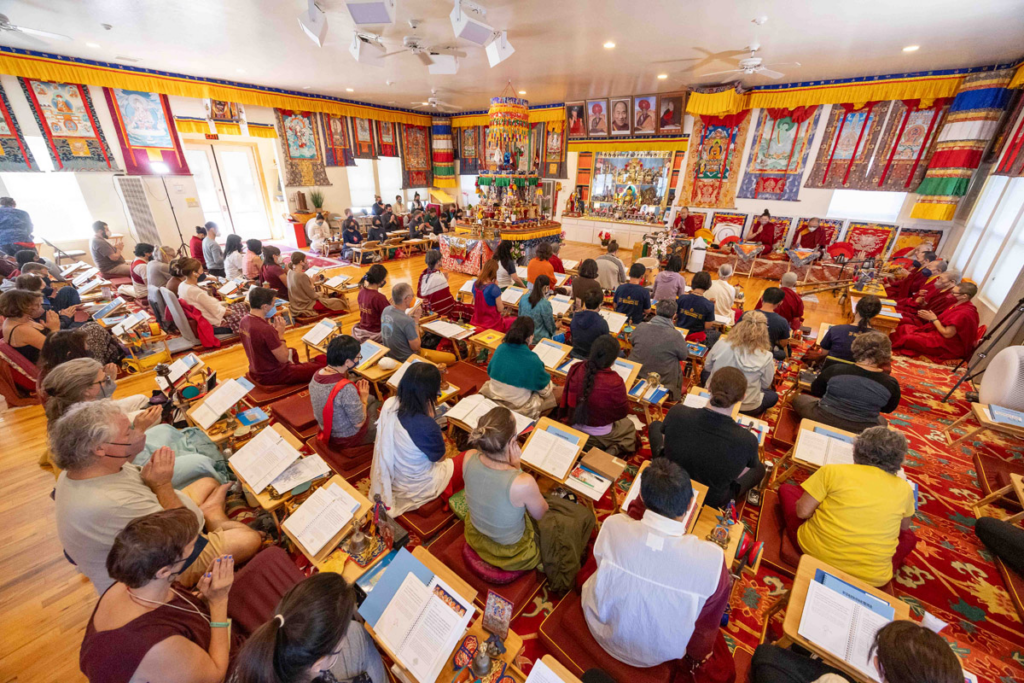
Vajrakilaya Retreat at Garchen Buddhist Institute in 2025

Online Community

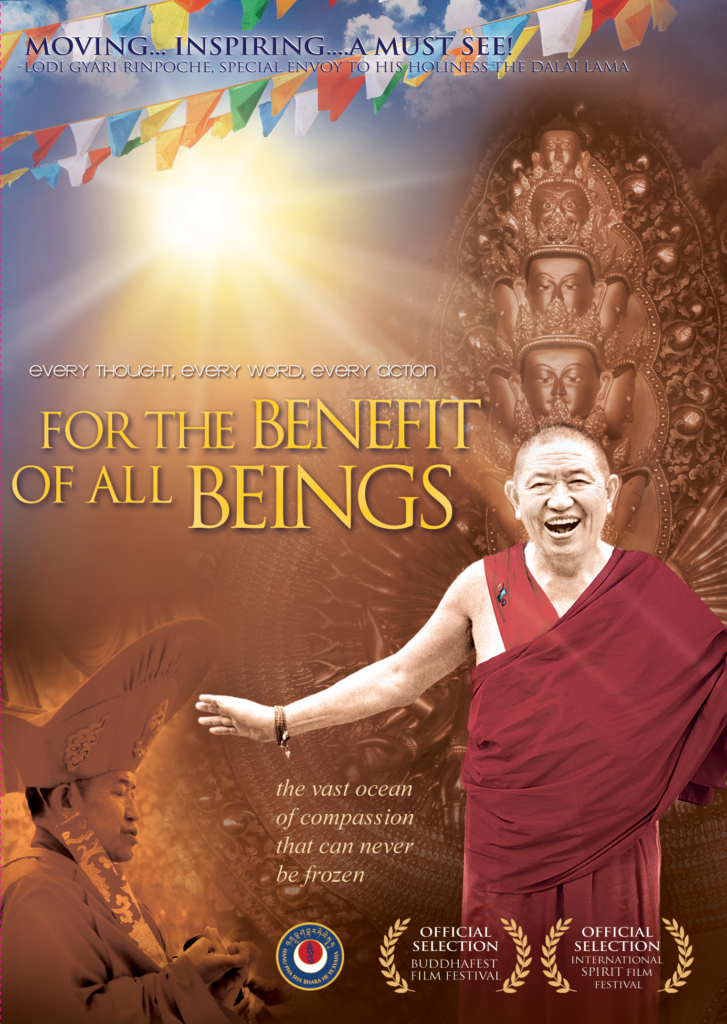
As mentioned before, the Garchen Buddhist Institute has a strong online presence. Many free films are available via their website, including “For the Benefit of All Beings,” a one-hundred-minute film available in English, Vietnamese, Russian, French, Spanish, and German. The film shares the life story of Garchen Rinpoche and showcases interviews from Kagyu figures and Western converts. Several other films, Garchen Rinpoche uses to share the story of the importance and origin of the institute. 

Uniquely, taking vows online is a service offered by the Institute. Garchen Rinpoche explains that the ultimate nature of the three Jewels (the Buddha, the Dharma, and the Sangha) is pervasive, which enables one to take vows without being physically present in a ceremony. A refuge vow can be taken as a first step on the Buddhist path and is said to represent one turning toward a life of benefit for themselves and also for others. After the Refuge vow has been taken, a Bodhisattva vow may be taken. This represents one’s desire for enlightenment to benefit all sentient beings. This vow may also be renewed. 

When looking at a list of upcoming events, almost every program available is offered both in person and online. (livestreamed on YouTube) The Garchen Institute has both English and Chinese YouTube channels with a combined three thousand and six hundred videos available to watch for free. Beyond this, there is also evidence of Garchen Rinpoche owning other YouTube channels with more specific purposes. For example, one channel focuses on the prayer wheel1.

Practices and Events

Many kinds of practices are offered every week at the Garchen Buddhist Institute. Led by Khenpo Tenzin, Arya Tara Practice is believed to promote protection and longevity for all beings. Sometimes, more specifically, the Arya Tara Practices are offered for the dead.  Also led by Khenpo Tenzin, a Mediation Series on Mindfulness is offered weekly. For Holy Days such as Lama Je Tsong Khapa Day, there are special prayers recited. 


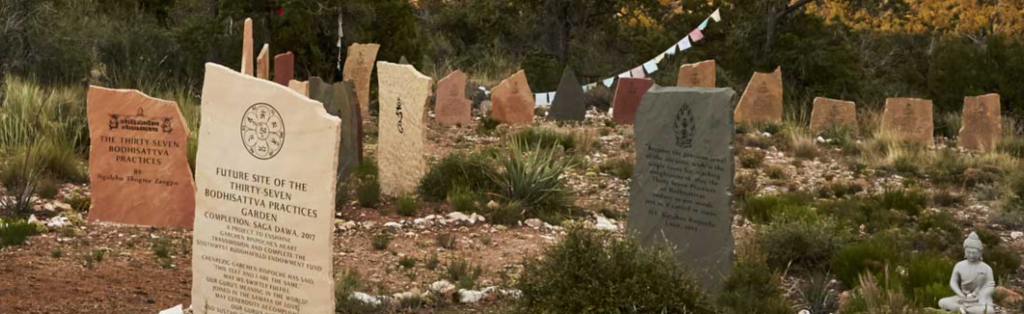
The Institute also provides many resources for individual practice. One example is the in-progress garden of thirty-seven Bodhisattva Practices. This will provide an example of how a Bodhisattva lives, providing a meditative experience for visitors to the Garchen Buddhist Institute.

Several-day-long retreats are also important to the Garchen Buddhist Institute experience. Kinds of retreats include solitude retreats, nature retreats, and intensive retreats. These retreats could also involve sleeping outside or in smaller retreat housing. Shorter retreats operate on a month basis, whereas longer retreats and pilgrimages operate on a yearly basis.
The greatest number of events happen on Sunday; the schedule is as follows:

8:30am-9:30amGuided Meditation
10am-12pmSunday Practice
1:30pm-3pmSunday Afternoon Teachings
3pm-4pmDharma Discussion

Proper conduct is also required for everyone on the property of Garchen Buddhist Institute. The rules are as follows:

  1. Protect all life2.
  2. Protect others’ property.
  3. Refrain from divisive speech and creating discord in the sangha.
  4. Refrain from sexual misconduct.
  5. Remain sober by not using drugs or alcohol.

Funding

From the information that is available, it appears that the majority of Garchen Buddhist Institute’s funding comes from donations. They have an endowment fund set up with the purpose of sustaining the Institute for as long as possible. Other sources of funding come from their own gift store as well as offering spinsored puja services. Lay people can request a sort of prayer ritual for a living or deceased person in exchange for a sum of money.

View of Buddhism in America

Based on the available and popular teachings as well as their accessibility, it can be said that constituents of Garchen Buddhist Institute view Buddhism through the lens of personal transformation and betterment. Many embrace the types of practices that are said to heal the spiritual or physical existence. Clearly, they also value lineage transmission as Garchen Rinpoche is a very important figure and happens to be seated at the Garchen Institute in Arizona permanently. Constituents value teachings from someone they see as a Bodhisattva.


Garchen Rinpoche speaks of his ability to practice Buddhism in America as “fortunate karma.” This reflects the Institute’s view of its place in the spread of Tibetan Buddhism in the West. The specific lineage of Drikung Kagyu Buddhism is not as common in the West as other subdivisions of Buddhism. It is clear that the community values being able to reach anyone willing to listen, as evidenced by their request for volunteer translators and their large collection of translated online media.

Garchen Buddhist Institute Stupa

1Garchen Rinpoche is rarely seen without a prayer wheel. It is a small handheld object with 20 billion mantras printed on the inside. The prayer wheel is held and spun around and is believed to help accumulate merit since each spin of the wheel can be equated to reciting these mantras. 
2Based on a short film about the Garchen Buddhist Institute, it is clear that guests are expected to respect animals. Since it does not rain in Chino Valley, Arizona regularly, a small pond was constructed to provide water for the animals in the surrounding area.

References:

All photos from Garchen Buddhist Institute website

Garchen Buddhist Institute. Home Page. https://garchen.net/
Accessed November 30, 2025.

Garchen Buddhist Institute. YouTube Channel. https://www.youtube.com/@GarchenBuddhistInstituteAZ
Accessed November 30, 2025.

Drikung Kagyu Official Website. https://www.drikung.org. Accessed November 30, 2025.