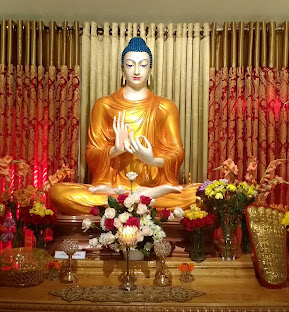
For this report, I wanted to examine the practice of Buddhism within the American South; more specifically, the American Bible Belt. I wanted to analyze a Buddhist community in an environment that exists outside of a Buddhist-dominated culture. As such, the Buddhist community I examined is The Lone Star Buddhist Meditation Center. It is located in Houston, TX, at 12415 N Eldridge Pkwy, Cypress, TX 77429.
The Center aligns itself with the Theravada school of Buddhism. The front page of the website has a quote from the Buddha describing the impetus for Buddhists to care for the world: “As a mother would risk her own life to protect her only child,” demonstrating the community’s alignment with the Buddhist Tripitaka, the canon. In the same vein, the Meditation Center encourages people to join its tradition, which they boast is 2,600 years old. This aligns with the accounts of when the historical Buddha would have lived. That is, this Theravada Buddhist community puts forth its identity as adhering to the historicity of the Buddhist tradition, as the Theravada tradition is the most historically grounded of the Southeast Asian Buddhist schools of thought. The Lone Star Buddhist Meditation Center sees itself as situated within that 2,600 years of Theravada Buddhist history and other Theravada Buddhist worldwide. In helping explain the Theravada Buddhist tradition, the website of the Meditation Center includes sections dedicated to exploring Buddhist fundamental teaching. The website covers the Four Noble Truths of Buddhism. Then, it goes into a deep dive into the Theravada understanding of Buddhist wisdom in an articulation of the Mundane Right View and the Supramundane Right View as leading to opportunities to reach enlightenment. Moreover, the website then gives a detailed view of the Meditation Center’s view of right living, including right mindfulness, right action, right livelihood, etc. In comparing the class notes to the tenets upheld by the Lone Star Buddhist Meditation Center, this Meditation Center seems in line with the traditional practice of Theravada Buddhism. Finally, the bottom of the page detailing these Buddhist tenets/beliefs venerates the historical Buddha as realizing these Buddhist truths without guidance, solely through disciplined meditation.
The founder of the Meditation Center is Kiribathgoda Gnanananda Thero was born in Sri Lanka in 1961. Thero has written a multitude of books on the Buddhist tradition, both in English and Sinhala, a language primarily spoken by the people of Sri Lanka. Thero spent time as a monk living in accordance with the temple monk life of Theravada Buddhism and studying dhamma/dharma. Furthermore, Kiribathgoda Gnanananda Thero attests to having spent some time in forest monasteries to continue his study of Buddhist practice. In August 1999, Thero founded Mahamevnawa Monastery to share teachings of the Buddha. This is a network of different Buddhist monasteries overseen by Kiribathgoda Gnanananda Thero. This network is based in Sri Lanka. The Lone Star Buddhist Monastery advocates that Thero’s work on dharma/dhamma is unique in how it can be accessed by laypeople and monks alike. The Meditation Center’s website also notes that his work is done without personal bias or commentary to allow for his work to be truly connected to the teachings of the Buddha. The website also includes some words from Thero. In line with the historical beliefs of Theravada Buddhism, Thero espouses that the practical teachings of the Buddha have been muddled over the years and by other traditions, but that Theravada has remained consistent with the original tradition. In my understanding of Thero’s words, he fleshes out his initiative to start the Mahamevnawa Monastery network as a way to venerate the Sangha and to encourage others to seek the path of Buddhism.
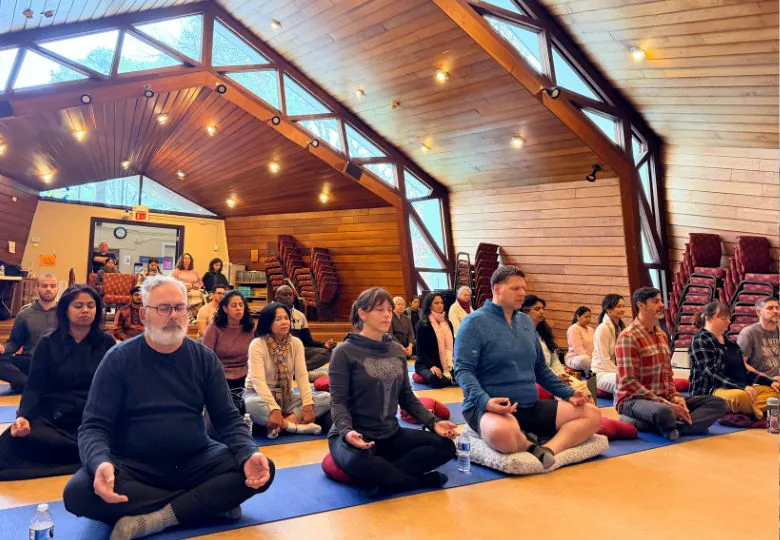
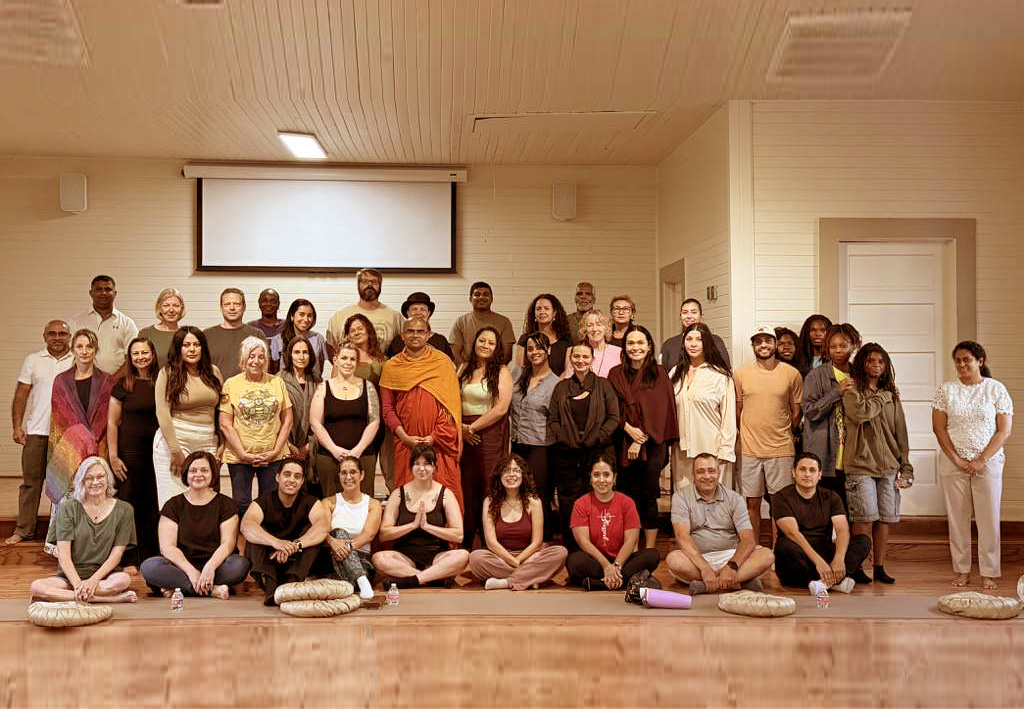
In continuing their adherence to the Theravada tradition, the Lone Star Buddhist Meditation Center boasts that they cater to anyone open to exploring the teachings of Buddha. The website does not have specific congregation information, but I think it is safe to assume that the community would be emblematic of the greater Houston area, perhaps tending toward the Southeast Asian community, as that is the background of the founder. There was no phone number to call and determine a more specific demographic this Meditation Center caters to. In looking through the pictures on the community’s website and the ones posted on their Facebook, the demographics do seem skewed toward Southeast Asians, but there is also a considerable White population that appears to attend the events hosted by the Meditation Center.
In line with the teachings of the Buddha, the Meditation Center emphasizes the study of Abhidharma as an extension of addressing the 5 Aggregates of Buddhism. That is, the Meditation Center’s philosophy stated on its website circles around addressing perception, form, feelings, consciousness, and volition to move practitioners closer to achieving enlightenment and peace of mind. The Center hosts various events in order to cultivate those in attendance toward achieving awakening. Furthermore, the Meditation Center provides dhamma/dharma classes for children. It is the adherence to dharma that demonstrates the Lone Star Buddhist Meditation Center’s commitment to the wisdom aspect of the Buddhist Three Trainings. In keeping with its name, this community has regular meditation classes every Sunday evening. The Meditation Center also hosts other less regular meditation sessions. This community’s practice and conception of Buddhism are thoroughly explained in their summation of meditation. According to the Meditation Center’s website, they view meditation as the essential way to discover inner peace for oneself. In this vein, this tradition and community hold to the Buddhist teaching described in class that meditation helps to rid one of ignorance, allowing for the Buddhist 4 Immeasurables to be practiced. Moreover, this explanation of meditation demonstrates how meditation holds a place as one of the Three Buddhist Trainings to escape ignorance.
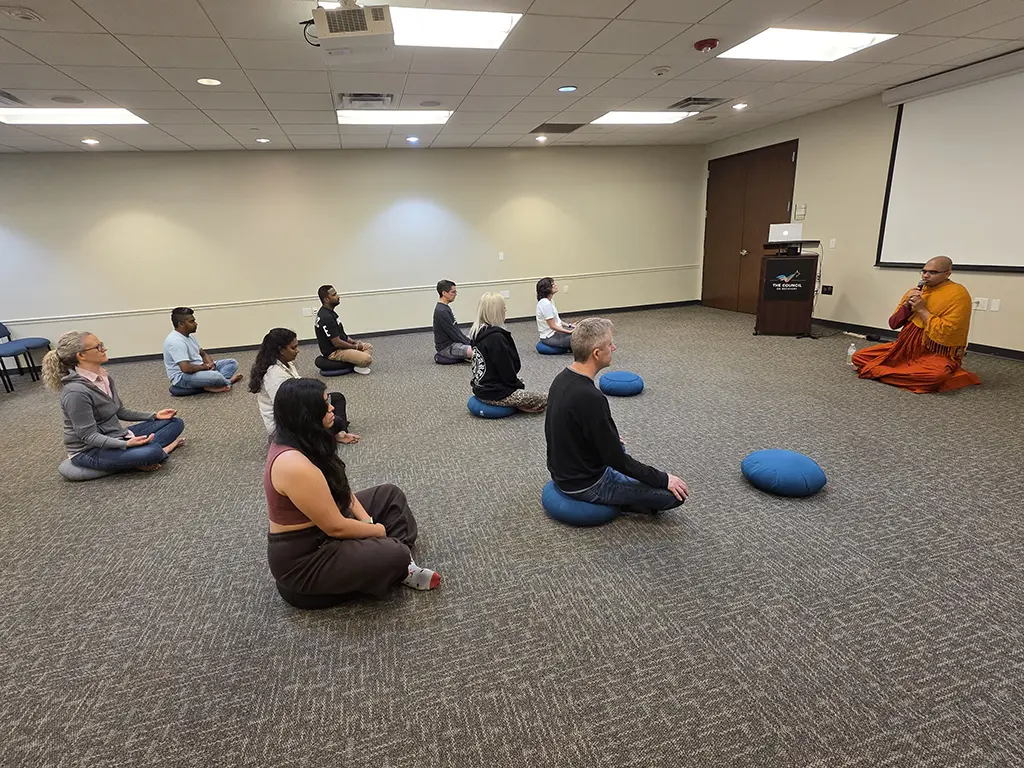
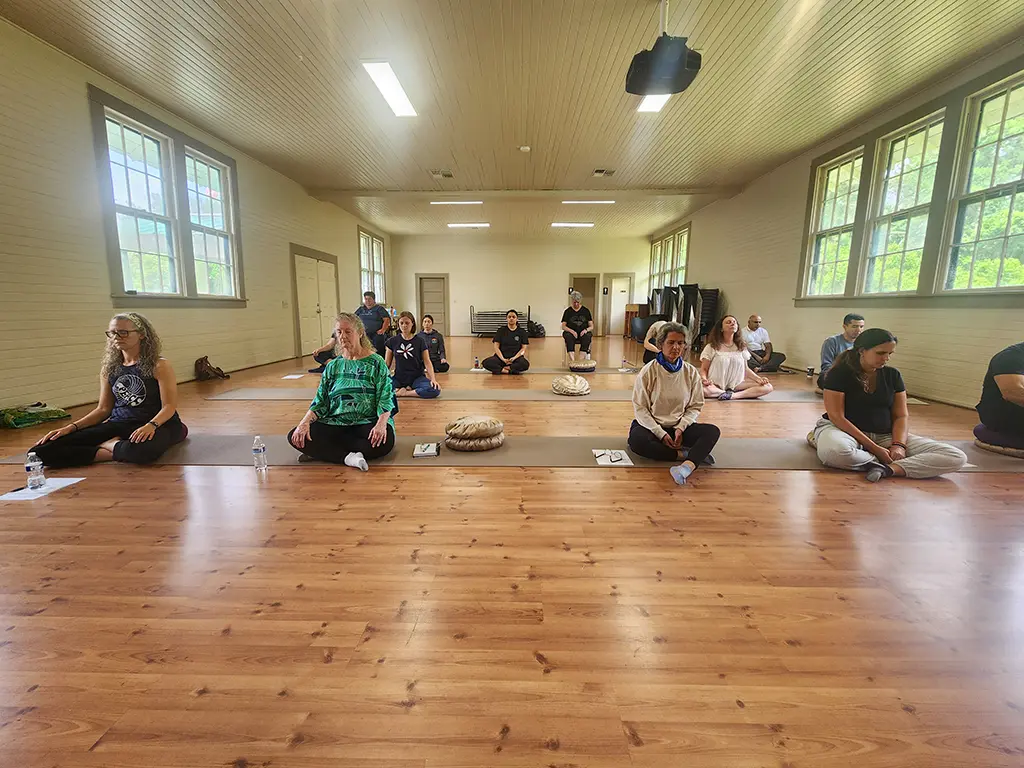
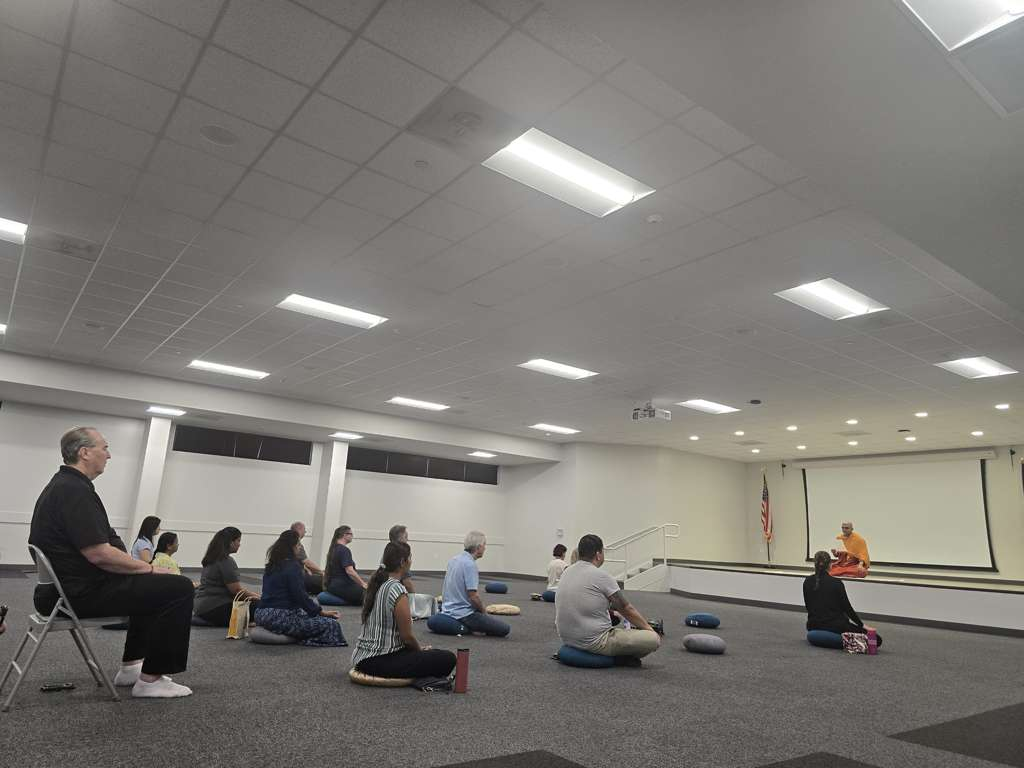
Even looking back at the original quote the Meditation Center boasts on their website’s home page, the Meditation Center’s explanation of meditation contains an emphasis on how meditation allows for an individual to better embody the bodhicitta. Specifically, the Center focuses on breathing meditation. They espouse that breathing meditation allows the practitioner to free their mind from the distractions of life. Besides breathing meditation, the Meditation Center provides opportunities to practice lovingkindness meditation to help overcome anger, walking meditation to prevent mental wandering, and impermanent meditation to alleviate the practitioner from painful or undesirable memories. The Meditation Center’s conception of the practice of lovingkindness meditation gets a longer explanation than the others. The Center understands lovingkindness meditation as what I understand to be an integral part of realizing the 4 Immeasurables in encouraging love, compassion, joy, and equanimity in practitioners and eventually, toward reaching awakening. As shown in videos on their website, the facilities for meditation include large rooms with instructors/bodhisattvas directing a room of people from the front. The walking meditation practice takes place outside and is understandably more mobile compared to the other espoused meditative practices. These types of meditation are all understood by the Meditation Center to be practical forms of Calming and Insight Meditation.
In the same vein as meditation, the Meditation Center also hosts meditation retreats. These reflect the lived experience of Founder Kiribathgoda Gnanananda Thero as a temple monk and his experience with forest monasticism in the Theravada tradition. The meditation events hosted by the Center lay the groundwork for practitioners to gain confidence in the wisdom of the Buddha’s wisdom. All in all, the Meditation Center’s view of meditation sees it as strengthening the practitioner emotionally and spiritually. The text, which describes the Center’s views on the intricacies of meditation, specifically calls out how meditation is for everyone, not just dedicated Buddhists, but everyone in the Buddhist Sangha. While there is nothing explicit that notes the Center’s place in spreading Buddhism in America, it can be inferred that their openness to all who are interested in learning is their way of spreading Buddhism in America. In this way of considering and practicing meditation, the Lone Star Buddhist Meditation Center aligns itself with the wider Theravada Buddhist community. In the vein of the Meditation Center’s events and its initiative to expose more and more people to Buddhism, the Center also offers virtual meditation sessions every Thursday. These practices are very similar to those offered in-person, emphasizing the same Buddhist principles such as encouraging peace of mind and mental fortitude.
In facilitating these practices, the website of the Lone Star Buddhist Meditation Center has advertising that allows for well-wishers to contribute to the Meditation Center in multiple ways. First, the Meditation Center accepts donations to help Buddhist monks across the world. The Center makes it clear that this is seen as engaging in the general Buddhist practice of venerating the Sangha. This is in line with the stated beliefs of the Meditation Center’s founder. The website seems to be very upfront about where funds go: financial contributions go to helping monks with costs associated with transportation and healthcare. Furthermore, the website notes that funds will generally go toward helping monks spread Buddhism across the world through the Mahamevnawa Monastery network. Then, the website allows for donations to go toward maintaining the Lone Star Buddhist Meditation Center’s facilities and helping with mortgage payments. Finally, the website gives space for people to contribute their time/a day as an offering. In their offering of a day, the Meditation Center has an ongoing calendar where people have offered special days to maintain the monastery as a place for everyone. This looks different for different contributors. This is seen as being spiritually beneficial for the donor and those who might be affected in the greater community.
Though it is situated as a minority religious tradition, the Lone Star Buddhist Meditation Center is committed to continuing the lived practices of Theravada Buddhism in Houston, TX, through its consistent encouragement of Buddhist meditation.
– Joshua Chin ’27